
Thread
Mac Portable, Dead Battery, Compatible AC Adapters
Most Mac Portables have dead batteries now, and we all know that the Portable won't start up from its AC Adapter without a good battery. However, it has been said that a PowerBook 100 AC Adapter would boot the Macintosh Portable even with a dead battery. I don't know this from personal experience though, just from what I have read on EBAY and in various online forums.
Here is a list of AC Adapters I found at Apple's website:
http://support.apple.com/kb/TA32393
Unfortunately, that web page doesn't mention the Mac Portable. The first AC adapter on that list is the M5140, which is for PowerBook 100. Would anyone know what the model number is for the Macintosh Portable's AC adapter?
Since it has been said that the PowerBook 100's AC Adapter works to boot the Macintosh Portable even if the Portable's battery is dead, but does anyone know if that AC adapter (which can boot the Portable with a dead battery) is the original model M5140 adapter or the replacement model M4662 adapter (or both)?
And what would happen if an M5651 or M5652 were connected to the Macintosh Portable? Would it fry the board? Apple's article says the M5652 would damage the PowerBook 100, so it makes one wonder what would happen to the Macintosh Portable.
I look forward to hearing your thoughts and experiences.
Thank you.
Here is a list of AC Adapters I found at Apple's website:
http://support.apple.com/kb/TA32393
Unfortunately, that web page doesn't mention the Mac Portable. The first AC adapter on that list is the M5140, which is for PowerBook 100. Would anyone know what the model number is for the Macintosh Portable's AC adapter?
Since it has been said that the PowerBook 100's AC Adapter works to boot the Macintosh Portable even if the Portable's battery is dead, but does anyone know if that AC adapter (which can boot the Portable with a dead battery) is the original model M5140 adapter or the replacement model M4662 adapter (or both)?
And what would happen if an M5651 or M5652 were connected to the Macintosh Portable? Would it fry the board? Apple's article says the M5652 would damage the PowerBook 100, so it makes one wonder what would happen to the Macintosh Portable.
I look forward to hearing your thoughts and experiences.
Thank you.
I've both the PB100 (grey) and Portable (white) adapters which I'll check on the model numbers for you today. I can confirm though, that the PB100 adapter on a Portable (with the dead, lead acid battery removed) does not fire up a Portable.
Some time ago, I posted a similar thread:
viewtopic.php?f=10&t=13918&p=134600&sid=380104df66fbfbcff3f353ee8d55b41c#p134600
... now I can't say I've tried the 9V/3A power adapter yet, but it sounds feasable. Keep in mind also that the caps will eventually need to be replaced with tantalum replacements. But, if you've not taken apart a Portable before, get ready for what is actually quite a pleasant experience - it pulls apart like a jigsaw puzzle, with no screws in sight. Just be careful to not snap off any tabs.
JB
Some time ago, I posted a similar thread:
viewtopic.php?f=10&t=13918&p=134600&sid=380104df66fbfbcff3f353ee8d55b41c#p134600
... now I can't say I've tried the 9V/3A power adapter yet, but it sounds feasable. Keep in mind also that the caps will eventually need to be replaced with tantalum replacements. But, if you've not taken apart a Portable before, get ready for what is actually quite a pleasant experience - it pulls apart like a jigsaw puzzle, with no screws in sight. Just be careful to not snap off any tabs.
JB
Byrd, thank you for your reply.
The inspiration for this thread is a conversation I am now having with one of our list members, off-list. He tried to boot the Portable with a 5651 adapter because he wanted to play it safe with a 2A adapter. However, he told me that did not work to boot the machine. He also said that when he originally acquired his Macintosh Portables, they came with a 5136 adapter, which I assume is the model number of the AC Adapter for the original Macintosh Portable. Even so, they will not boot off that adapter either -- no surprises there based on what I've read before about dead Portable batteries.
I did Google up this a few minutes ago.
http://idisk.mac.com/lefevere/Public/THE_PORTABLE_WILL_NOT_BOOT_UP.pdf
I guess there are a variety of things that could prevent booting, including bad capacitors that you spoke of.
The inspiration for this thread is a conversation I am now having with one of our list members, off-list. He tried to boot the Portable with a 5651 adapter because he wanted to play it safe with a 2A adapter. However, he told me that did not work to boot the machine. He also said that when he originally acquired his Macintosh Portables, they came with a 5136 adapter, which I assume is the model number of the AC Adapter for the original Macintosh Portable. Even so, they will not boot off that adapter either -- no surprises there based on what I've read before about dead Portable batteries.
I did Google up this a few minutes ago.
http://idisk.mac.com/lefevere/Public/THE_PORTABLE_WILL_NOT_BOOT_UP.pdf
I guess there are a variety of things that could prevent booting, including bad capacitors that you spoke of.
If you don't mind the digging, I'd love to know the technical info.
For the record, the individual I am speaking to off-line about his non-bootable Mac Portables told me he has the following adapters:
5136, 1.5A (came with the Mac Portables he acquired, and fail to boot the Portable)
5651, 2A (failed to boot the Portable)
5652, 3A (never tried this one)
And to repeat my earlier post, the PowerBook 100 adapters (which he doesn't have) are:
5140 (original)
4662 (newer, replacement)
For the record, the individual I am speaking to off-line about his non-bootable Mac Portables told me he has the following adapters:
5136, 1.5A (came with the Mac Portables he acquired, and fail to boot the Portable)
5651, 2A (failed to boot the Portable)
5652, 3A (never tried this one)
And to repeat my earlier post, the PowerBook 100 adapters (which he doesn't have) are:
5140 (original)
4662 (newer, replacement)
mcdermd, the individual I am speaking to off-list provided more info:
• He says he just checked his 5651 adapter (2A version) with a DMM and it started out at 7.7v but then quickly dropped to 0.5v, which indicates that particular adapter may be dead.
• He asks if he can safely use the 5652 adapter (3A version)? He tested it and says it shows a steady 7.8v.
Thanks.
• He says he just checked his 5651 adapter (2A version) with a DMM and it started out at 7.7v but then quickly dropped to 0.5v, which indicates that particular adapter may be dead.
• He asks if he can safely use the 5652 adapter (3A version)? He tested it and says it shows a steady 7.8v.
Thanks.
Hi all,
After a quick look through my boxes of Mac stuff, here are the adapters I have that are relevant to the topic:
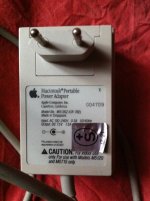
Macintosh Portable Power Adapter Model # M5136Z (output 7.5V / 1.5A)
This is the adapter that came with my Portable (original non-backlit). I bought this Portable second-hand from its original owner a couple of years ago. I confirm it won't allow the Portable to boot.
Apple Low-Power AC Adapter Model # ADP-17AB (output 7.5V / 2A)
This one came with my PowerBook 100, but the ©1994 year and the strange model number lead me to believe it certainly wasn't its original adapter. Maybe a later replacement?
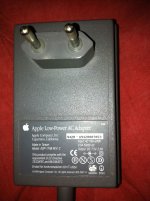
This one doesn't give my 100 enough power to boot anymore, though it still powers up its screen and allow it to make strange noises… So my 100 runs happily 24/7 for two months now from another 1xx adapter (see below). I can't remember for sure if it booted the Portable, but I don't think so.
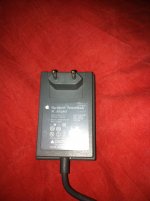
Macintosh PowerBook AC Adapter Model # 5140Z (output 7.5V / 2A)
I got one of those with each of my early 1xx PowerBooks (140 and 145B for sure, and I think also with my 150). So they weren't exclusive to the PowerBook 100. They easily boot my Portable. In my experience, for the Portable to boot it had to have its main battery taken out, and I had to try a couple of times (plug and unplug the adapter).
I don't have enough time today to check my later adapters' model numbers, sorry. But since I managed to boot the Portable with a M5140, I never tried anything else. Am I wrong to fear going beyond 2.0A?
After a quick look through my boxes of Mac stuff, here are the adapters I have that are relevant to the topic:
Macintosh Portable Power Adapter Model # M5136Z (output 7.5V / 1.5A)
This is the adapter that came with my Portable (original non-backlit). I bought this Portable second-hand from its original owner a couple of years ago. I confirm it won't allow the Portable to boot.
Looks like it is indeed M5136. I guess the Z in my adapter's model number is for Switzerland's specific connector.
Apple Low-Power AC Adapter Model # ADP-17AB (output 7.5V / 2A)
This one came with my PowerBook 100, but the ©1994 year and the strange model number lead me to believe it certainly wasn't its original adapter. Maybe a later replacement?
This one doesn't give my 100 enough power to boot anymore, though it still powers up its screen and allow it to make strange noises… So my 100 runs happily 24/7 for two months now from another 1xx adapter (see below). I can't remember for sure if it booted the Portable, but I don't think so.
Macintosh PowerBook AC Adapter Model # 5140Z (output 7.5V / 2A)
I got one of those with each of my early 1xx PowerBooks (140 and 145B for sure, and I think also with my 150). So they weren't exclusive to the PowerBook 100. They easily boot my Portable. In my experience, for the Portable to boot it had to have its main battery taken out, and I had to try a couple of times (plug and unplug the adapter).
I don't have enough time today to check my later adapters' model numbers, sorry. But since I managed to boot the Portable with a M5140, I never tried anything else. Am I wrong to fear going beyond 2.0A?
Okay, I have tested it here at my desk with my Portable (40MB conner drive, 2MB RAM, Modem). After each change in configuration, I waited ten seconds then briefly pressed both programmer and restart buttons simultaneously three times to reset the power manager before pressing a key on the keyboard to start the machine. My results are:
M5136 Macintosh Portable Adapter (1.5A, 7.5V):
Boots with good battery + 9v PRAM battery: YES
Boots with bad battery + 9v PRAM battery: NO (Starts but there is not enough power to spin the hard drive or the floppy drive)
Boots with no battery + 9v PRAM battery: NO (Starts but there is not enough power to spin the hard drive or the floppy drive)
Boots with no battery - 9v PRAM battery: NO (Starts but there is not enough power to spin the hard drive or the floppy drive)
M5651 PowerBook AC Adapter (2A, 7.5V):
Boots with good battery + 9v PRAM battery: YES
Boots with bad battery + 9v PRAM battery: YES
Boots with no battery + 9v PRAM battery: YES
Boots with no battery - 9v PRAM battery: YES
I should think that the 3A adapter should provide the same results as the 2A adapter.
M5136 Macintosh Portable Adapter (1.5A, 7.5V):
Boots with good battery + 9v PRAM battery: YES
Boots with bad battery + 9v PRAM battery: NO (Starts but there is not enough power to spin the hard drive or the floppy drive)
Boots with no battery + 9v PRAM battery: NO (Starts but there is not enough power to spin the hard drive or the floppy drive)
Boots with no battery - 9v PRAM battery: NO (Starts but there is not enough power to spin the hard drive or the floppy drive)
M5651 PowerBook AC Adapter (2A, 7.5V):
Boots with good battery + 9v PRAM battery: YES
Boots with bad battery + 9v PRAM battery: YES
Boots with no battery + 9v PRAM battery: YES
Boots with no battery - 9v PRAM battery: YES
I should think that the 3A adapter should provide the same results as the 2A adapter.
Logically, I agree. If you have a 7.7v PSU that can supply 1A and another 7.7v PSU that can supply 5A, either should work fine in most any situation because the device pulling power from the PSU will take as much electric current as it needs, and no more.
But it appears Apple is siding with Dr. McCoy on this, rather than Mr. Spock:
http://support.apple.com/kb/TA32393
Note that Apple says "Wattage" can destroy the circuit board of some PowerBooks! Their "Warning" says that anything above 19W would destroy a PB100 or PB150. But why? I can understand this if the voltage is too high, but it is really warning about excess voltage here? If so, why not put that instead of Wattage?
The individual with whom I am speaking off-list has a dead M5651 (which does him no good to test further) and a working M5652. Consider well how the 5651 & 5652 output the same voltage of about 7.7v. And yet, the 5651 is rated as 19W on Apple's site (2A), and the 5652 is rated as 24W on Apple's site (3A). The voltage is the same, yet the wattage is different (due to the current rating being different -- i.e., the 5652 supplies more current than the 5651). Now once again consider Apple's WARNING on that web page. If anything greater than 19W will destroy a PowerBook100 (i.e., the 5652 would destroy it), what then would the 5652 do to a Macintosh Portable???
The reason all this matters is because the main battery is dead, the individual who owns it doesn't have the means to get another, and we need to determine if his Portable is really working or not. The only way to determine if the Portable is fried somehow is to either get a working main battery (which is not possible right now), or test an AC adapter. But the only adapters currently in-hand that are working are the original Macintosh Portable adapter (which we all know WON'T boot the Portable that has a dead Main Battery), and the 5652 (7.7v, 24W, 3A). So does anyone have experience booting a Portable off an M5652 AC Adapter?
I've powered my Mac Portable from an M5651 2A adapter for years (ever since I realised that the original white wall wart was being yellowed by the heat from leaving it plugged in constantly) with no ill effects. However, as others have found, the M5651 will not reliably boot the Portable with the original 3.5" Conner hard drive.
With a compact flash drive, it's just a matter of hitting both the + buttons to reset the power manager and away it goes with or without the main battery present.
I don't know how sophisticated the charging circuit in the Mac Portable is, or how it will respond to a 3A charger if the main battery is dead (or worst case: if it has shorted cells). I suspect that the worst outcome from using a 3A charger would be that it might "blow" the pico fuse soldered to the Portable's main board. The fuse exists to protect the board from over current. I've only seen a Portable with an open-circuit fuse once and I have no idea what the user did to cause it.
@dcdermd: regarding testing with the 9v battery in / out, it won't make any difference - as long as the battery cover is on. The 9v backup battery is switched in mechanically by a micro-switch on the battery compartment door.
With a compact flash drive, it's just a matter of hitting both the + buttons to reset the power manager and away it goes with or without the main battery present.
I don't know how sophisticated the charging circuit in the Mac Portable is, or how it will respond to a 3A charger if the main battery is dead (or worst case: if it has shorted cells). I suspect that the worst outcome from using a 3A charger would be that it might "blow" the pico fuse soldered to the Portable's main board. The fuse exists to protect the board from over current. I've only seen a Portable with an open-circuit fuse once and I have no idea what the user did to cause it.
@dcdermd: regarding testing with the 9v battery in / out, it won't make any difference - as long as the battery cover is on. The 9v backup battery is switched in mechanically by a micro-switch on the battery compartment door.
The only reason why wattage matters, being too many watts kills powerbooks is because of 2 things really.
1 is poor circuit design.
2 is potential overload during a fault condition.
1: If the circuit is designed poorly, it uses the limiting in the power supply's current (wattage) to regulate proceeding voltages/amperages in cascading circuitry. So, if the wattage of a power supply was increased, in return the poorly designed circuit would regulate too "hot" and cause damage. (such as charging a battery).
2: If a fault occurs, such as a short in the battery, or elsewhere in the logic board, the lower current your supply can handle, the better the situation. Why? if the circuit shorts out, there is not as much current there to blow stuff up, maybe heat them up, but the power supply would crowbar before this would happen. If the amperage is higher, there is more current available to the short, which could cause ratings of semiconductors in cascading stages to be exceeded, in turn, cause failure in those stages. aka MAGIC SMOKE
Example of situation 2 would be a car audio amplifier. When bench testing damaged or possibly damaged/repaired car audio amplifiers, I run them at a current limited supply of 12v at 2amps. Why? if a short re-occurs or has occurred in the output stage, it will protect the power SMPS stage. If i supplied it with a high amperage power supply, such as 30amps, it would cause the SMPS stage to completely explode because of the short while attempting to supply voltage rails across nearly a 0 ohm resistance. MAGIC SMOKE
1 is poor circuit design.
2 is potential overload during a fault condition.
1: If the circuit is designed poorly, it uses the limiting in the power supply's current (wattage) to regulate proceeding voltages/amperages in cascading circuitry. So, if the wattage of a power supply was increased, in return the poorly designed circuit would regulate too "hot" and cause damage. (such as charging a battery).
2: If a fault occurs, such as a short in the battery, or elsewhere in the logic board, the lower current your supply can handle, the better the situation. Why? if the circuit shorts out, there is not as much current there to blow stuff up, maybe heat them up, but the power supply would crowbar before this would happen. If the amperage is higher, there is more current available to the short, which could cause ratings of semiconductors in cascading stages to be exceeded, in turn, cause failure in those stages. aka MAGIC SMOKE
Example of situation 2 would be a car audio amplifier. When bench testing damaged or possibly damaged/repaired car audio amplifiers, I run them at a current limited supply of 12v at 2amps. Why? if a short re-occurs or has occurred in the output stage, it will protect the power SMPS stage. If i supplied it with a high amperage power supply, such as 30amps, it would cause the SMPS stage to completely explode because of the short while attempting to supply voltage rails across nearly a 0 ohm resistance. MAGIC SMOKE
But, shred, your experience conflicts with that of mcdermd...
So who is right? Can Portables with the original 40MB Apple branded Conner drive be booted with the M5651 or not? One says yes, another no. But I would like to know who is correct and why. Is it, shred, that you didn't reset the power manager like mcdermd did?
What flash drive do you use, and where did you buy it?
Thanks!
Hi JDW,
Note that I said the M5651 doesn't "reliably" boot my Mac Portable with the Conner 3.5" hard drive. It worked sometimes, not others and I always reset the power manager before booting.
There's a thread I started called "Ah, it's the serenity" or something like that on getting compact flash to go in the Portable. I wired up my own cable to go from the Portable logic board to a 50 way SCSI adapter, then SCSI -> IDE > Compact Flash. It's not the neatest solution, but it goes well and the Portable is ultra quiet now.
[edit] My M5651 is running from 240v. It shouldn't make any difference to the output, but you never know.
Note that I said the M5651 doesn't "reliably" boot my Mac Portable with the Conner 3.5" hard drive. It worked sometimes, not others and I always reset the power manager before booting.
There's a thread I started called "Ah, it's the serenity" or something like that on getting compact flash to go in the Portable. I wired up my own cable to go from the Portable logic board to a 50 way SCSI adapter, then SCSI -> IDE > Compact Flash. It's not the neatest solution, but it goes well and the Portable is ultra quiet now.
[edit] My M5651 is running from 240v. It shouldn't make any difference to the output, but you never know.
Thanks for the tip on that other thread, shed. Here it is:
viewtopic.php?f=10&t=4477
Funny too, seeing that I actively participated in it! Ha ha. Totally forgot about it. And my closing post was to say that one of the links given resulted in a 404 error.
viewtopic.php?f=10&t=4477
Funny too, seeing that I actively participated in it! Ha ha. Totally forgot about it. And my closing post was to say that one of the links given resulted in a 404 error.
But when you speak of "Watts" you are talking about the combination of voltage and current, not just current alone. However, if an AC adapter puts out a steady voltage, then it would only be "too much current" that would increase the "wattage," which is what you mention kills the Mac Portable. But if we admit that "too much current kills," then how is it that the main 9v battery of the Portable wouldn't be a problem too? Because can't that lead acid battery supply more than 2 Amps of current? And as far as I know, the battery is just a normal battery, and nothing within the battery itself actively limits the current output.
I'm still trying to figure out what a rock solid 9.00v power supply (AC adapter, what have you) would be a problem if it has the upper potential of delivering more than 2 or so Amps of current. If the voltage of that supply isn't fluctuating, who case if it supplies a max of 3A or 4A or even 10A? Because again, even the main 9v battery of the Portable doesn't have built-in current limiting, does it?
Circuits only draw the required amperage from a power source. Once a circuit starts to fail, more current can be drawn in a quick surge or latch-up condition, which can lead to a cascading failure if the supply was able to deliver the current. From a service standpoint, lower wattages/current availability is preferred because if the supply cant push out the amount of current the "surge" is requesting, FAR less components are damaged.
Maybe i should have been more clear. I have a tendency not to be clear sometimes.
But all this babble is moot if your circuitry is operating perfectly. you can hook up a 7.5v at 400amps if you wanted to. it doesnt matter as the machine is only going to draw a certain amount as needed. Its when a failure begins to start, is when that current matters. so if a transistor shorts or a cap starts to short, and your supply can push 10 amps, it can cause some serious damage and cascading failure as the current availability is there.
think of it like a bomb or something, if the detonator false triggers, and its yeild is only 1 ton(available power), itll do far less damage than say if it had a 10 megaton supply. (maybe a bad example). So basically if your power supply is current limited, and a transistor shorts, it might get warm or something but thats it. If you had a crapload of available current, consumption would drastically increase and cause the motherboard or other failed hardware to explode/cause a fire.
But Wattage is Voltage x Current. But i am thinking of voltage as a steady supply yes. only variable current. as current increases, wattage increases, same way with voltage. But im thinking of a rock steady voltage in my explanations. But of course theres that whole factor if your power supply is only 2 amps, and a short is pulling a 4 amp load, your voltage will drop significantly preventing further damage because its a lower wattage power supply, than say, one that provides 4 or 6 amps.
Well anyway, I am a repair technician by trade so its kinda my train of thinking on that subject. Even though it may mean nothing by what others were saying. But hey....
Maybe i should have been more clear. I have a tendency not to be clear sometimes.
But all this babble is moot if your circuitry is operating perfectly. you can hook up a 7.5v at 400amps if you wanted to. it doesnt matter as the machine is only going to draw a certain amount as needed. Its when a failure begins to start, is when that current matters. so if a transistor shorts or a cap starts to short, and your supply can push 10 amps, it can cause some serious damage and cascading failure as the current availability is there.
think of it like a bomb or something, if the detonator false triggers, and its yeild is only 1 ton(available power), itll do far less damage than say if it had a 10 megaton supply. (maybe a bad example). So basically if your power supply is current limited, and a transistor shorts, it might get warm or something but thats it. If you had a crapload of available current, consumption would drastically increase and cause the motherboard or other failed hardware to explode/cause a fire.
But Wattage is Voltage x Current. But i am thinking of voltage as a steady supply yes. only variable current. as current increases, wattage increases, same way with voltage. But im thinking of a rock steady voltage in my explanations. But of course theres that whole factor if your power supply is only 2 amps, and a short is pulling a 4 amp load, your voltage will drop significantly preventing further damage because its a lower wattage power supply, than say, one that provides 4 or 6 amps.
Well anyway, I am a repair technician by trade so its kinda my train of thinking on that subject. Even though it may mean nothing by what others were saying. But hey....
Agreed. And that's why I want to know why there is all this talk, all over the web, about users needing to exercise caution about using AC Adapters that can supply much more than 2A. It makes no sense to me because I cannot imagine that every single Mac Portable out there has failing circuitry!
Now ponder this discussion, which warns about AC Adapters and talks about burned SMD resistors in the Portable's board:
http://www.applefritter.com/node/9864
(Note my own posts there back in 2006. I've been wondering about the technical details for YEARS! Still no clear-cut answers are forthcoming.)
What are your thoughts on this?
No, All I was doing was presenting a scenario where a higher wattage/current power supply would be a bad thing in the event of a circuit failure. thats it. nothing more.
if the circuits are perfectly fine, there is no issues that I can speak of. Now of course there could be issues in the charging circuitry that a higher current power supply will allow a lead acid battery to charge faster, IF and only IF the battery is demanding for it. but if not, it dont matter.
Edit: As far as the SMD resistors, id like to see or know where and what resistors. If i knew what part of the circuit they were in, i could explain why. hehe. SMD resistors burn up because the amount of current/voltage flowing through them has increased or other factors leading to the wattage the resistor can dissipate to be exceeded. But that is just a general "fill in the blank here" statement that means nothing, but at least i said it as it is true. I could be more specific if i knew what circuit.
if the circuits are perfectly fine, there is no issues that I can speak of. Now of course there could be issues in the charging circuitry that a higher current power supply will allow a lead acid battery to charge faster, IF and only IF the battery is demanding for it. but if not, it dont matter.
Edit: As far as the SMD resistors, id like to see or know where and what resistors. If i knew what part of the circuit they were in, i could explain why. hehe. SMD resistors burn up because the amount of current/voltage flowing through them has increased or other factors leading to the wattage the resistor can dissipate to be exceeded. But that is just a general "fill in the blank here" statement that means nothing, but at least i said it as it is true. I could be more specific if i knew what circuit.
Now i will say that if the power supply circuitry on the logic board is designed with components that are only meant to have a certain amperage flowing through it at any given time, and you allow more amperage to flow through it than rated, it will burn components up too. Again, the cascading failure scenario.
I havent see the schematic of a portable (if one exists) but if the battery is used to run the laptop at least partially before the AC adapter takes over, that means there are 2 power sources. If you remove the battery, that causes the entire load on the DC jack supply circuitry. if there are regulators in between, that means they have a heavier load. They burn up if they cant handle it.
So for example if the DC jack circuit is now pulling 1.78 amps becuase of the battery missing, when normally it would pull 1.25Amps, it can cause problems if the circuitry is designed "cheaply"
For example most 0805 SMD resistors can only hold a max of 1/8watt, and nowadays they are making 1/4watt SMD 0805 resistors, so that statement isnt true anymore at least today...
But say if they had 1/8 watt resistors and maybe there is a 82% power dissipation across those resistors under NORMAL circumstances, there is not a problem. Remove the battery and use a higher current power supply to run the unit, you just changed the entire power configuration in a way its not designed to run, it can push those resistors from say 82% to 130% power dissipation. What happens? they burn up over time. The more you push it past 100% the faster they burn up. (hotter they get).
as far as the macintosh portable and this being the cause, thats all still debatable and means nothing because i dunno what resistors burned up or which part of the circuit they are in.
But since I am going in blindfolded, I feel this: The macintosh portable battery is required becuase it can handle surge currents that the DC circuit supply cannot. So even though the power adapter charges the battery AND runs the machine, it actually has to be at a specific charge before the machine will run. because when it is running, the DC circuit will run the machine, but any peak surge currents are handled by the battery, once the load/demand goes down, it returns to charging and running from DC circuit/power adapter.
if the battery is missing/dead/gone and you force the DC circuit to run the entire machine, the surge currents arnt handled by the battery anymore. they are now handled by the power adapter/DC circuit. So guess what, certain circuitry can exceed thier ratings just by this alone IF the circuit is built cheaply with nearly underrated parts. This is probably the reason the portable is the way it is in the first place, because if the circuit was designed otherwise, it would run by itself without a charged batt in the first place from the factory.
Without seeing a schematic, my guess is the battery and DC power circuit, there are components in between that arnt rated for high surge currents. So the battery takes over for that type of conduct.
Best way to test this scenario is grab a digital ammeter. Run the machine and do idle and intensive work with the battery + charger. monitor current draw from DC jack. Do the same with a PB100 charger and NO battery. youll probably notice a huge difference. and that difference alone can blow stuff up if its not rated for that kind of demand.
I havent see the schematic of a portable (if one exists) but if the battery is used to run the laptop at least partially before the AC adapter takes over, that means there are 2 power sources. If you remove the battery, that causes the entire load on the DC jack supply circuitry. if there are regulators in between, that means they have a heavier load. They burn up if they cant handle it.
So for example if the DC jack circuit is now pulling 1.78 amps becuase of the battery missing, when normally it would pull 1.25Amps, it can cause problems if the circuitry is designed "cheaply"
For example most 0805 SMD resistors can only hold a max of 1/8watt, and nowadays they are making 1/4watt SMD 0805 resistors, so that statement isnt true anymore at least today...
But say if they had 1/8 watt resistors and maybe there is a 82% power dissipation across those resistors under NORMAL circumstances, there is not a problem. Remove the battery and use a higher current power supply to run the unit, you just changed the entire power configuration in a way its not designed to run, it can push those resistors from say 82% to 130% power dissipation. What happens? they burn up over time. The more you push it past 100% the faster they burn up. (hotter they get).
as far as the macintosh portable and this being the cause, thats all still debatable and means nothing because i dunno what resistors burned up or which part of the circuit they are in.
But since I am going in blindfolded, I feel this: The macintosh portable battery is required becuase it can handle surge currents that the DC circuit supply cannot. So even though the power adapter charges the battery AND runs the machine, it actually has to be at a specific charge before the machine will run. because when it is running, the DC circuit will run the machine, but any peak surge currents are handled by the battery, once the load/demand goes down, it returns to charging and running from DC circuit/power adapter.
if the battery is missing/dead/gone and you force the DC circuit to run the entire machine, the surge currents arnt handled by the battery anymore. they are now handled by the power adapter/DC circuit. So guess what, certain circuitry can exceed thier ratings just by this alone IF the circuit is built cheaply with nearly underrated parts. This is probably the reason the portable is the way it is in the first place, because if the circuit was designed otherwise, it would run by itself without a charged batt in the first place from the factory.
Without seeing a schematic, my guess is the battery and DC power circuit, there are components in between that arnt rated for high surge currents. So the battery takes over for that type of conduct.
Best way to test this scenario is grab a digital ammeter. Run the machine and do idle and intensive work with the battery + charger. monitor current draw from DC jack. Do the same with a PB100 charger and NO battery. youll probably notice a huge difference. and that difference alone can blow stuff up if its not rated for that kind of demand.
We can safely exclude that scenario, I think, as most Portable owners for years have been trying to get their Portables to work without a battery, since the batteries are all dead now. So it seems those SMD resistors (as discussed in that other thread) were killed without the lead acid battery being connected.
And that's what all this is about really. It's a crying shame that the Portable cannot be used with an adapter only! It's a travesty of engineering that Apple engineers forced the user to have that huge 9v lead acid battery in there.
The main battery is a 6v battery consisting of 3 x 2v, "Cyclon" 5.0Ah "Gates Cell". I think Gates changed hands some years ago and they are now made by Hawker Energy... no, wrong... it's now EnerSys http://www.enersysreservepower.com/!
I repacked my battery a couple of times last century and still have the original set of Gates cells from it (its surprising that they haven't corroded and spewed their innards by now).
I recall seeing a post somewhere (possibly on 68kMLA) where someone bought a small 6v gel battery and installed it in the Mac Portable. It wasn't the right shape and so they had used a battery with considerably less capacity to make it fit, but the computer booted reliably. I'm not sure how well this would function in the long term, since the Gates cells have slightly different chemistry and charging characteristics to regular lead acid batteries. I've started my PowerBook 100 on occasions with a pair of fly leads out to a regular lead acid gel battery and I guess this technique would also work on the Portable - as long as you have the battery door in place. If the battery door is removed from the Portable, the little micro-switch changes over to the 9v backup battery and you won't get very far at all with booting up.
I repacked my battery a couple of times last century and still have the original set of Gates cells from it (its surprising that they haven't corroded and spewed their innards by now).
I recall seeing a post somewhere (possibly on 68kMLA) where someone bought a small 6v gel battery and installed it in the Mac Portable. It wasn't the right shape and so they had used a battery with considerably less capacity to make it fit, but the computer booted reliably. I'm not sure how well this would function in the long term, since the Gates cells have slightly different chemistry and charging characteristics to regular lead acid batteries. I've started my PowerBook 100 on occasions with a pair of fly leads out to a regular lead acid gel battery and I guess this technique would also work on the Portable - as long as you have the battery door in place. If the battery door is removed from the Portable, the little micro-switch changes over to the 9v backup battery and you won't get very far at all with booting up.
According to Apple you can use a 9V AC adapter with all the batteries removed:
http://support.apple.com/kb/TA40602?viewlocale=en_US
It's the funniest thing I've ever read. It suggests that although technically you can power the Portable off the mains, why would you ever want to do this, since:
:lol:
Ahem.
-=DG=-
http://support.apple.com/kb/TA40602?viewlocale=en_US
It's the funniest thing I've ever read. It suggests that although technically you can power the Portable off the mains, why would you ever want to do this, since:
... size! ... weight! ... convenience factors! ... portable machine! ROFL
:lol:
Ahem.
-=DG=-
As you properly point out, that Apple article says you can power a Portable by removing the big lead acid battery, and also removing the small alkaline 9v PRAM battery, then connect a 9v AC adapter to the small 9v battery's contacts. But alas, not all the pertinent questions have yet been answered...
1) If this truly works, why then do we Google about it and find virtually no one using that method? Everyone on planet earth is instead still scratching their heads over how to rebuild lead acid batteries to get the Portable bootable again. And it's not like there is no such thing as a high-amperage 9v AC adapter either, so I am confounded to find such a dearth of end user feedback on that method. So if indeed the Apple article is correct, why then would not everyone be talking about that method? The lack of talk seems to cast doubts on the method. Or, if the method is correct, then such proves everyone on planet earth is a lazy bum for never having tried it! Agreed?
2) After some Googling, I was able to find one man on planet earth who claims to have tried a variation of Apple's advice. But in his case he claims that two AC adapters are required. Read his post here:
http://www.vintage-computer.com/vcforum/showthread.php?1957-Apple-laptop&p=30625#post30625
Therefore, would anyone care to comment on the soundness of his approach? And if it works, why then would Apple not have mentioned the need for 2 AC adapters in that TA40602 article?
3) Even in the utter absence of user feedback, let's assume for the moment the Apple article contains information on a feasible solution. What kind of 9v adapter then does one need to use in place of that tiny 9v alkaline PRAM battery? In other words, should it be a 9v AC adapter rated at 2 Amps? 3 Amps? 4 Amps? 5 Amps? And when you answer this question, please explain WHY you would recommend an adapter of such a current rating.
I look forward to your replies.
Looks like I am going to be placing an order from digikey for some of these caps, I ran out of stock on a couple of them. Weeee......
Anyway, as a sidenote, i can discuss a little bit about the circuit design of my board. not every board is the same, some of them have integrated power supply hybrid IC, mine does not.
It has 2 DC-DC circuits onboard, both of them Linear Technologies branded parts. LT1054CS, and LT1070C
the LT1070C appears to the 5V regulator circuit to power all the logic circuits. Has a rather large inductor. It also has a wide range of input voltages, up to 60v. But when its configured for 5V out, it has a power handling capacity of 10amps in its output. Of course, thats heatsinked and everything, plus at about 60 to 80% efficiency, you would need at least 15 or 20 amps input. lol.
Anyway, since its not heatsinked, its probably setup to deliver around an amp or two on 5V. there are alot of 5V logic circuits including the drives as well, so you need something beefy to supply 5V.
On the other hand, the LT1054CS circuit has a maximum voltage input of 15V, so that pretty much limits the portables power input handling at tops 15V. since this is a switched-capacitor based circuit, I am assuming this supplies 3.3v for the logic circuits. Maybe 12v, but im not sure what part of the motherboard would need 12V except for the drives. Then again, i could have it all backwards and the LT1054 circuit supplies the 5V and the beefy 1070C circuit supplies the 12V. Not sure, will not know until i rebuild my board to get it to fire up. the caps are so bad they are leaking through the PCB Vias. But what I do know are the facts I had stated about power input handling capabilities and what circuits they are.
Ok, now for the part you might be interested in:
the DC jack appears to feed into an IRF9Z30 P type MOSFET Switch. the jack also has a sense switch when something is plugged in, will break from ground. This goes down to another linear technology part, the Sense OP-AMP. its output goes back to the 9Z30. From there it probably turns on the 9Z30 to allow current to come in.
The main power bus from the 9Z30 when switched on, goes directly into the battery via a fuse. So the circuits ARE interconnected via only a single IRF9Z30. Thats it. this 9Z30 is NOT heatsinked. So, if run entirely off the DC jack, you could in theory allow the 9Z30 to run hotter because its RDS(on) isnt very good. But really, thats it. Also it goes through a pico fuse of unknown type, so it could in theory pop the fuse, but i doubt it.
Once through the fuse, and into the 4pin battery jack, I dont know where it goes, it branches off into an internal power plane.
the DC jack/battery power bus also feeds into Q15, another IRF9Z30 that feeds voltage to both the LT1070C, and LT1054CS circuit, to supply it power. So this MOSFET serves as a power on/off switch to this regulators, this is controlled by Q204 SMD transistor.
Also, near the battery jack, with a heatsink is Q16, and L10 which form once another DC-DC converter circuit. Not sure of output voltage. Probably since it has a large heatsink, one of the voltages that requires a high load, such as the 12V for the drives. Battery output also goes to Q20, which serves to only switch on/off the LCD display.
From looking at this, it seems the DC jack keeps the system hot all the time until the charge monitor cuts off the 9Z30 so the battery will discharge to the point where the DC jack cuts in again. A form of trickle-charging.
So there you go, To enable a portable to run without the battery safely, all you need to do is short the source and drain on Q1, IRF9Z30 at the DC jack. This will interconnect the DC jack to the same bus as the battery. To feel safer, you could remove Q1 entirely and do the same. Short Source and Drain. Reason i say this, if Q1 ever shorts internally, itll short Drain and Source, AND.. Gate together which will blow the LT op-amp. and its game over.
Anyway, as a sidenote, i can discuss a little bit about the circuit design of my board. not every board is the same, some of them have integrated power supply hybrid IC, mine does not.
It has 2 DC-DC circuits onboard, both of them Linear Technologies branded parts. LT1054CS, and LT1070C
the LT1070C appears to the 5V regulator circuit to power all the logic circuits. Has a rather large inductor. It also has a wide range of input voltages, up to 60v. But when its configured for 5V out, it has a power handling capacity of 10amps in its output. Of course, thats heatsinked and everything, plus at about 60 to 80% efficiency, you would need at least 15 or 20 amps input. lol.
Anyway, since its not heatsinked, its probably setup to deliver around an amp or two on 5V. there are alot of 5V logic circuits including the drives as well, so you need something beefy to supply 5V.
On the other hand, the LT1054CS circuit has a maximum voltage input of 15V, so that pretty much limits the portables power input handling at tops 15V. since this is a switched-capacitor based circuit, I am assuming this supplies 3.3v for the logic circuits. Maybe 12v, but im not sure what part of the motherboard would need 12V except for the drives. Then again, i could have it all backwards and the LT1054 circuit supplies the 5V and the beefy 1070C circuit supplies the 12V. Not sure, will not know until i rebuild my board to get it to fire up. the caps are so bad they are leaking through the PCB Vias. But what I do know are the facts I had stated about power input handling capabilities and what circuits they are.
Ok, now for the part you might be interested in:
the DC jack appears to feed into an IRF9Z30 P type MOSFET Switch. the jack also has a sense switch when something is plugged in, will break from ground. This goes down to another linear technology part, the Sense OP-AMP. its output goes back to the 9Z30. From there it probably turns on the 9Z30 to allow current to come in.
The main power bus from the 9Z30 when switched on, goes directly into the battery via a fuse. So the circuits ARE interconnected via only a single IRF9Z30. Thats it. this 9Z30 is NOT heatsinked. So, if run entirely off the DC jack, you could in theory allow the 9Z30 to run hotter because its RDS(on) isnt very good. But really, thats it. Also it goes through a pico fuse of unknown type, so it could in theory pop the fuse, but i doubt it.
Once through the fuse, and into the 4pin battery jack, I dont know where it goes, it branches off into an internal power plane.
the DC jack/battery power bus also feeds into Q15, another IRF9Z30 that feeds voltage to both the LT1070C, and LT1054CS circuit, to supply it power. So this MOSFET serves as a power on/off switch to this regulators, this is controlled by Q204 SMD transistor.
Also, near the battery jack, with a heatsink is Q16, and L10 which form once another DC-DC converter circuit. Not sure of output voltage. Probably since it has a large heatsink, one of the voltages that requires a high load, such as the 12V for the drives. Battery output also goes to Q20, which serves to only switch on/off the LCD display.
From looking at this, it seems the DC jack keeps the system hot all the time until the charge monitor cuts off the 9Z30 so the battery will discharge to the point where the DC jack cuts in again. A form of trickle-charging.
So there you go, To enable a portable to run without the battery safely, all you need to do is short the source and drain on Q1, IRF9Z30 at the DC jack. This will interconnect the DC jack to the same bus as the battery. To feel safer, you could remove Q1 entirely and do the same. Short Source and Drain. Reason i say this, if Q1 ever shorts internally, itll short Drain and Source, AND.. Gate together which will blow the LT op-amp. and its game over.
To add, What does this all mean? Well.. A complete paradox! Something that probably started all this confusion IMHO.
Something has to turn on that IRF9Z30 before DC jack power will get into the system, maybe the PRAM or main batt does this, still needs investigated. Maybe enough charge leaks by for it to turn on by itself. However i highly doubt it. If there is no other power available ANYWHERE inside that board, the 9Z30 cannot turn on to let DC current in. So if the main batt is completely wasted, i guess that roll is taken over by the small 9V. So basically by apple putting that transistor switch on the DC jack without some sort of trickle-back feedback, you now have a chicken and the egg syndrome.
it also kind-of puts to rest about the 1.5Amp charger not running the machine by itself. Then if this is the case, if its not enough to run the system on its own, then how do we expect it to run the system AND charge the main battery when the main battery is low? because then it would pull MORE current. not less....... I guess in this case the machine has to be OFF before the batt can charge, Which like i said, Q15 and Q20 is in charge of this, it can cut off the DC-DC circuits and the LCD just from these two transistors alone. Then you have Q18 which im not sure of its function, it also, can be turned off.
But once the battery is charged, yes the system could run, BUT, if the AC adapter cannot run the board by itself, then its going to start pulling from the battery. Therefore youll notice the battery slowly start going dead while the machine is running! So if the batt stays charged while plugged in and running, then the 1.5Amp theory is out the window, as the charger CAN run the board by itself (missing batt/batt charged 100%).
There are various smaller DC circuits around the board which probably what preserve RAM when the rest of the regulators are powered off.
So crunch on this for awhile. I have never operated or owned a portable until recently, so maybe it ONLY runs on the batt and once dead it has to shut down and charge. I dunno.
Something has to turn on that IRF9Z30 before DC jack power will get into the system, maybe the PRAM or main batt does this, still needs investigated. Maybe enough charge leaks by for it to turn on by itself. However i highly doubt it. If there is no other power available ANYWHERE inside that board, the 9Z30 cannot turn on to let DC current in. So if the main batt is completely wasted, i guess that roll is taken over by the small 9V. So basically by apple putting that transistor switch on the DC jack without some sort of trickle-back feedback, you now have a chicken and the egg syndrome.
it also kind-of puts to rest about the 1.5Amp charger not running the machine by itself. Then if this is the case, if its not enough to run the system on its own, then how do we expect it to run the system AND charge the main battery when the main battery is low? because then it would pull MORE current. not less....... I guess in this case the machine has to be OFF before the batt can charge, Which like i said, Q15 and Q20 is in charge of this, it can cut off the DC-DC circuits and the LCD just from these two transistors alone. Then you have Q18 which im not sure of its function, it also, can be turned off.
But once the battery is charged, yes the system could run, BUT, if the AC adapter cannot run the board by itself, then its going to start pulling from the battery. Therefore youll notice the battery slowly start going dead while the machine is running! So if the batt stays charged while plugged in and running, then the 1.5Amp theory is out the window, as the charger CAN run the board by itself (missing batt/batt charged 100%).
There are various smaller DC circuits around the board which probably what preserve RAM when the rest of the regulators are powered off.
So crunch on this for awhile. I have never operated or owned a portable until recently, so maybe it ONLY runs on the batt and once dead it has to shut down and charge. I dunno.
techknight, you certainly are the Knight of Tech!
But in light of your technical explanation, how do you use that information to explain what Apple clearly writes here:
"It might be possible to use an AC/DC 9-volt adapter to power the system, thus eliminating the need for the lead acid battery"
Source page: http://support.apple.com/kb/TA40602?viewlocale=en_US
Or are you going under the assumption that the word "might" used on that web page is just that -- something completely untested by Apple and nothing more than a "wild guess" by them? And yet, does Apple normally post wild guesses on their website that are not based in fact at all or otherwise could pose a danger? Would the author of that Apple page not first have consulted with Apple engineers to see if the content of that page were safe to recommend?
I would appreciate hearing your thoughts on this.
Thanks.
But in light of your technical explanation, how do you use that information to explain what Apple clearly writes here:
"It might be possible to use an AC/DC 9-volt adapter to power the system, thus eliminating the need for the lead acid battery"
Source page: http://support.apple.com/kb/TA40602?viewlocale=en_US
Or are you going under the assumption that the word "might" used on that web page is just that -- something completely untested by Apple and nothing more than a "wild guess" by them? And yet, does Apple normally post wild guesses on their website that are not based in fact at all or otherwise could pose a danger? Would the author of that Apple page not first have consulted with Apple engineers to see if the content of that page were safe to recommend?
I would appreciate hearing your thoughts on this.
Thanks.
just depends on where the information had been obtained from inside apple. In theory, its possible. From an engineering standpoint, something needs to turn on that IRF9Z30 FET before DC power can come through. the 9V battery may do that.
But when I get mined restored, I am removing Q1 completely and jumpering it. i bet it runs fine.
as for running the system ENTIRELY off of the 9V battery jack, i dont think so. not only the gauge wire they use isnt thick enough, Im not sure where the 9V connects up into the circuit becuase it runs inside an inner layer of the system board. Also they quote a question someone asked, They state this "It might be possible to use an AC/DC 9-volt adapter to power the system,". I emphasize on the word MIGHT, with basically the same idea as you.
when someone says MIGHT, it basically means they have no f***in idea.
For me though, if i were to guess, the 9V probably connects into the same power bus is the rest of the circuit, its just when the main battery dies and AC power isnt connected, the DC-DC circuits shut down completely, 9V only keeps the PRAM and PSRAM up, assuming the sense and select circuit detects the presence of 9V but absense of main batt/AC.
But when I get mined restored, I am removing Q1 completely and jumpering it. i bet it runs fine.
as for running the system ENTIRELY off of the 9V battery jack, i dont think so. not only the gauge wire they use isnt thick enough, Im not sure where the 9V connects up into the circuit becuase it runs inside an inner layer of the system board. Also they quote a question someone asked, They state this "It might be possible to use an AC/DC 9-volt adapter to power the system,". I emphasize on the word MIGHT, with basically the same idea as you.
when someone says MIGHT, it basically means they have no f***in idea.
For me though, if i were to guess, the 9V probably connects into the same power bus is the rest of the circuit, its just when the main battery dies and AC power isnt connected, the DC-DC circuits shut down completely, 9V only keeps the PRAM and PSRAM up, assuming the sense and select circuit detects the presence of 9V but absense of main batt/AC.
Yes, but this is Apple we are talking about. Furthermore, they as an American company (in outrageously litigious US of A) have to take care when offering advice about anything. Hence, it seems illogical to me that they would flippantly post such information, especially without first having consulted with Apple Engineering.
My problem is that I don't have a Portable to test if connecting a 9-volt, 3-amp variable power supply to the 9v alkaline battery connector of the Portable (with all other adapters and batteries removed) would work in firing up the Portable and keeping it running. Therefore, if any of you Portable owners have such a power supply and are adventurous enough, would you be willing to perform the test?
Hi,
I have several Mac Portables.
Since it's a valuable machine I recommand to rebuild the main battery. The battery housing is very easy to open and you can either replace the old 2 volt Lead Acid Cells with Hawker "Cyclon X" 2 Volt cells ( 3x of them ) , which are 100% identical to the original one's, or use a cheap 6 volt Lead-Acid battery of 5 Amps.
As for booting with high current power adapters only: It can kill your logic board as the circuitry is not designed to work on a power adapter only. Otherwise one would assume that Apple would have included a more powerfull PSU. The Powerbook 100 and all other powerbooks I have ( 100, Duo and 500 series ) perfectly work without the battery. The Mac Portable M5120 can work on even on the original 1.5 Amps PSU, if you disconnect the Connor Hard drive as this drive asks more than 2 Amps just to spinup.
The logic boards of the Mac portables regrattably also suffer badly of leaking capacitors: all the SMD capacitors are shot ( ESR > 20 Ohm ), also in most cases the axial and radial one's too. If you want to keep your Mac portable running in the long term: capacitor replacement is a must as soon as possible.
It will fix many issues with charging, no or whining sound, rolling barrs when adjusting screen contrast, instability, if the electronical components haven't suffered too much already...
After replacing the capacitors, you can also measure that the machine draws less power to start and also in standby/sleep.
As you will probably already know, the Mac Portables are always in Sleep mode even if you choose "Shutdown" in Mac OS: it makes no difference towards power consumption between Sleep and Shutdown. Even a fully recapped Mac portable drains a fully charged battery in about 7 days.
Good Luck,
Nico
I have several Mac Portables.
Since it's a valuable machine I recommand to rebuild the main battery. The battery housing is very easy to open and you can either replace the old 2 volt Lead Acid Cells with Hawker "Cyclon X" 2 Volt cells ( 3x of them ) , which are 100% identical to the original one's, or use a cheap 6 volt Lead-Acid battery of 5 Amps.
As for booting with high current power adapters only: It can kill your logic board as the circuitry is not designed to work on a power adapter only. Otherwise one would assume that Apple would have included a more powerfull PSU. The Powerbook 100 and all other powerbooks I have ( 100, Duo and 500 series ) perfectly work without the battery. The Mac Portable M5120 can work on even on the original 1.5 Amps PSU, if you disconnect the Connor Hard drive as this drive asks more than 2 Amps just to spinup.
The logic boards of the Mac portables regrattably also suffer badly of leaking capacitors: all the SMD capacitors are shot ( ESR > 20 Ohm ), also in most cases the axial and radial one's too. If you want to keep your Mac portable running in the long term: capacitor replacement is a must as soon as possible.
It will fix many issues with charging, no or whining sound, rolling barrs when adjusting screen contrast, instability, if the electronical components haven't suffered too much already...
After replacing the capacitors, you can also measure that the machine draws less power to start and also in standby/sleep.
As you will probably already know, the Mac Portables are always in Sleep mode even if you choose "Shutdown" in Mac OS: it makes no difference towards power consumption between Sleep and Shutdown. Even a fully recapped Mac portable drains a fully charged battery in about 7 days.
Good Luck,
Nico
Not going to "kill" anything.
The AC adapter and battery end up on the same exact power bus. only a MOSFET in between, and a picofuse. the reason the battery has to be in place with juice is because something has to turn on this mosfet to allow DC current to flow into the circuit from the adapter.
The AC adapter and battery end up on the same exact power bus. only a MOSFET in between, and a picofuse. the reason the battery has to be in place with juice is because something has to turn on this mosfet to allow DC current to flow into the circuit from the adapter.
:approve: My two cents, having read portions of this board are the following - P.S I own 18 Mac Portables, and have been studying them for a long time.
1. The whole thing about removing the batteries and putting a 9v feed in on the PRAM battery thing is just stupid, the whole idea of the battery cradle is to temporarily give the logic a bit of juice while swapping in and out the main battery to keep date/time. Amazingly, the machine will actually turn on with a brand new 9v battery if the hard disk is disconnected and you don't try and boot from a floppy. Of course, this will only work if the battery cover is off, and for a few minutes before killing the battery.
2. With the main battery removed, and the battery cover on, any PSU of 7.5v and 2a or over should turn over the machine, however I know some of my units will only turn over with the 3A 7.5v PSU's... Not sure why, as some get very edgy with the 3A PSU.
3. I always personally stick to the 7.5v 2A adaptors for safety, but always revert to the 1.5a cream adaptor when I have a good SLA battery in, the charge circuit seems to suck more amperage, and charge faster when available and in my experience shortened the overall battery life.
4. The Power controller on the Mac Portable is very funny and moving between power sources can scramble the boards a bit. Pressing both the reset and interrupt together a few times usually fixes them up, but I have had times where i've had to leave boards for a few days without power for them to be happy again.
5. If you are not going to rebuild the main 6v 5.0ah SLA, my experience is - best to remove both batteries and put back on the battery cover before connecting power supplies.
The Mac Portable is a very interesting machine, they really are one of my favourite mac's. However they are also the most unstable mac's without the SMD caps being replaced and a good PSU.
I only ask everyone, test your Apple PSU's before plugging them in, as many of those Cream and Grey PSU's are going supernova now, and dishing out either way too little, or way too much power.
Hope I've offered something of use to someone here.
1. The whole thing about removing the batteries and putting a 9v feed in on the PRAM battery thing is just stupid, the whole idea of the battery cradle is to temporarily give the logic a bit of juice while swapping in and out the main battery to keep date/time. Amazingly, the machine will actually turn on with a brand new 9v battery if the hard disk is disconnected and you don't try and boot from a floppy. Of course, this will only work if the battery cover is off, and for a few minutes before killing the battery.
2. With the main battery removed, and the battery cover on, any PSU of 7.5v and 2a or over should turn over the machine, however I know some of my units will only turn over with the 3A 7.5v PSU's... Not sure why, as some get very edgy with the 3A PSU.
3. I always personally stick to the 7.5v 2A adaptors for safety, but always revert to the 1.5a cream adaptor when I have a good SLA battery in, the charge circuit seems to suck more amperage, and charge faster when available and in my experience shortened the overall battery life.
4. The Power controller on the Mac Portable is very funny and moving between power sources can scramble the boards a bit. Pressing both the reset and interrupt together a few times usually fixes them up, but I have had times where i've had to leave boards for a few days without power for them to be happy again.
5. If you are not going to rebuild the main 6v 5.0ah SLA, my experience is - best to remove both batteries and put back on the battery cover before connecting power supplies.
The Mac Portable is a very interesting machine, they really are one of my favourite mac's. However they are also the most unstable mac's without the SMD caps being replaced and a good PSU.
I only ask everyone, test your Apple PSU's before plugging them in, as many of those Cream and Grey PSU's are going supernova now, and dishing out either way too little, or way too much power.
Hope I've offered something of use to someone here.
digitalrampage, thank you for your feedback. I am especially grateful of your words because who among us has so many Mac Portables? My goodness!
But my question was not directly answered by what you wrote. And perhaps that is because you lack a "variable" power supply. The situation is that an associate of mine who owns a Mac Portable cannot get it to work. He has adapters but none of them will boot the Portable and one of them, which should have worked, tested dead. So he lacks the required "working" adapters to test what you wrote. However, he has a "variable voltage" power supply. But before I instruct him to go ahead and connect that PSU to his Portable to test and see what happens, I first want to know who among us has done this. Yes, yes, I know many of you read this have tested AC ADAPTERS. But that is not the same as using a true variable-voltage power supply. I am not sure if my associate has a supply which also allows him to limit the Current too. He only told me he can vary the Voltage.
So who among us has connected a variable voltage power supply (NOT an AC Adpater) and successfully booted a Portable (internal hard drive included) and used that long enough to determine that such a power supply (at a particular set voltage and current) will NOT harm the Portable? That is what I wish to know. Surely there is at least one Mac Portable owner out there reading this who has tested this at least once.
I look forward to your replies.
But my question was not directly answered by what you wrote. And perhaps that is because you lack a "variable" power supply. The situation is that an associate of mine who owns a Mac Portable cannot get it to work. He has adapters but none of them will boot the Portable and one of them, which should have worked, tested dead. So he lacks the required "working" adapters to test what you wrote. However, he has a "variable voltage" power supply. But before I instruct him to go ahead and connect that PSU to his Portable to test and see what happens, I first want to know who among us has done this. Yes, yes, I know many of you read this have tested AC ADAPTERS. But that is not the same as using a true variable-voltage power supply. I am not sure if my associate has a supply which also allows him to limit the Current too. He only told me he can vary the Voltage.
So who among us has connected a variable voltage power supply (NOT an AC Adpater) and successfully booted a Portable (internal hard drive included) and used that long enough to determine that such a power supply (at a particular set voltage and current) will NOT harm the Portable? That is what I wish to know. Surely there is at least one Mac Portable owner out there reading this who has tested this at least once.
I look forward to your replies.
What do I risk in hooking up a variable voltage supply to my Portable that is running in good condition? My brother has all sorts of Tektronix equipment including a variable voltage supply module but I'd be loathe to power my Portable from it if there was a chance of harming it.
ok. Question: Can you run a portable solely on the 9V connector.
Answer: YES. You can. I tried it, it works. Idles at 1.80amps, takes about 2.2 amps surge to spin up the drive. There is a catch. You must have the battery cover removed. Why? the 9v isnt connected to the circuit at all until the saftey interlock is disengaged. The interlock switches out the 6V battery and switches in the 9V battery when the cover is slid off and removed.
Is it advisable? no. Why? it runs the switching regulators harder/hotter. Heat shortens the lifetime of components in the long run.
I cant get my backlit portable to solely run off the AC adapter input, there is too much voltage drop on the 5V switching regulator when loaded, so I have to mod the circuitry so that I can
Answer: YES. You can. I tried it, it works. Idles at 1.80amps, takes about 2.2 amps surge to spin up the drive. There is a catch. You must have the battery cover removed. Why? the 9v isnt connected to the circuit at all until the saftey interlock is disengaged. The interlock switches out the 6V battery and switches in the 9V battery when the cover is slid off and removed.
Is it advisable? no. Why? it runs the switching regulators harder/hotter. Heat shortens the lifetime of components in the long run.
I cant get my backlit portable to solely run off the AC adapter input, there is too much voltage drop on the 5V switching regulator when loaded, so I have to mod the circuitry so that I can
What are your thoughts on the following, where the seller (DWBOWERS) claims, "This Portable boots and runs fine without the battery using the included PowerBook power supply"?
http://www.ebay.com/itm/Macintosh-Portable-Vintage-Computer-Used-by-NASA-6MB-RAM-Excellent-condition-/140807426423?pt=US_Vintage_Computers_Mainframes&hash=item20c8c6d177#ht_500wt_922
He also has a backlit one too, in which listing he claimed the same thing about the PowerBook adapter until I contacted him about reliability, directing him to this thread. I wrote him 3 times via EBAY, but he merely changed his listing without replying back to me at all. I find that odd in light of his excellent reputation score and wonderful photos. And it brings up the same issue we've pondered in this thread — it is really safe to use a PowerBook adapter to owner a Portable in the long term? We really didn't come to any definitive conclusion in this thread, other than to deed TechKnight's warning about the potential for burned down resistors, as well as less than reliable booting (unless you've replaced the hard drive with a flash drive).
Anyway, here's the backlit one:
http://www.ebay.com/itm/Macintosh-Portable-Backlit-Model-M5126-with-Battery-Power-Adapter-and-Case-/140807393958?pt=US_Vintage_Computers_Mainframes&hash=item20c8c652a6
http://www.ebay.com/itm/Macintosh-Portable-Vintage-Computer-Used-by-NASA-6MB-RAM-Excellent-condition-/140807426423?pt=US_Vintage_Computers_Mainframes&hash=item20c8c6d177#ht_500wt_922
He also has a backlit one too, in which listing he claimed the same thing about the PowerBook adapter until I contacted him about reliability, directing him to this thread. I wrote him 3 times via EBAY, but he merely changed his listing without replying back to me at all. I find that odd in light of his excellent reputation score and wonderful photos. And it brings up the same issue we've pondered in this thread — it is really safe to use a PowerBook adapter to owner a Portable in the long term? We really didn't come to any definitive conclusion in this thread, other than to deed TechKnight's warning about the potential for burned down resistors, as well as less than reliable booting (unless you've replaced the hard drive with a flash drive).
Anyway, here's the backlit one:
http://www.ebay.com/itm/Macintosh-Portable-Backlit-Model-M5126-with-Battery-Power-Adapter-and-Case-/140807393958?pt=US_Vintage_Computers_Mainframes&hash=item20c8c652a6
Just rebuild the battery and you take no risk at all. It's the easiest battery I know from a laptop to rebuild.
In the end, why would you take any risk if you can perfectly buy the original cells brand new from the Manufacturer ?
You need 3x of these:
http://cellpacksolutions.com/Search_Data_Sheet.asp?ID=0800-0004
For only 22.5£ or about 35USD you can have recell your original battery and it will be good for at least 5 years ( if you don't let it drain completely ).
I have recelled the battery of all my Mac Portables: the oldest is now about 5 years old and frequently charged about 4x times a week nevertheless with a full charge and LCD & HDD always On + rest mode disable it still lasts over 3 hours.
Another argument is that Mac Portables with the original white power adapter and a rebuild battery a worth more than one with a dead battery and a PB100 adapter, not only from a collector's perspective but also on Ebay for example.
In the end, why would you take any risk if you can perfectly buy the original cells brand new from the Manufacturer ?
You need 3x of these:
http://cellpacksolutions.com/Search_Data_Sheet.asp?ID=0800-0004
For only 22.5£ or about 35USD you can have recell your original battery and it will be good for at least 5 years ( if you don't let it drain completely ).
I have recelled the battery of all my Mac Portables: the oldest is now about 5 years old and frequently charged about 4x times a week nevertheless with a full charge and LCD & HDD always On + rest mode disable it still lasts over 3 hours.
Another argument is that Mac Portables with the original white power adapter and a rebuild battery a worth more than one with a dead battery and a PB100 adapter, not only from a collector's perspective but also on Ebay for example.
Why? Because even a newly rebuilt battery will die in time. And because I really wouldn't need a battery since the Portable is not so "portable." And because even a newly rebuilt battery will run down over time, prompting me to either keep it perpetually connected (which I do not want to do), or connect, disconnect, and connect it frequently. Otherwise, the battery voltage will get too low, and I've read that such is a big no-no with Portable batteries.
Hence, it makes much more sense, and it is much more convenient, if we could "safely" use an AC adapter to power the Portable, without the need for any batteries inside it.
Hence, it makes much more sense, and it is much more convenient, if we could "safely" use an AC adapter to power the Portable, without the need for any batteries inside it.
If you want to use your Mac Portable on a PSU only: that's fine.
I prefer to keep my collection as original as possible, so that's with a working battery.
Let's be realistic: what's 44USD for a working battery ?
You pay 5x times that much for a replacement Lithium-ion battery for a new laptop now and it's dead in 2 or 3 years.
As for the draining of the Mac Portable's battery: yes it drains his battery, however with the logic board recapped it takes a fully charged battery 2,5 weeks to drain so if you charge it regularly the draining is not an issue at all.
I feel very comfordable with a Mac Portable lasting 3 hours on battery power, with all power savings disabled. Set them on and it's even longer.
There aren't many new laptops around that will beat this time, only a few with very expensive one's with SSD drives...
I prefer to keep my collection as original as possible, so that's with a working battery.
Let's be realistic: what's 44USD for a working battery ?
You pay 5x times that much for a replacement Lithium-ion battery for a new laptop now and it's dead in 2 or 3 years.
As for the draining of the Mac Portable's battery: yes it drains his battery, however with the logic board recapped it takes a fully charged battery 2,5 weeks to drain so if you charge it regularly the draining is not an issue at all.
I feel very comfordable with a Mac Portable lasting 3 hours on battery power, with all power savings disabled. Set them on and it's even longer.
There aren't many new laptops around that will beat this time, only a few with very expensive one's with SSD drives...
Since the Portable would not be my primary computer, nor the only vintage Mac in my collection, regularly charging of the battery once every 2 or 3 weeks would be a burden indeed. That's especially true if you've got a family, young kids, a busy job, etc., which may lead to your forgetting to charge the battery at times. That may not be true for everyone, especially if you use the Portable often. But realistically, who among us is so willing to faithfully charge the battery every 2 to 3 weeks? And who among us could keep that up for 2 to 3 years (whatever the life is of the replacement battery)? And who really wants to replace a $45 battery every 2-3 years if the Portable isn't used often? Perhaps there are a few, but I am not among them.
So I think you can see my point. Powering it off a dedicated PSU (benchtop power supply) really isn't desirable either as most people don't own one, and they are rather big and bulky. When I speak of an "AC Adapter" I am referring to a compact PowerBook AC Adapter, which the EBAY seller is referring to, and which we have discussed earlier in this thread. But as discussed previously, TechKnight believes that long term use of such could fry some onboard resistors. He simply doesn't know which resistors. I suppose if we did know which resistors, we could theoretically replace them with higher wattage versions and be done with the worry altogether. If so, that might be the best solution all around.
So I think you can see my point. Powering it off a dedicated PSU (benchtop power supply) really isn't desirable either as most people don't own one, and they are rather big and bulky. When I speak of an "AC Adapter" I am referring to a compact PowerBook AC Adapter, which the EBAY seller is referring to, and which we have discussed earlier in this thread. But as discussed previously, TechKnight believes that long term use of such could fry some onboard resistors. He simply doesn't know which resistors. I suppose if we did know which resistors, we could theoretically replace them with higher wattage versions and be done with the worry altogether. If so, that might be the best solution all around.
Coming in VERRRRY late to the discussion, I would like to add that using some power adapters with excessively high current ratings can damage equipment. Say that you pick up a really cool looking, medieval 5V, 10A power adapter and hook it up to a couple of 7400 series chips for a school project. And they blow right up and smoke and bubble. WHY?? It was the right voltage and you only needed 1 mA! It was not actually the right voltage when you ran it with such little current.
Unless a power adapter contains a regulator to overcome it, it has internal resistance that directly affects the output voltage over the entire range of current, starting at zero. When this 5V, 10A adapter was designed, it may have initially had an open circuit output voltage of 5V, but when test technician intern ID X hooked up his awesome heatsinked potentiometer from high school to load it down, something very bad happened.
He dropped the resistance lower and lower while watching the current climb, and while one might expect this resistance to be 0.5Ω after visiting Ohm's law (5V ÷ 10A = 0.5Ω), he actually had to turn the resistance all the way down to 0.27041Ω before he reached 10 Amps. Then he tested the output voltage under this load and it was WRONG - 2.29587V. Well he can fix that.
So, eager to get this thing working and impress the other guys in the only way he knows how - sheer SPEED, the guy cracked open the transformer and began adding extra output windings to the transformer. Current and voltage went up a little with each extra winding, so he had to turn up his pot a little each time too. Finally, after more than doubling the magnet wire that was there originally, he was satisfied when his readings were 5V, 10A. So was his boss - it does exactly what the spec says - 5V at 10A. TEST PASS --> TIMELINE OBJECTIVE COMPLETE AHEAD OF SCHEDULE --> SHIP IT --> PROMOTE INTERN X TO COFFEE MACHINE SUPERVISOR --> HAVE A REFRESHING CUP OF COFFEE. (Kidding in Dilbert fashion of course. )
Going back and testing the power adapter for open circuit voltage after this modification, it is now 10.889V because of 0.22959Ω internal resistance! Test the open circuit voltage of handful of your power adapters to see how true this story actually is.
Seriously, though, companies are VERY likely to be aware of this as they select/design power adapters, and they choose the most cost-effective one that works fine specifically with the device they bundle it with. When we try to use a high current rated adapter with a low current device, even if it's the same rated voltage, that's where we could run into problems if we don't consider voltage under different loads. I don't know if this applies to the PowerBook vs Portable power adapters damaging the PowerBook 100 but it could be tested.
Unless a power adapter contains a regulator to overcome it, it has internal resistance that directly affects the output voltage over the entire range of current, starting at zero. When this 5V, 10A adapter was designed, it may have initially had an open circuit output voltage of 5V, but when test technician intern ID X hooked up his awesome heatsinked potentiometer from high school to load it down, something very bad happened.
He dropped the resistance lower and lower while watching the current climb, and while one might expect this resistance to be 0.5Ω after visiting Ohm's law (5V ÷ 10A = 0.5Ω), he actually had to turn the resistance all the way down to 0.27041Ω before he reached 10 Amps. Then he tested the output voltage under this load and it was WRONG - 2.29587V. Well he can fix that.
So, eager to get this thing working and impress the other guys in the only way he knows how - sheer SPEED, the guy cracked open the transformer and began adding extra output windings to the transformer. Current and voltage went up a little with each extra winding, so he had to turn up his pot a little each time too. Finally, after more than doubling the magnet wire that was there originally, he was satisfied when his readings were 5V, 10A. So was his boss - it does exactly what the spec says - 5V at 10A. TEST PASS --> TIMELINE OBJECTIVE COMPLETE AHEAD OF SCHEDULE --> SHIP IT --> PROMOTE INTERN X TO COFFEE MACHINE SUPERVISOR --> HAVE A REFRESHING CUP OF COFFEE. (Kidding in Dilbert fashion of course.
)Going back and testing the power adapter for open circuit voltage after this modification, it is now 10.889V because of 0.22959Ω internal resistance! Test the open circuit voltage of handful of your power adapters to see how true this story actually is.
Seriously, though, companies are VERY likely to be aware of this as they select/design power adapters, and they choose the most cost-effective one that works fine specifically with the device they bundle it with. When we try to use a high current rated adapter with a low current device, even if it's the same rated voltage, that's where we could run into problems if we don't consider voltage under different loads. I don't know if this applies to the PowerBook vs Portable power adapters damaging the PowerBook 100 but it could be tested.
Which means its not 5V. lol. any power supply that is not regulated/loaded properly will produce voltages way different than what is written on the face.
If you have a TRUE 5V output power supply (regulated, etc..) then you cant damage anything. So 5V damaging a circuit that uses 5V is a myth unless the power supply is producing a voltage other than 5V. Or there is a problem in the circuit that causes excessive current draw, then you get a cascading failure, etc.. But then that wasnt the power supplies fault.
so if i had a 5V 200amp power supply hooked to a couple of 74XX chips, they arnt gonna blow. IF 5V = 5V. Just because a power supply is rated for excessive current, doesnt automatically assume it can damage anything.
Given proper regulation/load its fine..
But what you did say definitely a trap for young players that dont know about regulation. thats for sure. What you say is true if the 5V =/= 5V but then technically it isnt 5V is it... Only under proper regulation/load.
So, the way it should have been worded is: Using an Unregulated 5V power supply with excessive current CAN/WILL damage equipment.
Anyway, I know what you mean though, hence why you mentioned "some" power supplies. }
BUT MA, BLOWIN STUFF UP IS FUUUUUNNNN!!!!!! For example, i plugged the transformer connector in backwards while working on a Mackie 1202 Mixer that someone spilled coffee in. WHOOOPS. some caps went kerplow...
With all that aside, I dont know if the PB1XX adapters are regulated or not. if its SMPS, its fine. Anyway, I do know that some car audio equipment, they do a 30% overwind on the secondary windings of the switching transformer that feed the output rails. Running at full swing, loaded or not would blow every cap in the filter section, they arnt rated for the excess voltage. But luckily its a regulated power supply. So it keeps itself in tight feedback for output voltages. the overwind is there for peak current demand when the output section calls for it.
Not trying to start an argument, what you say IS correct in certain conditions, just bustin ya chops.
TechKnight, I often see EBAY Sellers of Mac Protables claim that they can operate the Portable perfectly, even without the main battery, by using a PowerBook 100 AC adapter. (We discussed a couple model numbers of these supposedly compatible adapters earlier in this thread.) The question therefore becomes, "are these PB adapters 'regulated'?" And if we would say that they are "regulated," are they regulated enough for a Mac Portable's electrical "load"? Evidence presented earlier in this thread seems to indicate an answer of "no" to that.
Now if someone here would kindly ship me a working Portable, and several AC adapters, with the understanding this is a scientific experiment that may damage something, we could perhaps find out once and for all, putting this 20+ year old question to rest.
Now if someone here would kindly ship me a working Portable, and several AC adapters, with the understanding this is a scientific experiment that may damage something, we could perhaps find out once and for all, putting this 20+ year old question to rest.
You make it sound like I was wrong when I clearly was not! How dare you!! :O -> >  ->
 -> :scrambled:
hahaha :lol:
I have actually made that mistake once with some 7400 chips. I blindly chopped off a 4.5V adapter and wired it in, as the range is 4.5-5.5 for the ones I had. I blew 'em (no smoke though) and when I tested the voltage it was up somewhere around 8V open circuit. DANG
That was nothing compared to when I blew an I/O pin on my awesome HC12 demo board. That was very tragic.
If there actually are people out there trying to learn from what I said here, technight has a valid point -- it isn't exactly clear what I was saying. In theory, if you have a 5V adapter and the current rating is high enough, or higher, or MUCH HIGHER, that will work perfectly fine.
This is usually true in the real world because of voltage regulators, but sometimes regulators aren't used so the rated voltage of those power adapters only comes out correct at the rated current. You should either pick an adapter that matches both the voltage and current, or you should test the adapter with a voltmeter. If the voltage is correct under no load (just your voltmeter attached), then you know that it is regulated and it will be fine under smaller-than-rated current loads.
->
hahaha :lol:
I have actually made that mistake once with some 7400 chips. I blindly chopped off a 4.5V adapter and wired it in, as the range is 4.5-5.5 for the ones I had. I blew 'em (no smoke though) and when I tested the voltage it was up somewhere around 8V open circuit. DANG
That was nothing compared to when I blew an I/O pin on my awesome HC12 demo board. That was very tragic.
If there actually are people out there trying to learn from what I said here, technight has a valid point -- it isn't exactly clear what I was saying. In theory, if you have a 5V adapter and the current rating is high enough, or higher, or MUCH HIGHER, that will work perfectly fine.
This is usually true in the real world because of voltage regulators, but sometimes regulators aren't used so the rated voltage of those power adapters only comes out correct at the rated current. You should either pick an adapter that matches both the voltage and current, or you should test the adapter with a voltmeter. If the voltage is correct under no load (just your voltmeter attached), then you know that it is regulated and it will be fine under smaller-than-rated current loads.
hahahahahahahaha. It was all fun. hehe. When it comes to blowing up stuff, I think i am the master of it. lol. But thats how you learn. I once blew out 30 op-amps in a Samson powered mixer once years ago because of a polarity issue on the +/-15v rails. I stuck a 7815 in place of the 7915 by accident. Whoops.You make it sound like I was wrong when I clearly was not! How dare you!! :O -> >-> :scrambled:
hahaha :lol:
I have actually made that mistake once with some 7400 chips. I blindly chopped off a 4.5V adapter and wired it in, as the range is 4.5-5.5 for the ones I had. I blew 'em (no smoke though) and when I tested the voltage it was up somewhere around 8V open circuit. DANG
That was nothing compared to when I blew an I/O pin on my awesome HC12 demo board. That was very tragic.
If there actually are people out there trying to learn from what I said here, technight has a valid point -- it isn't exactly clear what I was saying. In theory, if you have a 5V adapter and the current rating is high enough, or higher, or MUCH HIGHER, that will work perfectly fine.
This is usually true in the real world because of voltage regulators, but sometimes regulators aren't used so the rated voltage of those power adapters only comes out correct at the rated current. You should either pick an adapter that matches both the voltage and current, or you should test the adapter with a voltmeter. If the voltage is correct under no load (just your voltmeter attached), then you know that it is regulated and it will be fine under smaller-than-rated current loads.
JDW: I think they are regulated, SMPS based supplies. I cant verify for sure as I dont have a PB100 adapter. only one that came with my PB145. I forget what it was rated for. But its rock solid no load at 7.5V so that means its regulated/SMPS based.
i have an iHome 7.5V ipod dock adapter too, its SMPS based and rated for 2A. Same deal with my portable. But if i hook a 9V adapter up to the 9V battery terminals it works fine. But it draws close to 2A though. If i hook in the 7.5V adapter I have through the battery connection, it wont hold. exceeds the 2A limit as soon as the backlight kicks on, the machine poof shuts off.
Oh P.S. I just blew an 8051 based Micro today lol. I had a keypad apart for screwing around with, the UART wires were black and red, 12V power were white and green. at least now i know. lol. I thought black and red was power, hooked up 12V and blew a hole streight in a 1995 date code 8051 micro. whoops.
TechKnight, if a truly regulated PSU is all that is needed to guarantee a Portable won't fry any circuitry over time (with or without the stock batteries attached), why not just buy a suitable PSU from JAMECO or DigiKey? One could just hack off the connector of a stock Mac Portable PSU and wire it to the regulated PSU, right? Wouldn't that be the ideal solution here?
has anyone done any more work on these Back-Lit Models?
for instance what is: and kindly what are the proper values?
VR1
Q1
Q15
Q16
Q20
IS U5L Voltage Regulator Replaceable?
U2L - Voltage Ref?
What are common issues with these?
For instance, what part would allow the hard drive to spin up solely from battery? Q16?
I'v got 2 back-lit boards here that are both acting funny when (only) running off a good SLA battery.
When plugged in both boards work flawlessly.
Please lets expand this thread with good complete info, I am sure there are some back-lit owners that could find this information very useful, looks like technight has a good start.
I can hodge podge something together, so i can get my multimeter on some of these parts to see what the values are, my only issue is, I do not have a properly working back-lit portable board for a base-line.
for instance what is: and kindly what are the proper values?
VR1
Q1
Q15
Q16
Q20
IS U5L Voltage Regulator Replaceable?
U2L - Voltage Ref?
What are common issues with these?
For instance, what part would allow the hard drive to spin up solely from battery? Q16?
I'v got 2 back-lit boards here that are both acting funny when (only) running off a good SLA battery.
When plugged in both boards work flawlessly.
Please lets expand this thread with good complete info, I am sure there are some back-lit owners that could find this information very useful, looks like technight has a good start.
I can hodge podge something together, so i can get my multimeter on some of these parts to see what the values are, my only issue is, I do not have a properly working back-lit portable board for a base-line.
The 9v AC Adapter trick works and I have seen Portables being sold on ebay in the past with such an adapter rigged up in lieu of a working battery. The power circuit between the 9v battery and the 6v SLA battery is just the cover switch. The negative terminals of both batteries is wired to a common ground and the switch just switches between the 9v and 6v's positive terminal. You could even use a 6v AC adapter on the 9v battery connector if you are concerned about the step-up regulators on the motherboard. You don't need the main AC adapter to run this setup either.
Has anyone measured the amperage thats pulled from the 6v SLA battery when the hard drive is spinning up? I didn't think to do this while I had just leads running to the battery terminals. I'm curious as to how much current these circuits see with the "correct" power setup.
A typical boost regulator works by repeatedly charging up an inductor, then opening the switch (transistor or mosfet) so the magnetic field collapses rapidly, resulting in a high(er) voltage pulse which is directed through a freewheel diode into the output filter capacitor. If there is no load on the output, the resulting pulse can spike FAR higher than intended, so it's possible to damage the switching device in the regulator or the freewheel diode. This shouldn't happen on a *properly* designed regulator, but these things were relatively new in consumer devices during the Mac Portable era. In addition to that, ESR in the output filter capacitor can exacerbate the problem, as a good low ESR capacitor will tend to absorb the brief spike and clamp the voltage. A higher input voltage would also tend to make things worse.
You may discover otherwise, but this is my best guess at why these things are frying when powered without a battery installed. A scope on the switched side of the inductor would be a good way to see what's happening if the regulator doesn't zap instantly. A power resistor of a few tens of Ohms wired in place of the battery may also be enough to damp any spikes, or you could try installing a trans-zorb across the switching device in the regulator to protect it from excess voltage.
Is there a proper way to check the inductor?
I would assume they do not normally go bad.
I feel that this method of attaining 12v,
ITs still kind of like black magic to me.
Battery (6.7v to 6v) ---> boost regulator(switching transistor or mosfet) ----> inductor ----> freewheel diode -----> Filter Cap -----> 12 volts ?
All the components have to work properly in the circuit… its almost like a recipe for making bread, everything has to be right.
I have a situation with 5 boards, where the multimeter will show me 11.94 volts, but as soon as i attach any kind of load to the 12v side
it collapses to nothing.
The caps are freshly installed,
Diode appears to look fine, would a normal ESR Checker/Diode Checker/meter be able to test a freewheel diode?
If you could guess as to what part might be the weak link, what would it be?
Would you consider a Diode to be a wear item? Kind of like a cap? Maybe I should change that Diode by default as well?
Sounds like those little guys do quite a bit for work.
Also I should really look at the data sheet of the Boost Regulator, to get a better understanding how that works,
It might be more like multifunction device, Switcher for the Inductor, and also a 12v regulator all in one.
witch really would make it the key for proper operation of the generated 12v rail.
i did notice this boost regulator does have quite a few legs.
Battery (6.7v to 6v) ---> boost regulator(switching transistor or mosfet part) ----> inductor ----> freewheel diode -----> Filter Cap -----> Boost regulator(12v regulator part) = 12 volt rail ?
I would assume they do not normally go bad.
I feel that this method of attaining 12v,
ITs still kind of like black magic to me.
Battery (6.7v to 6v) ---> boost regulator(switching transistor or mosfet) ----> inductor ----> freewheel diode -----> Filter Cap -----> 12 volts ?
All the components have to work properly in the circuit… its almost like a recipe for making bread, everything has to be right.
I have a situation with 5 boards, where the multimeter will show me 11.94 volts, but as soon as i attach any kind of load to the 12v side
it collapses to nothing.
The caps are freshly installed,
Diode appears to look fine, would a normal ESR Checker/Diode Checker/meter be able to test a freewheel diode?
If you could guess as to what part might be the weak link, what would it be?
Would you consider a Diode to be a wear item? Kind of like a cap? Maybe I should change that Diode by default as well?
Sounds like those little guys do quite a bit for work.
Also I should really look at the data sheet of the Boost Regulator, to get a better understanding how that works,
It might be more like multifunction device, Switcher for the Inductor, and also a 12v regulator all in one.
witch really would make it the key for proper operation of the generated 12v rail.
i did notice this boost regulator does have quite a few legs.
Battery (6.7v to 6v) ---> boost regulator(switching transistor or mosfet part) ----> inductor ----> freewheel diode -----> Filter Cap -----> Boost regulator(12v regulator part) = 12 volt rail ?
It's really pretty straightforward, it's the same way a flyback transformer produces such high voltages. An inductor stores energy in the form of a magnetic field. The more quickly this field collapses, the higher the voltage it will be because it's the same amount of energy released in a shorter period of time. Each time the switching device closes, the inductor charges up by drawing current from the input. When the switch opens, the energy stored in the inductor is rapidly dumped into the load. The output voltage is regulated by a feedback loop that controls the length of time the switch is closed, which in turn controls the amount of charge stored in the inductor on each cycle.
Inductors rarely fail unless the insulation is burned off the windings causing a short. The freewheel diode can be tested like any other diode. Without a scope you are pretty much groping around in the dark but I would try replacing the regulator chip or take a look at the current limiting if it's external. Don't these use an all-in-one switching regulator IC with an internal switch transistor? As a general rule, semiconductor devices do not "wear out". Diodes can become leaky (electrically) but for the most part one that tests good is fine and there is no reason to replace it.
Definitely look for a datasheet for the regulator. The first step to diagnosing why something doesn't work is to gain a basic understanding of how it's supposed to work in the first place.
Inductors rarely fail unless the insulation is burned off the windings causing a short. The freewheel diode can be tested like any other diode. Without a scope you are pretty much groping around in the dark but I would try replacing the regulator chip or take a look at the current limiting if it's external. Don't these use an all-in-one switching regulator IC with an internal switch transistor? As a general rule, semiconductor devices do not "wear out". Diodes can become leaky (electrically) but for the most part one that tests good is fine and there is no reason to replace it.
Definitely look for a datasheet for the regulator. The first step to diagnosing why something doesn't work is to gain a basic understanding of how it's supposed to work in the first place.
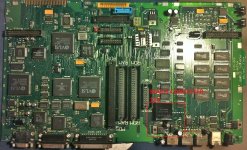
You need to remove the freewheeling diode and somehow insert an ammeter between that diode and the rest of the load. Because if that boost exceeds more than 1.5A or so, itll drop out. Watch the current draw.
I cant remember what all uses that 12V, I think the HDD, serial, audio, and FDD use it.
I dont know what the current rating of the inductor, or the inductance is. I could break out my B&K and measure it, but i really dont wanna tear my portable all the way apart again. lol.
You want to ring check, and inductance check the coil against a known good. That way, it can be ruled out. because if it has shorted turns it can saturate early and the voltage will drop off. but then the regulator will get noticeable hot very quickly at that point.
I cant remember what all uses that 12V, I think the HDD, serial, audio, and FDD use it.
I dont know what the current rating of the inductor, or the inductance is. I could break out my B&K and measure it, but i really dont wanna tear my portable all the way apart again. lol.
You want to ring check, and inductance check the coil against a known good. That way, it can be ruled out. because if it has shorted turns it can saturate early and the voltage will drop off. but then the regulator will get noticeable hot very quickly at that point.
That photo is too blurry for me to make out the part number, but Linear Technology generally has good datasheets and documentation. Most of their part numbers are LTxxxx.
Inserting an ammeter anywhere in the regulator circuit is not likely to work. The current will be pulses and these circuits tend to be sensitive to stray inductance and capacitance. Without an oscilloscope, your best bet may be to replace parts one at a time until you find the bad part(s), the same thing is likely wrong with all of the boards.
Inserting an ammeter anywhere in the regulator circuit is not likely to work. The current will be pulses and these circuits tend to be sensitive to stray inductance and capacitance. Without an oscilloscope, your best bet may be to replace parts one at a time until you find the bad part(s), the same thing is likely wrong with all of the boards.
http://www.digikey.com/product-detail/en/LT1070CT%23PBF/LT1070CT%23PBF-ND/891546?WT.z_cid=ref_octopart_dkc_buynow
the diode is a generic shottkey, but it has to be capable of the current your handing it.
the coil has to be measured.
the diode is a generic shottkey, but it has to be capable of the current your handing it.
the coil has to be measured.
I've used the LT1070 in a couple of designs before, it's a good part.
Datasheet and documentation is here:
http://www.linear.com/product/LT1070
The CKC suffix indicates various options, stuff like temperature range, package style, whether it's Pb-free, etc. You need to start searching by the root part number.
Datasheet and documentation is here:
http://www.linear.com/product/LT1070
The CKC suffix indicates various options, stuff like temperature range, package style, whether it's Pb-free, etc. You need to start searching by the root part number.
Does it not have a 3 digit code on the top? It works the same way as capacitor codes.
You can make a pretty good guess by looking at the datasheet though. It will tell you how to calculate the optimal inductor value based on the desired input voltage and output voltage and current. RTFM
No, I posted a picture. It shows a part number of the coil, but it doesnt really ring any bells on google.
Sure you can go by datasheet, but the exact way IMHO on how they did it is by an inductance meter, but thats just my thought.
I am not entirely sure what amperage the 12V rail supplies, so im not entirely sure what the saturation current of the coil needs to be in that aspect. Of course we know the regulator tops 5A peak. So we can safely assume by using the maximum ratings boundary.
As a start, spec a coil based on the absolute maximum ratings. knowing your dealing with 6v to 7.5v input. and 12v output. But i would ring it to make sure its even bad first...
eh. whatever. lol mine hasnt failed. at least not yet.
Sure you can go by datasheet, but the exact way IMHO on how they did it is by an inductance meter, but thats just my thought.
I am not entirely sure what amperage the 12V rail supplies, so im not entirely sure what the saturation current of the coil needs to be in that aspect. Of course we know the regulator tops 5A peak. So we can safely assume by using the maximum ratings boundary.
As a start, spec a coil based on the absolute maximum ratings. knowing your dealing with 6v to 7.5v input. and 12v output. But i would ring it to make sure its even bad first...
eh. whatever. lol mine hasnt failed. at least not yet.
http://www.mouser.com/ProductDetail/Vishay-Semiconductors/VSSAF5L45-M3-6A/?qs=sGAEpiMZZMutXGli8Ay4kDeC%2frMhms2PGmqbeJ7O5WI%3d
Mouser Part #:
78-VSSAF5L45-M3/6A
Manufacturer Part #:
VSSAF5L45-M3/6A
Manufacturer:
Vishay Semiconductors
Description: Schottky Diodes & Rectifiers 5A, 45V, TMBS
: $0.31
maybe this?
http://www.digikey.com/product-detail/en/LT1070CT%23PBF/LT1070CT%23PBF-ND/891546?WT.z_cid=ref_octopart_dkc_buynow
$10.93 - seems quite expensive.... dammit.
how about this?
http://www.mouser.com/ProductDetail/Texas-Instruments/LM2577T-ADJ-NOPB/?qs=sGAEpiMZZMug9GoBKXZ751B%2faedqEegd7LygRit8d30%3d
Larger Image
Mouser Part #:
926-LM2577T-ADJ/NOPB
Manufacturer Part #:
LM2577T-ADJ/NOPB
Manufacturer:
Texas Instruments
Description: DC/DC Switching Converters STEP-UP VLTG REG
1: $5.97
maybe 3A would be plenty?
Mouser Part #:
78-VSSAF5L45-M3/6A
Manufacturer Part #:
VSSAF5L45-M3/6A
Manufacturer:
Vishay Semiconductors
Description: Schottky Diodes & Rectifiers 5A, 45V, TMBS
: $0.31
maybe this?
http://www.digikey.com/product-detail/en/LT1070CT%23PBF/LT1070CT%23PBF-ND/891546?WT.z_cid=ref_octopart_dkc_buynow
$10.93 - seems quite expensive.... dammit.
how about this?
http://www.mouser.com/ProductDetail/Texas-Instruments/LM2577T-ADJ-NOPB/?qs=sGAEpiMZZMug9GoBKXZ751B%2faedqEegd7LygRit8d30%3d
Larger Image
Mouser Part #:
926-LM2577T-ADJ/NOPB
Manufacturer Part #:
LM2577T-ADJ/NOPB
Manufacturer:
Texas Instruments
Description: DC/DC Switching Converters STEP-UP VLTG REG
1: $5.97
maybe 3A would be plenty?
ok i will keep an eye on that.
It would be much less of a hassle to spend more money and get the right part, instead of making something else work.
Its not like there is a %90 price difference ether, its 50% less expensive, and has 2 amps less power output as well.
I know the diode package is not like what is on there.
looking closer at the pads, I think this one might fit.
It would be much less of a hassle to spend more money and get the right part, instead of making something else work.
Its not like there is a %90 price difference ether, its 50% less expensive, and has 2 amps less power output as well.
I know the diode package is not like what is on there.
looking closer at the pads, I think this one might fit.
Linear Technology parts do tend to be a bit on the spendy side. If you ask them nicely though, they will usually send you a couple of samples free of charge. I've used the LM257x parts as well, originally National Semiconductor and now cheaper clones are made by TI. They work very similarly to the LT parts but do double check the pinout and current rating.
The inductor is really not all that critical. They only come in a handful of standard values and most of these integrated switching regulators will work fine over quite a wide range of inductances and in this case a similar application recommends 150uH so I would expect anything from 100uH to 200uH to work just fine and a much wider range is likely to work to some extent. If you are trying to optimize efficiency then you want to get the value a bit closer to ideal, but here you are just trying to diagnose and I am betting there is nothing wrong with the existing inductor.
Same with the diode, it's not critical. Any Schottky diode of equal or greater current and voltage ratings will work fine, although if the diode tests ok out of circuit then it's highly unlikely to be bad.
There is just not much to this circuit, and most of the parts are easily tested. There is no need to shotgun it and replace everything.
The inductor is really not all that critical. They only come in a handful of standard values and most of these integrated switching regulators will work fine over quite a wide range of inductances and in this case a similar application recommends 150uH so I would expect anything from 100uH to 200uH to work just fine and a much wider range is likely to work to some extent. If you are trying to optimize efficiency then you want to get the value a bit closer to ideal, but here you are just trying to diagnose and I am betting there is nothing wrong with the existing inductor.
Same with the diode, it's not critical. Any Schottky diode of equal or greater current and voltage ratings will work fine, although if the diode tests ok out of circuit then it's highly unlikely to be bad.
There is just not much to this circuit, and most of the parts are easily tested. There is no need to shotgun it and replace everything.
All I can say is order up the parts and try it.
First thing is first though, test all the traces that connect the regulators circuits all together. Follow the datasheet, its example circuit diagram is what I would follow as its likely the same.
Also, check any resistors it may have to form the output voltage.
oh and last but not least, check the shutdown signal. if engaged, thats why no 12V. and the 68HC05 is responsible for that.
First thing is first though, test all the traces that connect the regulators circuits all together. Follow the datasheet, its example circuit diagram is what I would follow as its likely the same.
Also, check any resistors it may have to form the output voltage.
oh and last but not least, check the shutdown signal. if engaged, thats why no 12V. and the 68HC05 is responsible for that.