
Thread
What to do with a Power Mac G5?
you can try installing a new hard drive, what are your speeds, because SATA1 pretty much the best you are going to get is around 65 Megabytes/sec.
you should be getting Atleast 50 mb/sec, there should be a seagate hard drive in there, usually those are pretty fast. also make sure its not the network cable from the the Compute to the router, and make sure its Cat5e, i've had crap cables slow my 1000 m/bit speeds down greatly!
you should be getting Atleast 50 mb/sec, there should be a seagate hard drive in there, usually those are pretty fast. also make sure its not the network cable from the the Compute to the router, and make sure its Cat5e, i've had crap cables slow my 1000 m/bit speeds down greatly!
I think that if I had one of the single processor G5 machines with case parts in good condition, I'd look for suitably bashed higher-end model (for no more than a small sum, mind you) and proceed to swap some parts to make one really good machine out of the two. The case itself disassembles so that even the grill front and back/ top and bottom part can be swapped between machines.
Now, I will admit that I am a luddite, and that the Intel machines have advantages for the web and certain media applications etc., but for almost all of my everyday uses, a G5 has plenty of power and performs with dollops of panache. My own favourite is the dual 2.3GHz, early 2005 model — the pick of the G5 litter.
Now, I will admit that I am a luddite, and that the Intel machines have advantages for the web and certain media applications etc., but for almost all of my everyday uses, a G5 has plenty of power and performs with dollops of panache. My own favourite is the dual 2.3GHz, early 2005 model — the pick of the G5 litter.
That was my first thought as well.Donate it to me
Probably the first thing would be to add more RAM if it's not maxed out already. Then maybe a faster HD like the others have said.
Not familiar with the G5s per se, but getting a faster single-core processor or even a mulit-core setup would probably give it gobs of raw horsepower if you wanted to do more heavy-duty things with it. Swapping in a faster processor would that probably be the most expensive option, but it would probably net the biggest boost. Though it would probably be overkill for a light duty daily-use machine, since any sort of G5 wouldn't be a painfully slow and obsolete machine to start with.
I'd certainly be more than happy to have such a huge step up from what passes as usable around here. My parents are still making good use of a 1.25Ghz G4 iMac for daily use for email, light browsing, and occasionally watching some YouTube videos, and it'd certainly be a big improvement over my workhorse 450mhz G3 Blue & White that does just about everything I've ever asked of it. Unless there's something that makes you absolutely need an MacIntel with the most recent version of OSX, a G5 would certainly be a reasonable machine to have and to put to use.
G5s (and most G4s) are in a really interesting place. They're not really "retro" -- they're definitely somewhat proprietary, and compared to the Macs we've got today, they're odd, finnicky old beasts with limited hardware support, etc. I would be zero surprised in a few years to find that people are comparing the likes of PowerMac and iMac G5s to SiliconGraphics and Sun MIPS/SPARC workstations. Useful in their day, but didn't keep very well and had a fairly limited shelf life after their vendors stopped actively supporting them. (Maybe HP/HPPA or DecPaq/Alpha is a better example than Sun here, because I hear one or more of the BSDs has very active sun/sparc support.)
All of that having been said, if I had a G5, I'd probably use it for much of what I would have done the day it was new in 2003 -- as little Internet as possible, minus maybe an IRC client or an ssh/telnet session, and period-appropriate productivity and graphics or media apps.
At this point, programming for those older versions of 10.x would only really be useful as an exercise in patience, and if you're really intent on porting. (ClassicHasClass may be the best resource for what to do to get started with programming for old versions of Mac OS X. I know that 10.3/10.4 had xcode in the box, starting with 10.5 it may or may not have been on the install CD, but I'm also sure xcode is available on Apple's web site.)
Other than that, I would keep it around. If it's not broken now, it won't be any time soon. The bad caps issue really affected the eMac and one or two models of the iMac G5 the most significantly, so a G5 would be worth cracking open every few years to check on, but probably won't be wildly leaky.
The unfortunate thing is that unless you're running a pretty specific floating-point heavy workload, a G4 or almost any modern Intel computer (Prescott Pentium 4 and newer, Atom, maybe even Pentium M) will outrun it, numbers-wise, and finding updated software for Mac OS X 10.6/10.7 on Intel and Windows/Linux on x86 is way more easy than it is on Mac OS X/PPC. Additionally, a machine with an atom in it will take a tenth (probably less) the electricity that a G5 does, while still being faster and having more/faster interconnects. (There are atom boards available with six SATA-3G/6G ports, and multiple PCI/PCIe ports for additional HBAs, if you're really interested in having a server with any big amount of storage capacity.)
That having been said. The G5 is fairly recent and because it's a Mac, a whole bunch of commercial software was available for it in its day. What can't you do with a G5? Technically, a G5 could do everything I do on my current computer. It would be slower and I would arguably be wasting electricity, but it could be fun, and ram/disks are so cheap, if you're running less than 4 or so gigs of ram and there's any indication your disks might not be performing well, the cost of more ram and new disks would make it worthwhile. (I suspect with 4 gigs of ram, and a new disk or two, 10.4 or 10.5 would run pretty well on a G5, and may even be useful, but it depends on your workload and patience.)
Another thought: Is there anything you want to do with a G5? There are a few of us around who might remember what app people would've grabbed back when G5s were new to accomplish that task.
wow 29 bucks! free shipping,
http://www.ascendtech.us/foxconn-45ctp-intel-atom-single-core-230_i_mb4fox45ctp330s.aspx
all that ATOM talk, and a google search...
these will run up to snow leopard and are 100% supported,
even the GMA 950 it's fully CI AND QE supported!
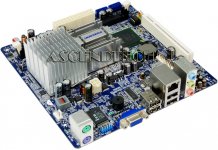
http://www.ascendtech.us/foxconn-45ctp-intel-atom-single-core-230_i_mb4fox45ctp330s.aspx
all that ATOM talk, and a google search...
these will run up to snow leopard and are 100% supported,
even the GMA 950 it's fully CI AND QE supported!
A 1.6GHz isn't going to be much faster than a top-end MDD and has much less hardware and OS support, unfortunately.
I use a G5 as my daily driver and main development workstation, but I have a quad 2.5GHz and even by today's standards is still no slouch. Either the quad or the fastest air-cooled (I think that's beachycove's) would be my recommendation; the quad is the only liquid cooled G5 that's worth the headache. I would have trouble thinking of stuff to do with a 1.6GHz too, unfortunately. It's not a terrible Mac, just sort of an odd duck in that it was not significantly faster than the machines it replaced and had more drawbacks.
For programming, Xcode came with 10.4 and you can get 2.5 easily enough (I don't think Apple has expunged it from their servers yet like they did MPW). I build TenFourFox with Xcode 2.5 and the Xcode 3 linker which one of our contributors ported to 10.4.
Honestly if you can't think of anything you need to do with it then you have two choices, sell it for what you can get (very little) or shelve it for a couple years until you get the urge to revisit it.
In the 90's I kept a few of my old 486/Pentium 1 boards (since they were not worth anything) on a shelf incase I ever wanted to use them for something. It took a decade or so but I eventually wanted to go back to that era and the parts came in handy. With all hardware the value of the stuff drops down to nothing but after a while they do get harder and more expensive to replace. In a few year anything non x86 is going to be hard to find with all the recycling going on. If you happen to be one of those people who likes revisiting old computers then keeping a G5 around might be a good idea.
In the 90's I kept a few of my old 486/Pentium 1 boards (since they were not worth anything) on a shelf incase I ever wanted to use them for something. It took a decade or so but I eventually wanted to go back to that era and the parts came in handy. With all hardware the value of the stuff drops down to nothing but after a while they do get harder and more expensive to replace. In a few year anything non x86 is going to be hard to find with all the recycling going on. If you happen to be one of those people who likes revisiting old computers then keeping a G5 around might be a good idea.
In terms of G5s, classichasclass is pretty much correct. the 1.6GHz G5 isn't going to be very fast. The main reasons to use one are "I'm testing it" or "it was free and I had it hanging around."
Atoms aren't that great for Mac OS X, if you want to build a new Mac using non-Apple parts, it's my "you didn't hear it here" reccomendation that you get something with a Core2 processor and a 965 or 3-series chipset. Any Core2 will make the G5 cry for its mother, and if you're going OS X, it's a reasonable presumption that you're wanting something at least semi-modern anyway.
An Atom will be suitable if you're looking only for low power consumption or you're looking for linux/bsd, or a toy OS like reactos or haiku.
I would agree with Unknown_K's assessment that when you've got a system in the "zone of uninteresting" the best strategies are either to sell it for what you can get (maybe to somebody who still really relies on that particular hardware for whatever reason, and is willing to pay for even the slowest machine) or shelve it until it's more interesting from an actual historic standpoint.
Atoms aren't that great for Mac OS X, if you want to build a new Mac using non-Apple parts, it's my "you didn't hear it here" reccomendation that you get something with a Core2 processor and a 965 or 3-series chipset. Any Core2 will make the G5 cry for its mother, and if you're going OS X, it's a reasonable presumption that you're wanting something at least semi-modern anyway.
An Atom will be suitable if you're looking only for low power consumption or you're looking for linux/bsd, or a toy OS like reactos or haiku.
It was removed due to pretty extreme abuse. We tried asking, we tried asking again, we tried asking again, ad nauseum, until it was easier to make one of the tools away. Sad but true.
I would agree with Unknown_K's assessment that when you've got a system in the "zone of uninteresting" the best strategies are either to sell it for what you can get (maybe to somebody who still really relies on that particular hardware for whatever reason, and is willing to pay for even the slowest machine) or shelve it until it's more interesting from an actual historic standpoint.
I've got the same problem with a dual 2.5. It was given to me because it was overheating and Apple couldn't solve the problem. Sat there for about a year before I looked at it. Blew out a lot of dust and it was no longer overheating even when rendering video. But what to do with it now? It's too noisy to run videos on my TV. I now have 3 Macbook Pros and a Macbook as well as a couple of overclocked 1.42 MDDs and a dual 1.8ghz DA. I just can't think of anything that I couldn't do as well or better on one of these.
The case for keeping such a machine around definitely diminishes when you've got a bunch of faster MacBook/Pros around and you have no specific need for a G5 or for an older version of the OS.
A dual 2.5 G5 is probably faster than most of the G4s, and will hold more ram, but there's a good possibility that most software that'll run in 10.4/10.5 won't take advantage of the G5's specific type of extra horsepower, without being faster still on an Intel computer.
A dual 2.5 G5 is probably faster than most of the G4s, and will hold more ram, but there's a good possibility that most software that'll run in 10.4/10.5 won't take advantage of the G5's specific type of extra horsepower, without being faster still on an Intel computer.
This discussion is just a little nauseating for this site — 68kmla my ass. Thus, please excuse the following rant.
The truth is that the switch to Intel and associated developments in the land of software (Wirth's Law, Flash, and the relentless onward march—but to where?—of the web in general) have made G5 towers redundant in the popular imagination, which has the knock-on effect of making them cheap, plentiful and (in practical terms) perfectly collectable for the rest of us. To that extent, the state of the G5 presents a welcome opportunity.
The machines are, in a nutshell, vintage by computer standards (much of which is a stitch-up and a con, but I'll not go there just yet). Now, in the land of vintage computers, which we are all on here to talk about, I prefer to use professional-grade hardware when I can (Quadra 950s over LC475s, for example). Among more recent machines, the G5 towers fit that particular description, rather better than, say, might an early MacBook. A single-processor G5 maybe doesn't, admittedly, but a 2.3GHz duallie certainly does. Unless I had compelling issues related to portability, therefore, I'd take such a G5 tower over an early MacBook any day, essentially because the former will outlive the latter, has dollups more class, and in that sense and more kicks early MacBook butt. Speed is frankly over-rated; so is wasting one's youth on Flash and online video. I prefer interesting engineering and design quality.
There is a workable solution to the conundrum that arises when perfectly good tools are being displaced by the ephemeral lure of having and holding ever-newer, faster ones — don't buy new if you can avoid it. Be a Luddite, resist the hype, maximize the astonishingly untapped potential of the older tools (e.g., by learning to program in a TenFour Fox kind of way, or by buying abandoned software for them — like, say, Logic for ppc, or learn to compile for OSX on a risk-free box) and so reuse what others discard, before—eventually, admittedly—you yourself have to recycle it. Run the right software on it (which is what really matters), and make the computer industry poorer, while keeping yourself richer in the bargain. You will lose out on almost nothing, apart from having been had.
A perfectly functional professional-grade computer tower ought to keep getting used as long as possible, like any $3000+ tool in a rightly-ordered world. In what other walk of life do we throw such tools away so readily? It would be seen as barking madness in, say, a woodworking shop, or even in a hospital, and it ought also be be taken as madness in our homes and on our desks. Yes, there comes a point when technologies need to be replaced, but there also comes a point at which the recognition should dawn that Lemming-like behaviours are endemic in the world of computer consumption and marketing, and that they are best resisted. Yup, that's us (you can still watch that in HTML5 on yer G5, BTW).
What to do with a G5 tower? Put it together with another one that has been abandoned, like I said, and make one better than both. Or in its current state, find someone else who can use it if you can't, even if it is only in order for them to experiment with OSX or Fedora (ported to PPC again) or with compiling, and thus give it away ("He who has two cloaks should give to him who has none"). That would really be something remarkable to do with a G5.
My $.02.
Writing the G5 TenFourFox backend taught me an awful lot about how to optimize for the chip, and actually applies pretty much to any later POWER system. I think I can say unequivocally that an awful lot of software was never well optimized for it.
But I know that defending the G5 is pretty much impossible around here.
I guess what beachycove said is very true, many of us like to say oh the intel x is better blah
Apples hype is seductive.
The industrys march for more bandwith, more speed, more upgrades is nearly sickening.
My concern is the pace of evolution is getting way too fast. Instead of writing cleaner code, developers seem to just write more bloat expecting you to own the newest gadget.
i.e why keep your iPad 1 or Macbook for 4 years? Buy the iPad HD 5 WOW SUPER FAST NEW 3d 4g 5z 16Q version with Siri1.2b L56 with BookFace Intergration and TwitDerp telecasting.
If you dont, no Angry Birds SpaceSpaceUltraHD for you.
Why keep your iPhone for 2 years? Get the newer one with the wifies and the geebees.
-end minor rant mode-
This new massive-data transmission internet is horrible for a lot of people who live in areas where they cant get fast broadband. Who wants to wait 20 hours to download an OS update? (for example a 10.x.x update)
I have. I didn't violate them, did I?
I apologize for the missing of the quote button. I'm just used to seeing it on the main thread page
I suppose I was looking for something interesting to do with it. I had always thought of the G5s as very powerful machines, but I suppose in relation to Intels they are practically useless.
Good speech, and I heartily agree (except for not replacing old machines in your main workflow, as I'm a big current tech geek too). As for your suggestion for Logic or compiling, I might just do that. Those were the first nonstandard answers on what to do with it.
The 970 chip has fairly good floating point performance, compared to contemporary Pentium 4s. This is really only useful if you're doing media work or content creation stuff, like rendering.
A dual 2.3GHz G5, as an example, outperforms a contemporary single-socket Pentium 4 (Prescott 2M chip in a box sold mainly for use by people running Word, Excel, and Outlook) by maybe a 20% margin at an FP heavy benchmark like Cinebench.
*dramatic pause*
Woefully, I haven't been able to obtain a contemporary dual socket Netburst Xeon system to find out much it crushes the G5 at everything Apple wanted you to believe it was good at.
But, if you're already using newer computers to do any given creative or horsepower-intensive task, unless you specifically want to migrate to an older version, I wouldn't really bother. It might make a poor learning platform too, since you're more likely to find programs offering current versions of software for student (such as autodesk's free software program, and Microsoft's Ultimate Steal) than it will be to find discounted versions of old software. (Outside of eBay, of course, where you can probably find software one or two versions back pretty easily.)
So, it's a computer, it'll run apps, it'll run all the same apps today as it would when it was new, but it's unlikely you'll be happy with its performance at anything but relatively basic tasks, or anything you're willing to wait a lot longer for than you might wait, say, for a first-gen MacBook/Pro or intel Mini to complete the same task.
It has been suggested that linux and/or the BSDs may be a good way to extend the life of a G5, but it depends wildly on the apps you want to run, and you're still going to be running into the 970's performance limitations, and hardware support may be limited, so you may make the decision that it's more worthwhile to run linux/bsd on said 2004/2005-era netburst excelbox.
The G5 is an unfortunate system because it was sold as a high performance workstation, and it just does those tasks in a less than admirable way, when you really start comparing them to other types of computers, even its direct predecessor. With enough marketing effort, it probably didn't matter how much it performed compared to a G4 or a Pentium 4, because I bet Apple was selling a lot of these to individuals/researchers/universities moving to the Mac from MIPS/IRIX, HPPA/HPUX, Alpha/Tru64 and Alpha/OpenVMS, and SPARC/Solaris.
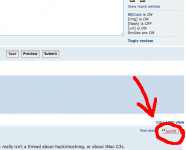
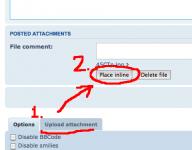
Adding the attachment, then clicking the "insert inline" button is the best way. You'll avoid a bunch of duplicate filenames hanging around in posts. Also, one thing I do in posts that are heavy on formatting or images is use the preview function to verify how it'll look.
That having been said, this thread remains about G5s, not about casemods. Plus, everybody and his mother and his dog has been putting ATX boards in Macs since forever. It's not new, nor is it exciting, nor has it ever been called "re-powering."
Excessive quoting. Not a "rule" per se, but part of our house style, as described in the block I pasted into my post.
Sorry, that wasn't addressed to you. It was addressed to the post directly above it, by uniserver. In this house, we read down the page - hence we don't need to quote the block directly behind us.
And there's the thing. Between that and the fact that certain tools are only available on OS X (and no, you don't argue "but WinCinema9000 is just as good!!" to an artist) the G5 machines remain useful in that niche - especially if they can be picked up for cheap. I know a number of video, audio and still image people who have picked up G5s in the last few years when they couldn't afford a Mac Pro. Of course, the more cores you can get the better - and the availability of Firewire and PCI/e/x slots is a plus within that niche, especially for people trying to get the best out of their investments in older or second-hand equipment.
Not that this redeems the G5, but according to both the flops.c benchmark and the classic SETI@Home CLI client a 2.0Ghz Xserve G5 was brutally fast at number-crunching compared to a 2.8Ghz/533Mhz FSB dual-socket Dell Poweredge 2650, which was a current machine at the time I tested both of them. I probably still have the numbers around *somewhere* (if I looked through enough ancient hard disks), but basically per-Mhz the G5 scaled about the same as the contemporary AMD Opterons. Which, in case the world has forgotten, easily humbled Intel's offerings prior to the Pentium M and Core series CPUs when measured in terms of IPC.
Huh... I do actually have some numbers from slightly before I tested the G5 still sitting on my work machine. (The newest Mac in these files is an 867Mhz G4 Powerbook, so, yeah... maybe this was about a year prior.) Want to see how bad Intel sucked at the time? Here's the FLOPS results from a 2.4Ghz/400Mhz FSB PowerEdge 2650 Vs. a two year older consumer-grade 1.33Ghz Athlon Thunderbird. (In an SDRAM, not DDR, motherboard no less.)
Athlon Thunderbird 1.33Ghz, Asus motherboard:
Code:
 FLOPS C Program (Double Precision), V2.0 18 Dec 1992

  Module     Error        RunTime      MFLOPS
                           (usec)
    1     -8.1208e-11      0.0236    593.3775
    2      1.4704e-15      0.0084    835.4312
    3      1.5743e-13      0.0187    906.6667
    4      1.7658e-13      0.0154    973.3840
    5     -4.6207e-13      0.0369    786.0244
    6      3.9452e-13      0.0288   1008.6957
    7     -1.4600e-11      0.0510    235.1320
    8      4.8178e-13      0.0334    898.7712

  Iterations      =  512000000
  NullTime (usec) =     0.0004
  MFLOPS(1)       =   857.4557
  MFLOPS(2)       =   464.0668
  MFLOPS(3)       =   702.5564
  MFLOPS(4)       =   945.0710
Code:
 FLOPS C Program (Double Precision), V2.0 18 Dec 1992

  Module     Error        RunTime      MFLOPS
                           (usec)
    1      4.0146e-13      0.0163    856.7963
    2     -1.4122e-13      0.0143    490.4153
    3      4.7296e-14      0.0205    827.4430
    4     -1.2546e-13      0.0163    919.3481
    5     -1.3756e-13      0.0390    742.7559
    6      3.2374e-13      0.0361    803.8662
    7     -8.4583e-11      0.0491    244.5778
    8      3.4872e-13      0.0382    786.2196

  Iterations      =  512000000
  NullTime (usec) =     0.0001
  MFLOPS(1)       =   565.7506
  MFLOPS(2)       =   468.3017
  MFLOPS(3)       =   677.3624
MFLOPS(4) = 819.1257(As to SETI, my recollection was that on average a 2.8Ghz PowerEdge could manage a work unit in about three hours, give or take 20 minutes, while the G5 consistently hovered around the two hour mark. This being measured with the UNIX "time" command.)
Certainly small floating-point benchmarks or SETI scores are not a complete picture of how various CPUs actually performed in the real world, but for at least some tasks the G5 had *genuine* Supercomputer credentials (for the era) compared to a contemporary Pentium 4 when it came to massive number crunching. The problem is that interactive desktop computing for the most part lives or dies based on an instruction mix weighted towards integer performance and "responsiveness", not FPU, and the G5 seems to curiously suck at that sort of thing.
(I no longer have access to a G5 so someone else will have to do the work of compiling useless benchmarks and running them if they want to confirm or dispute my shoddy memory.)
Which G5s were you testing against? Anything except the first generation wouldn't really be "contemporary" -- the PE 2650 was released in 2003. The Pentium 4 to which I refer was an OptiPlex 280, which used a newer Prescott or Cedar Mill processor. It was a dual 2.3GHz AGP G5 (2004-2005-ish) compared to a single-socket 3.6GHz Pentium 4.
I'm not saying anything about anything vaguely Northwood-based, because Northwood and older are definitely not that great.
SETI may be even more gloriously optimized for the G5 (or just incidentally hits on the G5's strengths) than CineBench, too.
The 970's position is a supercomputer chip is bolstered by the fact that its family members were installed, well, into supercomputers. (Or some variant therein)
Woefully enough, that doesn't translate into good performance using desktop apps on Mac OS X, and the Pentium 4 has ALWAYS killed at integer performance, and it just so happens that by the time Prescott and Cedar Mill showed up (which, yes, are really late in the netburst game) -- they were pretty good at FP too.
Keep in mind that compared to the other chips in the POWER family (which got used in IBM's supercomputer/research class machines, and in clusters, and in scale-up servers) the 970 is pretty well gimped, too. IBM only used the 970 as we know it in one or two products. An unpopular CAD workstation and a workgroup file/web server come to mind. The 970 would've done great a few years earlier, even scaled back appropriately for performance.
What it comes down to more than the fact that the 970 was an inappropriate microprocessor for Macs, is that when you made all of the concessions you need to to run a 970 in Mac hardware, the computer that was based around it ("Power Macintosh G5") is a pretty awful machine. It's predecessor and successor both support twice the number of disks and optical drives it does, and have more slots, and have more choice in terms of graphics and other expansion hardware, and also each take less electricity.
I would gladly have given all of that stuff up if the 970 truly, actually, killed it in terms of performance, and hit the ball out of the park, and was legitimately faster at running Mac OS and Mac OS applications than the G4 was. Unfortunately, for the first generation or so, this just wasn't true. (SETI is a science/research application, not a Mac application, and it's far from a desktop application. The fact that it'll run therein notwithstanding.)
Also worth noting: X86 PCs didn't have to be good at FP, hell, most of them still don't have to be. FP just isn't part of most "desktop" workloads. It's a part of some workstation workloads, but the G5 was a bad workstation, and Apple didn't even try to use the W-word when selling it. Very telling, I think.
All of that doesn't make the G5 any less capable of running whatever apps it could when it was new, but it does have pretty significant performance and efficiency implications. And trying to find a G5-optimize application or process just to take advantage of a G5 just seems... misguided... to me. Just my take though.
I was testing a first-generation 2.0 Ghz Xserve G5, introduced January 2004. The PowerEdge 2650 was released in 2003 (same as the first desktop G5s, incidentally), but its replacement, the PE2850, wasn't available until July/August-ish 2004. So at the time I was playing with them both machines were *brand new* and thus my vague recollections seemed a reasonable reply to your specific comment about wishing you had a "contemporary dual-socket Xeon" in order to judge just how badly it would "spank" the G5. Prescott Xeons didn't come out until June 2004, (February 2004 for the desktop chips) so comparing a Prescott to a G5 is (semi)-dirty pool; mainstream state of the art in Xeon-land as of Jan 2004 (or June 2003, for that matter, intro date of the G5 desktops) was the 130nm "Prestonia", mainstream Desktop was Northwood. (The extremely expensive "Gallatin"-based chips with additional cache were announced in September 2003, so I suppose you could count them as the G5's true competitor, but architecturally they were basically overclocked Northwoods and didn't perform much differently per-clock.)
On the flip side it is worth noting that the Xserve G5 did have the advantage of being equipped with the improved 970FX chip, rather than the original 970, along with a high-powered cooling system so it's numbers *are* going to be better, or at least more consistent, than those produced by the original G5 desktops. I remember a little bird (who definitely would of known the truth) once telling me that Apple used to run their benchmarks for those systems in *strictly* temperature-controlled rooms because the original non-FX units would start to throttle the CPU if the inlet temperature of the boxes rose above something like 78 degrees while under load. I don't know if/how much he might of been exaggerating, but... by all means, by pointing out that the G5 was "good at some things" I'm certainly not arguing it was a good mainstream CPU.
Where to begin? First off, "68kMLA" by definition is a place where people who like 68K Macs and maybe also some other kinds of computers congregate. It is not a place where people have to avoid using newer hardware or are obligated to be some kind of computing ascetic, denying themselves any technology they don't absolutely need. We all have our reasons for coming here. Don't presume that you get to decide what the 68kMLA means. We're not even talking about a 68K machine here; there is no need to act superior.
The fact that agg23's Power Mac G5 is still useful does not mean that the advantages of new hardware are "ephemeral," much less that people who buy new hardware are "being had." Being a Luddite doesn't just mean using older hardware and being comfortable with it, it means distrust and hostility towards new technology, which is the absolute worst position to take as someone who is using an older computer. Why are you encouraging this kind of thinking?
From December 2003 through May of last year, an MDD Power Mac G4 was my primary computer. It started to show its age in the last few years of this, but it still did everything I wanted it to do. It was, and remains, a great machine (although I've barely used it in recent months). However, an opportunity came up to get a Sun workstation with a Core 2 Quad and I decided it was time to move up. I know what it's like to be in the position of running hardware that is no longer supported and doesn't keep up with all the new stuff, and it's not bad if you know what you're getting into. Being suspicious of technological progress, or assuming that new technology has nothing to offer you, is far from this. I always knew what new hardware could do that my G4 couldn't do, and as long as I was okay with that it could still be my primary machine. I let the issue of its replacement come up at a natural time without forcing it or attempting to use the machine as a daily driver for as long as humanly possible. Things like watching HD video and virtualization were not possible with it, but I do them on a regular basis now. I use less power not only from the machine itself, but from the fact that my house's climate control system no longer has to compensate for my computer. The machine I replaced the G4 with is every bit as elegant and interesting, and manages to do many times more while using less power and generating less heat. Since then I've bought two i7 machines, not so I could watch Youtube videos more easily, but because they were well-designed and efficient tools for the things I wanted to do with them.
Manufacturers and retailers of computers obviously market them because they want to sell their product, which seems to leave a bad taste in your mouth judging by your use of loaded words like "hype" and "lemmings." You're making too much of it, though. Anybody who is selling something is going to market it because they need to sell things to stay in business. This is natural and does not mean anything at all. It doesn't mean you need their product, but it doesn't mean it has nothing to offer over what you already have, either. Replacing a computer is a decision to be weighed based on what the current machine does, what the new alternatives have to offer, and and what kind of tasks are being done. Generalizations like "don't buy new if you can avoid it" have no place in that judgment.
So, personally, a 1.6GHz G5 is not something I would go out and buy, but if you've got one laying around, go ahead and use it. There are plenty of things it can do, which have been discussed. If nothing else, install BSD or Linux on it and let it be a headless server. If you come across an opportunity to pick up upgrades for cheap, by all means, spend a bit of money on it. Just don't fall into thinking that new hardware has no practical advantage, or that buying new computers amounts to being scammed. You don't have to abandon perspective in order to enjoy a G5 (or any other older computer) for what it is.

Wow, I missed this the first time through.
If that's your notion of what the 68kMLA is about, then you clearly haven't been around long enough, or you have just completely misunderstood everything you've seen since you got here. As ianj says, the 68kMLA isn't about actively pursuing the opportunity to be a luddite. There's really nothing noble or admirable in being a luddite or avoiding upgrades that are worthwhile, justicable or needed in the pursuit of some kind of higher calling.
When this site was new, we weren't "collecting" 68k Macs, nor were we actively attempting to be luddites. We were buying these things used because they were a budget-friendly way to get a reasonable amount of computing done in a then-reasonable amount of time, for a reasonable amount of money. The World Wide Web (and high multimedia integration therein) had not exploded at all the way it has in the decade since I joined up at the MLA, and to put it bluntly, no re-compiling was needed to make an 840av and an iMac or PowerMac G4 run the same version of Internet Explorer. (up until 5 came out, but web standards changed very slowly back then and IE4/5 had the same functionality for a long time.)
At present, I notice a few people trying to do the same thing with decade- (or nearly-decade-) old G4 and G5 systems, and it is kind of bothersome because a lot of stuff has changed since then. For example, not counting inflation, the cheapest Mac today costs half what it did in 2002, and is super easy to expand into something pretty incredibly powerful. Plus, it wasn't until the middle or late 2000s that we really started to see computers start to ship with an excess of computing capacity.
In 2002, even on my TiBook (which you'll learn later in this post cost my family $2800 when it was new) wasn't really so powerful and didn't have so much excess horsepower that I really felt like it was a machine purchased for its ability to last a long time based on the fact that it was too much computer for my needs today.
But, generally I'll give somebody using PowerPC as their home computer a pass, so long as they aren't talking about how much faster it is than an Intel system. I'll even let some instances of "it does what I need" if it's discovered that they're using contemporary apps.
A lot of people do, but I'll admit, I tire of that attitude. Go hang out with the SGI or Sun or DECPaq people if you want a platform where every model was a professional-grade computer. In the grand scheme of things, Macs haven't ever been very high end. There are high-end Macs, but Macs are not high-end computers.
If you go backward in time, "high end" computers are very very expensive. Today, I could afford to bring home a Mac Pro, but in 1990, somebody with my type of job would have had to save a long time to bring home a Mac IIfx.
What do you use your machine for? Not every use case really requires that the tool be $3000.
Previously, I was in the process of entering the dangerous and sexy world of professional photography, but then changed to business/information systems school, and now I work in an IT environment at the university. I can tell you that the notion that a desktop machine should last forever is patently false in almost every applicable context. To put it bluntly, $3000 is not enough spent on a computer to justify trying to make it last far beyond its prime, which in microcomputers that fit on desks and can easily be carried by one person, is not a very long time.
In an institutional environment, even if a computer (let's say it's an early Pentium 4 based Dell Precision workstation) cost a lot and was a really useful productive tool when it was new, today at ten years old, it would cost more to support than it would to just buy a new Dell desktop like an OptiPlex 780 or 790 that could virtualize ten of the old P4 box. And you can't just presume that a computer will never need support, parts, or to have its software maintained. It's also unfair to suggest that the entire institution should avoid upgrading just so that a few old boxes can be maintained without it causing a major disruption in service to the "standard" computers. (1)
In an individual's home, they last a good while, but that's because an individual is going to have fewer things to support and is going to have to spend money and time supporting a piece of equipment anyway so it matters less if that equipment is old.
In the context of professional tools (even an individuaol professional operating out of his or her own home), especially in the situation that you are using the computer directly as a tool that does your job and makes you your money, a willingness not only to invest more than $3000 for the computer itself, but to reinvest in that tool every few years should be of paramount of importance.
Let me put it this way: When you're a professional photographer, the faster you can view, process, and output your images and get them to the customer is all the faster you can get back out into the field to start taking more pictures and getting those pictures to their customers. Unless you're enough of a big-shot to have a dedicated editor, you'll want to have the fastest possible tool for that job. (And if your editor works for an hourly wage, I bet you'll want to equip him or her with as fast a computer as possible, to reduce the number of hours they'll be billing you, or to increase the amount of work they do in a standard day.)
The "photographer" example is compounded by the fact that photographers tend to pick up new cameras once every few years, to catch up with the advances in imaging technology or to advance the types of services they'll be able to provide. (You can't shoot sports on a Hasselblad, and if you're doing art landscape or fashion photography, your quick-shot Nikon or Canon may not capture enough image data to produce a very large print.)
A good example of this is when I replaced my 6mp cam with a 12mp cam, back when I was still on the photography track. Even though I was already using Core2 computers for my photo workflow, I noticed a slowdown as my computer's storage subsystems spent more time shuffling the same number of photos (now bigger) from place to place, and I noticed a reduction in the overall number of photos I could view or process at once, and I noticed an increase in the time it took to convert a certain number of camera raw files to DNG files, using Adobe's tools.
Of course, it was still fast enough that I didn't consider replacing the iMac right away, but enough that I became pretty well aware of the impact that computer performance would have on my life as a professional photographer. If I was a working photographer making money, there would be no reason for me not to buy a new computer every few years to compensate for new camera bodies, increases in volume of work, and to take advantage of advances in microprocessor technology that make my job go faster.
Compare this to the tools of a carpenter. One hammer, unless you need specialized ones, will probably last forever. Likewise, a car can last a long time, because the nature of its work doesn't change. You can't really buy a faster hammer.
Now, I understand that not every job people do on a computer is really going to see such clear benefits from upgrades, as photography does. If you're writing, then you can probably write just as well on a Mac Plus (I'll allow for 4mb of ram and a hard disk) as you can on a Mac Pro. My understanding (this bit is specifically for beachycove) is that you mainly work with text. Correct me if I'm wrong, but unless there's really specific graphic layout or conversions involved (LaTeX or PDF creation, or you're doing graphic layout for a publication) then why is a "professional" computer even needed? Microsoft Word runs just as well on my mini as it would on a Mac Pro.
Is it just an aesthetic preference, sort of how I happen to prefer that my minitowers be OptiPlexes, or is there a legitimate reason why text processing even requires a G5? If you're not going on the Internet and your e-mail and file transfer services/protocols work fine with what's available on a G3 or G4, and you literally ONLY use your computer for work purposes, then why ever upgrade at all, and why bother with a high end computer? (I explain later why I would, and why an institution would, but as an individual professional, or as a home user, this interests me.)
That having been said, I've bought/owned new "professional" computers for use at home before, and on a few of them, I've spent quite a bit. My TiBook was $2800 when it was new, my current ThinkPad was $2200 after deep discounts when I bought it, and my server was $1200, plus $1000 in upgrades, plus probably $500 in storage supplements after that, and I'm planning either my next $1000 storage/backup server, or more upgrades to the main virtualization server. (Meaning that when I'm done with it, well over $3000 in new parts will have gone into this one computer, which at this point is just about 16 months old.)
I bought those high end computers for a reason, and if the pattern shows you anything, I'm probably not going to stop. Buying a high end computer isn't like buying a high end car where you can do it once in the '90s and then just stop forever -- unless you've managed to seal its tasks, and your own tastes and preferences, in time. The point of a "high end" (but still desktop) computer is that you need as much grunt or flexibility or whatever right now.
Buying a computer for its functionality six or more years in the future always has been and always will be an incredibly misguided thing to do. What I've seen time and time again is "I bought this system that was about six times more than I needed when I bought it, and cost twelve times what I should have paid, I am now using it way over its capacity because I spent all my money a few years ago when I bought this system, thinking I would never outgrow it." Either that person is once-bitten twice shy and thinks they will always out-grow every computer very quickly, or believes that the computer is responsible for a few more years of service to them, even though they have clearly outgrown it, and outgrown its expansion/upgrade options.
The need to replace machines regularly is especially true for somebody who manages to use all of the functionality or capacity of their brand new high end computer right away. My server has a lot of scalability built in, but at the end of the day, I actually know exactly where its capacity ceiling is (two of these, (2)), and I know how much it will cost me to get to that ceiling, and I know how much it'll cost me to get to a new machine, and I know what parts I can bring forward to a new machine.
If I weren't already running my server at capacity (2) and I was sure I wasn't going to be able to use the capacity of the computer I bought as my server, I probably would just have bought something way smaller. There is very little sense in buying a computer because you think it'll be useful for something you're going to be doing in a certain number of months or years, or you think you can predict the rate at which your need for computing capacity will expand.
Because somebody is going to mention it, it's worthwhile for me to suggest that there are types of computers that don't need or merit regular replacement. If I buy a computer (It doesn't matter what class of machine it is) and it just keeps doing its job and legitimately, the performance needs don't ever outstrip that machine's capability, there's nothing so much more efficient as to justify replacing the machine for efficiency purposes, and it continues running updated and secure software, then it wouldn't be on my replacement list. Something like a dectop (barring hard disk failure) running a small web site is a good example.
Outside of my retro computers or hobby machines, I replace computers for one of the following reasons:
- There is a useful performance increase in buying a newer machine (such as in the photography example)
- I have reached the capacity of my current machine (such as with my virtualization server)
- because there are security benefits to a new machine (such as with a PowerPC Mac, on which it's important that I was running Mac OS X, and I was using for production work where the app is available as a UniversalBinary)
- because there are reliability or energy efficiency benefits to a newer machine
- the cost of replacement parts for that machine have reached an unreasonable level (IDE hard disks for laptops? Just three new disks later and you really should have just bought a new machine with one of those AMD fusion processors that uses newer, cheaper, faster SATA disks.)
I can honestly say that i think the only time I would expect a computer I bought new to last a long time (like, I bought a machine starting with the expectation that I'd use it for more than three or four years) is if I were to spend the money on something like an HP Integrity or an IBM POWER system -- a computer that cost me more than $5000 up front which I was going to be using/maintaining over the course of several years mainly just for the fact that it's cool or different, not because I can utilize that amount of horsepower. It's way out of my regular purchasing habits anyway. (But, oh man, can you imagine how awesome OpenVMS must be on that HP RX2800i2?)
As long as we're talking about big systems, that's maybe another avenue to explore for just a brief moment. Some organizations buy computers (true professional computers, not just business-class desktops/laptops or desktop workstations) that cost hundreds of thousands of dollars, if not into the millions. Most of those same organizations have standard three, four, or five-year desktop replacement cycles, but I happen to be on board with the notion that it's totally reasonable to expect your million dollar research supercomputer to stay operational a little bit longer than that. Plus, in the '90s and earlier '00s, UNIX servers cost a lot more than the commodity servers that can these-days replace them. I know that at my institution, a bunch of the web servers that have been taken out of service in the past year or so were a decade or so old. The new servers might not last that long, but it'll be because the workload outgrew the machine. (We're switching away from discrete, physical machines, one for each task, to virtualized servers running on commodity hardware for most tasks. When a task outgrows a machine, we can just increase its resources, or add another server in order to give it more room.)
Modern technology makes a huge difference in the datacenter, too. One of our old UNIX servers (whose job, by the way, was mainly hosting static HTML files) was a purple, SPARC box with two or four processors that probably drew 400 or 500w. It was replaced with a new server that draws 200W, has eight or sixteen cores, and does the work of a whole rack of those old machines.
The G5 as a product was horrible. Yes, it was based vaguely on a family of supercomputer-class chips, but it was cut down in all the wrong ways to make it affordable for a desktop computer, it held half the number of disks and optical drives as its predecessor, it had fewer expansion slots than its predecessor, and its successor shares in the interesting and successful visual design while actually producing a computer that's truly (or as truly as Apple will ever get) desktop-workstation class. (You can get a Quadro graphics card for it, but you have to know what you're doing to even bother with that -- the card alone is like $2000 and it has pretty poor drivers for most every day Mac tasks, but it's what you'll want when doing sustained 3d rendering or a bunch of AfterEffects work.)
Add to that, comparing the G5 to a MacBook/Pro is kind of unfair because it's fairly well established that Apple hasn't really sold a professional or business-class laptop for a very long time. The present MB/Ps are good, but give me a hollar when they've got flexible expansion bays and a docking connector. (Thunderbolt could remove this need even on PC laptops though, I'm staying tuned for that.) The G5 tried very hard to be a competitor to systems like the Sun Blade 2000 and the Silicon Graphics Fuel/Octane2/Tezro, Compaq DS15/DS25/ES47 and the HP C8000. It might even be faster than those systems, and if you think of it in terms of just those systems, sure, because most of them had limited options and only two disk bays. But we all compare it to the PowerMac G4 and dual socket netburst xeon systems.
I suppose none of that necessarily affects your choice ot use one, but believing that you're making that choice based on the technical merits of the system is dangerous, because it has relatively few of them. Compared to a relatively modern MacBook (let's say 2009 or later) about the only merits it has are that it can accomodate two desktop hard disks and that it has the capability to consume a lot more electricity. (Technically it has a few other merits that come from being a desktop, but it is slow enough compared to any Penryn Core2 that it is probably not worth pulling one out to use if you already happen to have said Penryn Core2 MacBook/Pro.)
Oh, you. "lemmings" (your phrasing) and "misguided" (my phrasing) are really on different levels, and even though this isn't the lounge, "keep it civil" applies. It's a fairly big accusation to suggest that any of us who engages in owning a computer less than a decade old (which is basically what you're doing) is a lemming. Your doing so by a showing a YouTube video that will use most of the available resources on the very computer we're talking about makes it even better.
Legit question -- if somebody can't find a use for a G5, what is really the likelihood that somebody who "needs it" (I'm going to take this as that they don't have any computer at all but could hypothetically use one somehow) would want a PowerMac G5 anyway? It runs an oudated, insecure version of Mac OS, and there's only one (and a half if you count Safari 5, is the latest version available on 10.5/PPC?) modern browser, and it's slower than a netbook-style machine they could get for $350 which would include a display and a basic office suite. Plus, the PowerMac G5s take boatloads of electricity, and many of them require adapters to use a monitor most people will have. You're basically giving your friend a money sink, especially if they have such a heavy "need" for a G5 (I'm presuming things about your friends here) because they don't have a computer at all, and therefore no Internet connection.
What is your friend with no Internet going to do with a G5? Are you also giving them a printer? I presume you have a compatible monitor (or monitor and the proper adapters) and keyboard/mouse to give them.
Selling it would be a good choice though. There are people on the Internet who can appreciate it for what it is: a cheap, compromised version of what we want to think of as a product of a bygone time -- RISC workstations. I do somewhat sympathise with folks who like the G5 and can understand it in context like that. Heck, I even appreciate the G5 when it's understood in that way. In terms of the whole market in the time it was new, it's a really interesting experiment of a machine, but there's a reason Apple switched to Intel's processors.
------
(1) This is a really extreme tangent so I'm putting it down here -- institutional computer buying, as I have observed it, falls into one of two categories. The first is upgrades, these machines are bought with the purpose of directly replacing something else. Buying a new set of machines in a cascading or tiered upgrade pattern is fine too. When the university buys the next PC that will sit on my desk, it will be an OptiPlex that replaces the 790 I'm using today, and the 790 I'm using today will replace the 745 I have for secondary tasks, and that 745 will be taken to the surplus store.
The other category is capacity expansions. The university has a veritable boat-load of computers today, our main student computer lab has 80 seats in the main room, and a pair of 30-seat training classrooms. In the late 1980s or early 1990s when that building was converted from "Auxiliary Study Library" to a student computing facility, eighty Mac SEs or IIcis and IBM PS/2 stations (or even terminals to whatever VAX or IBM mini/mainframe existed at the time) would have been prohibitively expensive.
So, that lab, even though it's such a huge room, probably started with 30 or 40 computers, and sometimes new computer purchases went toward replacing the oldest machines, and sometimes new computer purchases went toward just putting in more machines so as to serve a greater number of concurrent students.
But, institutional computer buying habits aren't really what is being discussed here, and they're also fairly complicated anyway.
(2) I have a Dell PowerEdge T610. It's a dual socket server with support for up to like 192 gigs of ram, and it holds eight internal hard disks. Right now I'm running enough VMs that I'm almost at the limit of my current sixteen gigs of ram. I need to double that amount of memory, and I think when I do I'll start running into the limits of my current processor, which is an E5620 -- 2.4GHz quad core, HT, 12mb cache.
The next upgrade I want to make is the storage controller -- I currently have a Dell PERC6/i in it, which is kind of slow (apparently) and only supports up to 2TB disks. I have a way to go before I purchase any number of >2TB internal disks, but I am fairly close to making some decisions about the way the machine's internal storage is arranged, and the way I perform backups. In addition to increasing/rearranging the machine's internal data stores, I may be acquiring some sort of tape backup, or another server or NAS just for backups. Anyway, all of that is basically in the effort of saying that after the ram and processor, storage is the next big capacity thing I'd like to deal with on that box. Almost more because I find dealing with those issues interesting than it's an actual problem now or in the near future.
What are you talking about? Of course you can! http://www.google.ca/search?tbm=isch&q=air+powered+nail+gun
There are different sizes of nail, strips of nails secured with paper vs wire, different capacities, there are staples(and even flooring specific staplers), etc. They do wear out depending on quality, lubrication, and usage in general. And you also need an air compressor. and the compressor needs oil and you have to make sure to empty it after use to prevent rust buildup.
A traditional hammer still has uses on the job, but if you are in this line of work you have pneumatic tools too and you use both.
You can even get nailers powered by gasoline IIRC. but you do not use those in enclosed spaces!
Nice to see Cory finaly got his Thesis done and posted here 
I don't think you can realy rationalize what you collect and what you don't in this hobby (or why you even bother with old computers in the first place). Time isn't always money unless it is work that you get paid for. There are diminishing returns with getting the job done a little faster with newer hardware like burning a DVD for example, exactly how will shaving a few seconds off the burn time save you anything?
If people are hard up for a cheap OSX machine for real use they would probably be better off hacking commodity X86 hardware then messing with an old G4/G5. I stick with MDD or earlier because I like classic mac os and they are NOT my main computing machines (which in reality these days just do video streaming, email, web, and other lite weight tasks). Most people upgrade computers these days because they hose them up with crapware and it is cheaper to just buy a new one (with a warrenty) then figure out how to clean it or pay somebody to do it.
Anyway, back to the question at hand:
I've seen it written elsewhere that OS X (or microkernel OSes in general) is just not a very efficient server OS. You may like to compare performance with a *BSD or Linux - especially if you can find a G5-optimized build (or build one from source, if you're feeling masochistic). ClassicHasClass may have suggestions here.
This is an experiment that would cost you $0 to try out (not counting time) if you already have disk space for it. A small second drive to install the OS, correctly configured, should be able to read & serve files from your existing OS X volume/s.
For a home file storage server, this is probably less of an issue, and I would suggest looking at things like keeping your disk regularly repaired and defragmented and not overly full (rule of thumb at least 10% free space), keeping your OS and files on physically separate disks (or at least separate volumes), keeping your OS updated, maxing out the RAM, debugging your network setup, and lastly, possibly a faster hard drive and/or faster hard drive PCI/x/e controller card. The last item would open up the possibility of a RAID for even faster HD performance and/or realtime backups.
However, in the interests of your electricity bill, for a machine that has to be on 24/7, there is certainly a lot to be said for a cheap dual-Atom board running a free OS.
What were you serving? Was this for home file storage, or webserving, or something else?
I've seen it written elsewhere that OS X (or microkernel OSes in general) is just not a very efficient server OS. You may like to compare performance with a *BSD or Linux - especially if you can find a G5-optimized build (or build one from source, if you're feeling masochistic). ClassicHasClass may have suggestions here.
This is an experiment that would cost you $0 to try out (not counting time) if you already have disk space for it. A small second drive to install the OS, correctly configured, should be able to read & serve files from your existing OS X volume/s.
For a home file storage server, this is probably less of an issue, and I would suggest looking at things like keeping your disk regularly repaired and defragmented and not overly full (rule of thumb at least 10% free space), keeping your OS and files on physically separate disks (or at least separate volumes), keeping your OS updated, maxing out the RAM, debugging your network setup, and lastly, possibly a faster hard drive and/or faster hard drive PCI/x/e controller card. The last item would open up the possibility of a RAID for even faster HD performance and/or realtime backups.
However, in the interests of your electricity bill, for a machine that has to be on 24/7, there is certainly a lot to be said for a cheap dual-Atom board running a free OS.
Heh. I suppose you could say that about any fire-breathing workstation computer. I made the mistake of leaving my first-gen Mac Pro powered on all of January and February and it materially affected my power bill.
Again getting back to the original question/to recap, for the most part we could all agree on the following with regards to a G5: A Power Mac G5 is a physically impressive but flawed computer, which (by many measures) hasn't aged that well, all arguments about how good/bad it was when it was new aside. If you have one that's no longer your main computer the best uses for it are probably, in descending order:
A: Use it to run era-appropriate PowerPC-only-binary productivity software, IE, old copies of Photoshop/Final Cut Pro/whatever. This assumes that you own the licenses to said software, have a genuine use for them (be it artistic/educational/whatever), and they run better on the G5 than anything else you have. An original 1.6Ghz G5 desktop makes an unusually iffy case for this since those machines are not much/any faster at many things than late-model G4 towers, and G4 towers usually support a broader range of older software. (Including in most cases the ability to run stuff that requires booting natively into OS 9.)
B: Use it to "experiment". If you have an interest in running oddball hardware/OS combinations a G5 offers a few possibilities, including Linux, FreeBSD, and NetBSD at a minimum. The first two OSes on that list include the option of running fully 64 bit kernels, which no G5-supporting OS X can do, so if you really want to pretend your old G5 is an "exotic workstation" that's your best bet. (This is what I'd use a G5 for if someone shoved one in my face. But in all honesty I suspect once I'd finished with the initial "get it all working" marathon session I'd probably power it on to play with roughly as often as I do my NetBSD-running Sun Ultra 10, which is "not often".) Or you could install an old version of Xcode and program it. How this is better than using a new machine if you're trying to develop for OS X I'm not sure, but if you're wanting to learn more about IBM's version of the PowerPC architecture you could do worse. (Although if you're fixated on getting a job at IBM I'd probably say switch the sucker to Linux before starting.)
C: Sell/give it to someone that wants to use it for A, B, or D. Depending on the audience/venue you should be able to get a few sawbucks for it.
D: Use it as a server, either with OS X or something from category B. There's really no arguing here: objectively the G5 isn't a very good choice for this. It's big, it's noisy, it sucks a lot of power, and for its size it offers a positively *miserable* amounts of room internally for storage devices. (That huge and *two* drive bays? Really?) But it's something it's capable of doing with the right software, just like any old computer. (Count me as also curious what you were trying to serve with it that was "slow". The G5 is fairly fast when it comes bus/memory/HD interfaces and while OS X fails badly when it comes to scaling with multiple threads it *should* be okay for just about any home use.)
F: "Hand it down" to someone to use as their main computer. Someone here has made it clear how offended they get when it's suggested this isn't a good use for it, but facts are facts. A single G5 tower might perform as well or better as a crusty old Pentium 4 on things that both can run, but the crusty old Pentium 4 will run any number of currently supported OSes, web browsers, and plugins, and thus won't subject its user to the gauntlet of having to use a million little workarounds for things that the software no longer exists for on the G5. Like it or not all PowerPC Macs are now essentially in the same category as Commodore Amigas, and while it's admirable that folks like ClassicHasClass are giving their time towards supporting people in the "Mac-orphan" community you sort of need to be *in* that community and believe in the cause to appreciate it. Shoving a G5 at someone who just wants to email the grandkids, watch YouTube, and play Farmville is a recipe for frustration when computers that will do those things adequately without giving the user the software runaround are basically a dime a dozen.
Note that "Gut it and stuff an Intel motherboard in it" isn't on the list; it not being included isn't because doing so would be some sort of mortal sin but because the OP's original question appears to have been framed as "what would I use a G5 CPU equipped machine for?". It's no longer a G5 if you do that. I suppose if you were really thinking outside the box there's a million other uses, like "dam a drainage ditch with it" or "keep your dead cats in it", but since they also involve using the machine in such a way that the G5 CPU isn't specifically leveraged I'd say they're probably off-topic for this thread.
Does anyone else have a suggestion which *does* use the G5 CPU that doesn't fit into categories A-F?
As per the file serving being fairly slow, I've tried it running Tiger, Leopard, and Leopard Server (the latter for trying Time Machine backups). Transfer speeds were slower than transfers to my junky PC laptop's USB HD (which is connected with USB 2.0), so I would have to guess that the HD in the G5 is the issue (transfers were tested over both AFP and Samba).
I'll probably just set it up with NetBSD or a linux distro (Debian based) and Tiger/Leopard with Photoshop 6 or 7 (can't remember which one I own for PPC). Maybe I'll try to find a cheap copy of Logic too.
I'll probably just set it up with NetBSD or a linux distro (Debian based) and Tiger/Leopard with Photoshop 6 or 7 (can't remember which one I own for PPC). Maybe I'll try to find a cheap copy of Logic too.
Logic is probably not a bad thought; it's likely to run rather nicely on that machine. Heck, get an old disk of iLife PPC and throw Garageband on there. Plus with Firewire, USB and PCI you have a wide range of obsolete (ie, cheap) and modern add-ons available for better audio I/O, hardware MIDI control and extra DSP grunt to run effects and synths.
There are also a number of nice open source audio projects that run on *nix, should you choose to go that route.
However, if you want to have another crack at using it as a server, I would suggest doing the small tune-ups (and later/optionally, upgrades - disk, RAM) I suggested way back up there.
Incidentally, my daily driver is a G4
Another thing to be said for running *BSD on your G5 instead of Mac OS X is that you'll be getting a current OS with security updates and a high likelihood of continued support moving forward. A similar situation this reminds me of is in Sun hardware, which switched from the 32-bit sun4m architechture to 64-bit UltraSPARC in 1995. Solaris dropped support for the legacy 32-bit platform ten years later, but both OpenBSD and NetBSD fully support it to this day and will probably continue to do so. It could be argued that the G5 is a Mac and therefore not running OS X makes its very existence pointless (which I've said before in other contexts), but as a Mac the G5 is an orphan. As a generic UNIX machine it can be a first-class citizen for years to come.
And of what particular purpose is a general use UNIX machine? I've always been a Linux and OS X user. The only UNIX experience I have is from OS X. What would I get (end user) that I don't get in OS X? Yes, I am a developer and very technically minded, but I've never seen the use for a pure UNIX shell on machines that are capable of more. Am I misinterpreting something?
Maybe, but I doubt it's important.
Some people like to make a distinction between operating systems that are directly descended from historical PDP-11/VAX UNIX code (like Free/Net/OpenBSD) and operating systems that grew out of cloning said code, IE, Linux (more properly, the OS that results from combining a Linux kernel with a userland that's a mix of old BSD-licensed software and differently-licensed clones of it.), calling one "Unix" and the other not. Religious arguments aside (and believe me there are fanatic nutballs that get *really wound up* over this distinction) except for a few edge cases there is no practical difference between what you can do with a machine that has Linux installed and one that has Free/Net/OpenBSD installed instead.
(From a legal standpoint you're only *really* allowed to call your OS "Unix" if you're paying a certification fee to The Open Group, who own the trademark. Said group actually sued Apple for calling OS X "Unix" in their advertising in 2003 and Apple gave in and coughed up the license fee to certify OS X Leopard in 2007. None of the "Free" BSDs are licensed by the Open Group despite them all having a better claim on being called "UNIX" than OS X, and thus if you look at their websites you'll find that they advertise themselves as "Unix-like" or "derived from BSD UNIX", not *as UNIX*.)
If you're already comfortable with Debian Linux there's no good reason I can think of to install a BSD instead unless you specifically want to see what it's like. I would hazard a guess that of the two Linux is *probably* going to be better supported/more stable on the G5 than BSD since Linux was/is a mainstream OS choice for POWER-based hardware while BSD really isn't. (In some trailing-edge/obscure cases, like Motorola 68k-based hardware, some of the BSD's like NetBSD may be the better/more stable choice.)
I mentioned the BSDs specifically just to relate the story of 32-bit SPARC machines being supported by them long after Sun stopped doing so. There was no intention of suggesting that Linux would not work equally well, nor was any Linux vs. BSD partisanship involved. I use the term "generic UNIX" to refer to operating systems like the BSDs that trace directly back to the original AT&T UNIX, but are not the product of a proprietary vendor that pays the Open Group for permission to call them "UNIX." It's a term of convenience that I perhaps should have put into context.
I'm not sure what you mean by a "pure UNIX shell," though. Proprietary UNIX platforms like Solaris, AIX and HP/UX, as well as the free ones like *BSD, run all the same desktop software that Linux does, and from a non-technical user's perspective the experience is essentially the same. There is no reason why you would be limited to only a command-line shell simply because you were using UNIX instead of Linux.
I'm not sure what you mean by a "pure UNIX shell," though. Proprietary UNIX platforms like Solaris, AIX and HP/UX, as well as the free ones like *BSD, run all the same desktop software that Linux does, and from a non-technical user's perspective the experience is essentially the same. There is no reason why you would be limited to only a command-line shell simply because you were using UNIX instead of Linux.
I think I'm going to install Ubuntu 10.10 on there and see what I can do with it.
Kind of off topic, but my CRT has recently started acting weird. After running for so long it starts to visibly scan (see the video here if you don't know what I mean). Does this mean the caps are going bad or what? This is my only VGA CRT (I do have a LCD with VGA, but it needs to stay where it is), so I'd like to keep it up and running (as long as it doesn't take too much effort).
Kind of off topic, but my CRT has recently started acting weird. After running for so long it starts to visibly scan (see the video here if you don't know what I mean). Does this mean the caps are going bad or what? This is my only VGA CRT (I do have a LCD with VGA, but it needs to stay where it is), so I'd like to keep it up and running (as long as it doesn't take too much effort).
Sorry, no offence intended, IE, didn't mean to suggest you were one of the "fanatic nutballs" because of your specific usage of the term. (I have of course dealt with people who do seem to think they're scoring points for BSD by saying it's "real UNIX, unlike Linux", but that's amusingly pathetic in light of how the recursive acronym "GNU" expands to "GNU is Not Unix" anyway.) It's just at this point the distinction is sort of moot, since there has been about twenty years' worth of water under the bridge since Linux was born and BSD escaped from academia respectively. These days there's a Debian distribution that runs with a FreeBSD kernel, Slackware Linux's init system probably looks more like 1989-era BSD than any of the current xBSD's do, the current incarnation of MINIX, which isn't Linux *or* BSD in the kernel, is using NetBSD's source for its base libraries and tools... the lines are very blurry. And "real" commercial UNIXes (which are officially AT&T flavoured but themselves carry varying amounts of BSD DNA along with them) have diverged so much from each other and their Berkeley cousins that moving from one to another, like from Solaris to AIX, is probably more jarring than moving from a Linux distribution like Debian to FreeBSD or vice-versa. If there's such a thing as "Generic Unix" in 2012 it probably *is* a Linux distribution, or at least the term could be used to describe any OS that provides an environment similar to that provided by a mainline Linux distribution. (Most of which approximate a generic-ish "SysV+BSD pieces" commercial UNIX like Solaris somewhat more closely than the BSDs do.)
Anyway, enough hair-splitting. Whee.
But only on Intel.
The same as linux, in a lot of ways.
Updated userland, regularly scheduled and ad-hoc security patches, and more flexibility than OS X offers in terms of window management and what services you want to run. In a *bsd (or linux) you can choose not to run a window manager at all, which may be of help to somebody who has a serial console (and an xserve which has a serial console port) and just wants to run it as a remotely administered, console-only computer. I do a very similar thing (but with linux), remotely, using SliceHost.
I have actually been thinking about running such a local machine (sans GUI) for local productivity tasks such as having a copy of all my various inboxes in Alpine (I probably have a few gigs of email between the accounts I'd hook up), using ttytter, and syncing my dropbox so I can use vim/nano/whatever to do writing, when I'm not in the mood for Notepad++ on Windows or PlainText on my iPad.
Plus, such a machine (or VM on my big server) would be a useful test environment for things like "will all of my wikis break when I upgrade from PHP 5.2 to PHP 5.3?" (protip: they will.)
Having all of that on a separate, physical machine (such as a G5 if you can swing the electricity costs, new disks and a reasonable amount of ram for it) or even some other non-x86 platform is mainly valuable if you can deal with the platform differences, and you want it set up that way for a specific interest in the machine.
But that's if you want to use it as a server or console productivity machine (in which case I'd pull the graphics card too, if it'll boot up without it.) If you're interested in graphical productivity, Mac OS X is going to be your best bet on Mac hardware. It'll run all the apps it did when it was new, and as a few people suggested, you may be able to find old versions of some content creation apps on eBay, and in a lot of cases people will say that learning on those older versions of apps can be a valuable experience. (I would find it to be annoying unless there was a particular version of app for while a veritable boatload of training material had been developed, and you already had that training material.)