

Thread
Just Wondering
Hello people. Been using the lc475 for few days with printer and im thinking...
is there any old Mac (not osx) that could be enhanced, or even use an overclocked emulator to create a useable computer for today
im talking OS 7 to OS 9,,,,has to feel like a mac
guess you could (and people probally already have) swap the main board of the lc475 with an I7 laptop board and run ballisk II ( thats the best emulator for me anyway, dont like sheepshaver)
would it be possible to have usb, wireless, etc etc. I guess the hardware would be there so it would be a software requirement in the OS
Would there be sufficient processing power left over from emulation to run what ever old software that exists for these operating systems. Would there be enought processing power left over to update the old software for todays protocols and requirements.
has it been done already.
God i would love to be able to use system 7 , every day , as my main machine , and get most of my usual stuff done on it.
Granted specific software , like Maya, After effects would be best left alone for the pc......but just for email, browsing, utube, music...you know ...the typical time wasting hours in front of a machine
-
cheers folks
is there any old Mac (not osx) that could be enhanced, or even use an overclocked emulator to create a useable computer for today
im talking OS 7 to OS 9,,,,has to feel like a mac
guess you could (and people probally already have) swap the main board of the lc475 with an I7 laptop board and run ballisk II ( thats the best emulator for me anyway, dont like sheepshaver)
would it be possible to have usb, wireless, etc etc. I guess the hardware would be there so it would be a software requirement in the OS
Would there be sufficient processing power left over from emulation to run what ever old software that exists for these operating systems. Would there be enought processing power left over to update the old software for todays protocols and requirements.
has it been done already.
God i would love to be able to use system 7 , every day , as my main machine , and get most of my usual stuff done on it.
Granted specific software , like Maya, After effects would be best left alone for the pc......but just for email, browsing, utube, music...you know ...the typical time wasting hours in front of a machine
-
cheers folks
it would have to take dedicated developers to write modern browsers, etc.. for the old OS. Which is no easy task, because not only do you have to write the browser engine, BUT you would have to back-port existing libraries, or roll your own libraries for all the little things like javascript, TLS SSL, etc...
Youtube you would need an HTML5 engine which again would have to be written for the older OS. Not to mention the graphics libraries would need to be written, or an engine created to use the existing quickdraw crap.
I dont think its possible to take a modern day browser source code, and back-port it to the ancient OS. IT would probably be easier to start with the latest browser that ran on the ancient OS, and then find its sourcecode and write the HTML5 engine for that. Of course you need OpenSSL for the SSL engine which is a requirement these days, and that probably wont compile with all the new C language changes. so it would need back-ported as well.
The simple answer is: no. itll never happen without dedicated developers, and knowledgeable developers familiar with modern an ancient technologies. Otherwise, its just a machine locked in time.
And besides an emulator would be the only way to get any performance out of it. If you tried to run it on the real machine it would choke. So no point really.
Oh and dont forget the poor memory management these OSes had like the old W95 days. the browser would probably end up consuming tons of memory trying to render the javascript and HTML pages, and probably puke all over itself and bomb the OS. the browsers at the time were bad enough.
I have suggested in the past about creating a PDS/NUBUS card with modern day DSPs, or even an ARM Cortex with some RAM to run all the computational intensive tasks, plus itll accept modern day GCC code and libraries. But then I get shot down about how its not the "real thing" and that the mac becomes a "terminal" which is a yes but no situation.
But the thing is, the "real thing" wont calculate modern day engine requirements without some sort of help, at least not within a reasonable timeframe of internet browsing acceptance. Sure the mac could probably do it on its own. 20 minutes later, and then 5 minutes for each page scroll click.
Youtube you would need an HTML5 engine which again would have to be written for the older OS. Not to mention the graphics libraries would need to be written, or an engine created to use the existing quickdraw crap.
I dont think its possible to take a modern day browser source code, and back-port it to the ancient OS. IT would probably be easier to start with the latest browser that ran on the ancient OS, and then find its sourcecode and write the HTML5 engine for that. Of course you need OpenSSL for the SSL engine which is a requirement these days, and that probably wont compile with all the new C language changes. so it would need back-ported as well.
The simple answer is: no. itll never happen without dedicated developers, and knowledgeable developers familiar with modern an ancient technologies. Otherwise, its just a machine locked in time.
And besides an emulator would be the only way to get any performance out of it. If you tried to run it on the real machine it would choke. So no point really.
Oh and dont forget the poor memory management these OSes had like the old W95 days. the browser would probably end up consuming tons of memory trying to render the javascript and HTML pages, and probably puke all over itself and bomb the OS. the browsers at the time were bad enough.
I have suggested in the past about creating a PDS/NUBUS card with modern day DSPs, or even an ARM Cortex with some RAM to run all the computational intensive tasks, plus itll accept modern day GCC code and libraries. But then I get shot down about how its not the "real thing" and that the mac becomes a "terminal" which is a yes but no situation.
But the thing is, the "real thing" wont calculate modern day engine requirements without some sort of help, at least not within a reasonable timeframe of internet browsing acceptance. Sure the mac could probably do it on its own. 20 minutes later, and then 5 minutes for each page scroll click.
Hi Techknight
I hear ya. It would ba a major amount of work. Would require the knowledge of true software engineers ......something I am not....by a long shot.
Maybey it would be easier to take a more recent OS and just change the GUI to look like the old mac os.....pretty sure ive seen them somewhere before....but that would not be the same
Do you know if anyone has ever made even a usb interface for any of the old macs.
I would love to be able to us the lc475 every day.
I dont know what it is, maybey old age, but I have never enjoyed using a computer as much as the macs. Modern machines have amazing power and versatility etc etc. Even my owm machin, I7 running OSX mountain lion hackintosh does not come close to the old feel and look of the old macs.
-
feck............I think it is old age.................dang!
I hear ya. It would ba a major amount of work. Would require the knowledge of true software engineers ......something I am not....by a long shot.
Maybey it would be easier to take a more recent OS and just change the GUI to look like the old mac os.....pretty sure ive seen them somewhere before....but that would not be the same
Do you know if anyone has ever made even a usb interface for any of the old macs.
I would love to be able to us the lc475 every day.
I dont know what it is, maybey old age, but I have never enjoyed using a computer as much as the macs. Modern machines have amazing power and versatility etc etc. Even my owm machin, I7 running OSX mountain lion hackintosh does not come close to the old feel and look of the old macs.
-
feck............I think it is old age.................dang!
did you do the 33mhz oc to your lc475?
128 meg ram
10k hd?
dougg3 rom simm, ram check disable etc?
on board ram remove...
dual 512k vram sticks.
lots little things you can do to boost the lc475 , all of witch makes its mac 8.1 experience better.
128 meg ram
10k hd?
dougg3 rom simm, ram check disable etc?
on board ram remove...
dual 512k vram sticks.
lots little things you can do to boost the lc475 , all of witch makes its mac 8.1 experience better.
hi uni.
No Ive done nothing to it at all. Spent the last month building PI metal detector kits.
I imagined there would hardware upgrades, but its software i was wondering about , If anyone tried to write patches for old mac OS's to make them more useful today.
USB would be great on OS7, Youtube etc etc
I guess it would so complex it would take someone who wrote the origional OS.
Imagine it, 1 card you plug into your mac thats has a usb port, firewire port, hdmi connection , powerful graphics chip and a co-processor to help the 68040 and a dam big patch for the OS. I buy one no questions asked.
Id say there would be a very big market for such a device
But I have no idea as to the amount of work and time it would take and weather the market would even justify the cost of developing such a product.
god...that would be so cool.
No Ive done nothing to it at all. Spent the last month building PI metal detector kits.
I imagined there would hardware upgrades, but its software i was wondering about , If anyone tried to write patches for old mac OS's to make them more useful today.
USB would be great on OS7, Youtube etc etc
I guess it would so complex it would take someone who wrote the origional OS.
Imagine it, 1 card you plug into your mac thats has a usb port, firewire port, hdmi connection , powerful graphics chip and a co-processor to help the 68040 and a dam big patch for the OS. I buy one no questions asked.
Id say there would be a very big market for such a device
But I have no idea as to the amount of work and time it would take and weather the market would even justify the cost of developing such a product.
god...that would be so cool.
What's the point of data buses that the CPU can't even feed? OS9 is barely useable online, System 7 doesn't have a chance regardless of patches.
That would be kind of neat, depending on how it worked.
Systems 6, 7, 8 and 9 are all perfectly usable operating systems, depending on your software needs. As an example, many years ago, I was perfectly content with my PowerMac 7500 which had two hard drives so I could boot into System 8 or 9. But then the credit card company decided my browser was too old and they wouldn't support it anymore. So, I bought a used Mac Mini to use for web browsing. The PowerMac 7500 remained my primary computer until I eventually got a MacBook.
It would have been nice to be able to install a "modern day computer" compatibility card instead. Double-click the MDC program and a window opens up and boots Mac OS X. Then, you launch Safari, pay your credit card, read the latest headlines and watch a Vimeo video. Then, quit the program and go back to what you were doing.
Well, not let the card run an entire environment. I guess you could, but then the mac would truely be a terminal at that point.
I mean let the card run the Math, or any other calculation intensive subroutines while the mac runs the interface, and any low speed requirements.
I mean let the card run the Math, or any other calculation intensive subroutines while the mac runs the interface, and any low speed requirements.
Exactly techknight.
-
im thinking of the speed of present machines - surely there is a way to link a second machine/board that will assist the origional mac system for performance. And at the same time create a seperate link to house moderm requirements, but give control to the origional system.Origional system is in full control.
Like vger ...........in the first star trek film ( i just came up with that.....but its perfect!!!)
-
massive rebuild of OS...massive research........Massive work.......i know .......but it can be done .....jobs would have thought so...weh hey!!!
-
how about a seperate computer, with massive memory,power, graphics , that is running ballisk, but the entire interface is through the running mac operating system. OS7 running all legit , but wired into an onboard emulator, mouse, communication, etc etc.
-
imagine system 6.08 with usb and youtube......no lag.
_
imagine the internet in black and white..........woooowwwww
-
ah jasus lads........would be a pure 'think different'
-
techknight...from what ive seen of your vids you could probally come up with this in hardware............in a few hours
-
anyone up for the software mountain?
-
im thinking of the speed of present machines - surely there is a way to link a second machine/board that will assist the origional mac system for performance. And at the same time create a seperate link to house moderm requirements, but give control to the origional system.Origional system is in full control.
Like vger ...........in the first star trek film ( i just came up with that.....but its perfect!!!)
-
massive rebuild of OS...massive research........Massive work.......i know .......but it can be done .....jobs would have thought so...weh hey!!!
-
how about a seperate computer, with massive memory,power, graphics , that is running ballisk, but the entire interface is through the running mac operating system. OS7 running all legit , but wired into an onboard emulator, mouse, communication, etc etc.
-
imagine system 6.08 with usb and youtube......no lag.
_
imagine the internet in black and white..........woooowwwww
-
ah jasus lads........would be a pure 'think different'
-
techknight...from what ive seen of your vids you could probally come up with this in hardware............in a few hours
-
anyone up for the software mountain?
Hardware isnt the problem. Programming is. I am just barely learning what pointers are in C. Yea, thats how far back I am with programming languages. I know VB and BASIC like the back of my hand, but thats it.
System 7.1 was ported to run on x86 Intel chips. It's too bad the source code for that isn't available, else that would probably be a good starting point for such a project.
The code name for porting System 7 to Intel was the "Star Trek project" and their slogan was "To boldly go where no Mac has gone before."
Did you mean either the blue-and-white Power Macintosh G3, or most NewWorld Macs after it that had, AirPort, USB, and could boot OS 9?
You can use USB storage on these machines, most of them support wireless, or wi-fi to Ethernet bridges, and you an edit .doc/xls/ppt (the "old" Office format) files in Word 98/2001, etc. You can even connect them to a modern file server running netatalk.
Oh, yeah most of that's going to work poorly (if at all) on Mac OS 9. it's going to be downright impossible on System 7.
Part of is the OS -- it's just not up to the task. Even if you put a whole raftload of horsepower behind it, and run it on newer hardware such as fast G4s with a lot of RAM, the OS isn't really up to the task of managing that in a way that modern software expects.
Part of it is the software -- You could hypothetically port some better software to it, (Chrome, modern Firefox, whatever) but then you run into CPU limitations and the fact that you'd need to do a lot of background work. It's almost going to be easier to build a shim to just boot modern linux in a window on the Mac and literally use Linux in a Window, sort of like the old MATE, perhaps? or build a new operating system with new apps on hardware such as the Raspberry Pi or the nVidia Jetson TK1 development board.
For a while, on one of the IRC channels I'm in (#a2c.chat if I remember correctly) there was talk about using the Pi or similar hardware (or designing new hardware!) as the basis for a modern computer that follows the concepts of the IIgs. It would ultimately be a dual personality kind of thing. A simple graphical interface with a few applications, some Internet stuff (SSH, a browser, maybe a mail app, possibly ports of existing things for convenience) and some development stuff.
It be easier than re-engineering all of Mac OS X to be both modern and classic at the same time.
Do you mean the web? The Internet has been around since before color displays on computers were really common.
Today, you could probably find a medical grayscale LCD and connect it to your computer. Mac OS X has a grayscale option in the accessibility area as well.
Nothing's optimized for it, but it also doesn't actually look "bad" when you're using it.
---
At the end of the day -- (with some exceptions) any given computer will always be as good as the day you bought it. The most obvious exceptions are that if you have a PowerPC Mac with OS X, you should keep it off the Internet, Because Security, and if you have an appliance device such as an iPad/iPhone etc that don't allow you to install different versions of the OS at will, then the device may get slower over time as software piles up on it. The other main exception is that connection methodologies change, and what Claris Em@iler or Eudora or Netscape supported in the 1990s is almost all gone at this point. (And email providers are now so generous with storage that you typically wouldn't want to take your mail off of them.)
If you were using a Performa for writing letters and keeping your budget in 1995, there's no reason you couldn't do so today.
That all sounds incredibly convoluted.
Why not just have a 68k Mac and enjoy it for the things 68k Macs are good for? There's plenty you can do on it, and even ways you can integrate it with modern workflows (using plain text or markdown files, file server with netatalk, using an SSH (or telnet, within your own LAN) server to do email on a remote UNIX/Linux system (one of the ways you would've done it in the early '90s before PPP made it easy to use Internet applications directly on your Mac in a home environment), and then use a tablet, chromebook, OS X or modern Windows computer for anything you can't do on the vintage Mac?
Why bother with a modern day compatibility card, anyways? At that point, just use a Raspberry Pi, and gut the old Mac to install it in if you really want to browse the web on it.
Hi folks
Im in the same boat techknight...vb 5 and basic.....tried Borland c++ for a few weeks and got angry...that's when I started vb and got happy again
Cory I ment mac se or performa 475 (or is it and LC475). system 7.Basically any machine that will run the old OS's. The idea is to keep the old machine, system and all its software. I spend allot of time using my macs and my favourite mac is the SE. If only it could go on the net. I saw some guy who got his mac plus on the web but it was too slow to be pratical
https://www.engadget.com/2013/12/16/getting-a-27-year-old-mac-plus-onto-the-web/
I hear all the 'why bother, gut the machine and slap in an lcd and modern Board'............ that's not the idea at all
ill try describe the idea from another angle
Mac se.......OS7...theres loads of software for it. want to add usb and the internet. So its not start with a new machine and build backwards but the opposite- start with old machine and add to it
The whole point is to keep it a true mac, not emulated, not osx ,not new OS with old apple gui
I know its a nightmare, bus widths, processor instruction sets, code, problem after problem
DCR - I have never heard of 7.1 being ported to intel chips. Would love to check it out. Is there a link on here.
That's gas about startrek..........sure you cant bate a bit of star trek.....most of the modern stuff is more painful than Scotties accent!!
Im in the same boat techknight...vb 5 and basic.....tried Borland c++ for a few weeks and got angry...that's when I started vb and got happy again
Cory I ment mac se or performa 475 (or is it and LC475). system 7.Basically any machine that will run the old OS's. The idea is to keep the old machine, system and all its software. I spend allot of time using my macs and my favourite mac is the SE. If only it could go on the net. I saw some guy who got his mac plus on the web but it was too slow to be pratical
https://www.engadget.com/2013/12/16/getting-a-27-year-old-mac-plus-onto-the-web/
I hear all the 'why bother, gut the machine and slap in an lcd and modern Board'............ that's not the idea at all
ill try describe the idea from another angle
Mac se.......OS7...theres loads of software for it. want to add usb and the internet. So its not start with a new machine and build backwards but the opposite- start with old machine and add to it
The whole point is to keep it a true mac, not emulated, not osx ,not new OS with old apple gui
I know its a nightmare, bus widths, processor instruction sets, code, problem after problem
DCR - I have never heard of 7.1 being ported to intel chips. Would love to check it out. Is there a link on here.
That's gas about startrek..........sure you cant bate a bit of star trek.....most of the modern stuff is more painful than Scotties accent!!
I have realbasic for the Mac which is very similar to VB. But the problem though, the 68K version is highly unstable and constantly crashes with Type errors. But when it does work, its kinda neat.
Especially if I am sitting side by side with my Mac, and my PC. Use the PC to look up parts, and then copy and paste between my PC, and my mac with a little clipboard program I wrote that uses sockets, to the excel BOM spreadsheet. At least I do get some use out of it from time to time.
Especially if I am sitting side by side with my Mac, and my PC. Use the PC to look up parts, and then copy and paste between my PC, and my mac with a little clipboard program I wrote that uses sockets, to the excel BOM spreadsheet. At least I do get some use out of it from time to time.
An excellent effort was made with Classilla to make a browser that is capable on today's web on the machines running
OS9. However, Cameron's other project, TenFourFox, which there is a much bigger demand for, has taken precendence. Even Classilla though, because of all of the coding that would be necessary to keep the browser completely modern, is now designed to browse in a "mobile application" mode.
I don't know man. I do what I can with my vintage, legacy equipment. But in terms of using the more heavy internet uses in computing, I always go back to my R61 running a Linux distribution based on the latest Debian testing releases. But I do a lot on my iMac g3 and my SE/30. On both of those computers I do a lot of gaming, use IRC, read the news, graphics editing, work on spreadsheets, write documents, etc. I aim to be doing a lot of the same thing with my IIgs, after I resurrect it from the dead.
I see where you are going with this - you are going for aesthetic. You want your computing experience to look and feel retro, while keeping up with the times. I totally get you. It would be great. But no one has really accomplished anything like that as of yet. I saw what you said about the I7 upgrade, and reminded me of a guy I saw on youtube, who did this with a g3 flowerpower iMac: https://www.youtube.com/watch?v=FVTTVOtvF3Q I've seen others do almost the same thing with the Mac Color Classics. To do that to a completely non-dead CC is pretty evil I think, though.
OS9. However, Cameron's other project, TenFourFox, which there is a much bigger demand for, has taken precendence. Even Classilla though, because of all of the coding that would be necessary to keep the browser completely modern, is now designed to browse in a "mobile application" mode.
I don't know man. I do what I can with my vintage, legacy equipment. But in terms of using the more heavy internet uses in computing, I always go back to my R61 running a Linux distribution based on the latest Debian testing releases. But I do a lot on my iMac g3 and my SE/30. On both of those computers I do a lot of gaming, use IRC, read the news, graphics editing, work on spreadsheets, write documents, etc. I aim to be doing a lot of the same thing with my IIgs, after I resurrect it from the dead.
I see where you are going with this - you are going for aesthetic. You want your computing experience to look and feel retro, while keeping up with the times. I totally get you. It would be great. But no one has really accomplished anything like that as of yet. I saw what you said about the I7 upgrade, and reminded me of a guy I saw on youtube, who did this with a g3 flowerpower iMac: https://www.youtube.com/watch?v=FVTTVOtvF3Q I've seen others do almost the same thing with the Mac Color Classics. To do that to a completely non-dead CC is pretty evil I think, though.
yeah i did something like this back in 07.
i made it a real hackintosh as well... it was running 10.4.11 witch was current at the time.
natively /w GMA 950 graphics. Full QE and CI... it was bad ass!
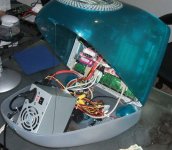
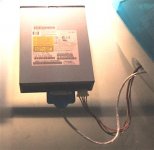
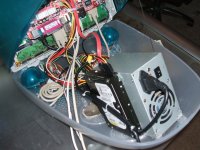
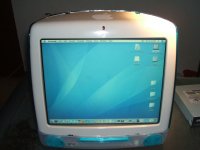
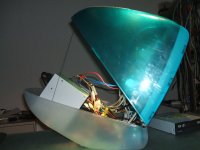
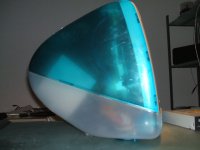
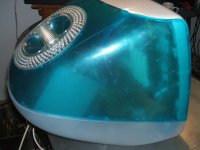
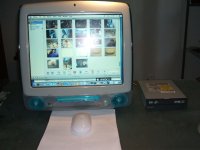
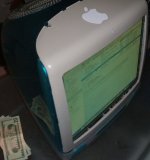
i made it a real hackintosh as well... it was running 10.4.11 witch was current at the time.
natively /w GMA 950 graphics. Full QE and CI... it was bad ass!
This LEM article covers it and has links to other articles about it.http://lowendmac.com/2014/star-trek-apples-first-mac-os-on-intel-project/
interesting
I wonder if these projects for x86 are 2 of the same...
both situations using " San Francisco Canyon Company" for the port.
I know one was talking about quicktime for windows and the other was talking about quicktime for system7, on x86.
I wonder if these projects for x86 are 2 of the same...
both situations using " San Francisco Canyon Company" for the port.
I know one was talking about quicktime for windows and the other was talking about quicktime for system7, on x86.
I'm not a software guy, but why not VNC the modern UI/apps from another machine to the 68K mac?
great work there techknight - you still got it? - got any demos?. My first hackintosh was a core2 duo and took me 6 nights of trial and error to get to the osx desktop....was worth every second
-
thanks for the link dcr - will have to get out the reading glasses
-
that shot of the mac plus on the web......isn't it just so ..'wanting'.....
-
come on.....there must be a way of doing it. An SE/30 would make most sense. With all the accelerator card's that were built for it, a card to do the web..card does all the work, takes its instructions from the mac and returns the resulting screen ourput.
-
Are there any people here that worked on any of these cards, their software.
-
would love to see a project getting started on here, with people from here, giving what they can........youd be amazed what kind of skills and knowledge can be pooled together
-
and yes yes....I know....its hard, its difficult, why bother, use your pc,
-
but why not.............its all good fun
-
now ...wheres me dam glasses
-
ps.........are the fumes from solder bad for your eyes.....my sight has gone to the dogs in last 12 months......!!!
-
thanks for the link dcr - will have to get out the reading glasses
-
that shot of the mac plus on the web......isn't it just so ..'wanting'.....
-
come on.....there must be a way of doing it. An SE/30 would make most sense. With all the accelerator card's that were built for it, a card to do the web..card does all the work, takes its instructions from the mac and returns the resulting screen ourput.
-
Are there any people here that worked on any of these cards, their software.
-
would love to see a project getting started on here, with people from here, giving what they can........youd be amazed what kind of skills and knowledge can be pooled together
-
and yes yes....I know....its hard, its difficult, why bother, use your pc,
-
but why not.............its all good fun
-
now ...wheres me dam glasses
-
ps.........are the fumes from solder bad for your eyes.....my sight has gone to the dogs in last 12 months......!!!
This is equivalent to me hacking my Pismo to support Thunderbolt, HDMI, USB 3.1, as well as giving it a SATA III bus and full El Capitan support while also wanting it to retain the ability to boot OS9 and access PC Cards.
If that sounds impossible it's because it is.
If that sounds impossible it's because it is.
falen5,
With what's already built into an SE/30 and a normal Ethernet card that already exists, there's plenty of ways to interface to the modern Internet.
You're simply never going to get a satisfactory web experience out of it. A "modern resource card" is an interesting idea, but most vintage Macs don't have displays large enough to use such a thing. At minimum you'd need an 832x624 monitor, the minimum recommendation for modern computing is 1024x768 or thereabouts (and the LC475 simply can't drive much more than that without dumping down to like sixteen colors) and most people are using, at minimum, 1366x768 or 1280x1024 displays on their modern computers.
And both Windows 10 and mainstream Linux distributions (packaged with GNOME, KDE, etc) are doing a really good job of making 1280x1024 feel cramped.
Your best bet is to consider telnet on the local LAN for text-only interfaces to things. Basically, do it the way you actually would have done it in the late '80s or early '90s and dial directly to a UNIX system and use that to get on the Internet.
This isn't necessarily strictly impossible, but it's realistically beyond the collective abilities of everybody here. Even Cameron Kaiser wasn't able to modernize existing code for Mac OS 9 that much, and that's without the limitations of RAM, CPU power, and without saying "oh, well, let's just put an ARM CPU on a NuBus card and offload this application's work to that card" -- which is clever, but at that point why not just run the simplest X11 browser you can find and run that on a Pi or a PC and display it on the Mac?
And that still doesn't address the issue of so many web sites absolutely demanding large displays these days.
At the end of it what you've got is something like a Quadra 650 or 800 (or IIfx/950) with several ARM coprocessor boards doing particular tasks or sharing the workload of different browser instances, with a big LCD hooked up to the biggest baddest GPU you can find, which you own't really be using for its Mac capabilities as much as for it's ability to drive a modernly large monitor, and at that point why not just buy a Griffin iMate for your ADB kb/mouse and connect it to a modern PC minitower with Linux, using MATE as the graphical interface?
With what's already built into an SE/30 and a normal Ethernet card that already exists, there's plenty of ways to interface to the modern Internet.
You're simply never going to get a satisfactory web experience out of it. A "modern resource card" is an interesting idea, but most vintage Macs don't have displays large enough to use such a thing. At minimum you'd need an 832x624 monitor, the minimum recommendation for modern computing is 1024x768 or thereabouts (and the LC475 simply can't drive much more than that without dumping down to like sixteen colors) and most people are using, at minimum, 1366x768 or 1280x1024 displays on their modern computers.
And both Windows 10 and mainstream Linux distributions (packaged with GNOME, KDE, etc) are doing a really good job of making 1280x1024 feel cramped.
Your best bet is to consider telnet on the local LAN for text-only interfaces to things. Basically, do it the way you actually would have done it in the late '80s or early '90s and dial directly to a UNIX system and use that to get on the Internet.
This isn't necessarily strictly impossible, but it's realistically beyond the collective abilities of everybody here. Even Cameron Kaiser wasn't able to modernize existing code for Mac OS 9 that much, and that's without the limitations of RAM, CPU power, and without saying "oh, well, let's just put an ARM CPU on a NuBus card and offload this application's work to that card" -- which is clever, but at that point why not just run the simplest X11 browser you can find and run that on a Pi or a PC and display it on the Mac?
And that still doesn't address the issue of so many web sites absolutely demanding large displays these days.
At the end of it what you've got is something like a Quadra 650 or 800 (or IIfx/950) with several ARM coprocessor boards doing particular tasks or sharing the workload of different browser instances, with a big LCD hooked up to the biggest baddest GPU you can find, which you own't really be using for its Mac capabilities as much as for it's ability to drive a modernly large monitor, and at that point why not just buy a Griffin iMate for your ADB kb/mouse and connect it to a modern PC minitower with Linux, using MATE as the graphical interface?
yeah i did something like this back in 07.
i made it a real hackintosh as well... it was running 10.4.11 witch was current at the time.
natively /w GMA 950 graphics. Full QE and CI... it was bad ass!
DSCF0206.JPG
DSCF0224.JPG
DSCF0208-1.JPG
DSCF0249.JPG
DSCF0248.JPG
DSCF0247.JPG
DSCF0246.JPG
DSCF0228.JPG
DSCF0205.JPG
That is really cool.

Cheers people.
Cory.......you nailed what I was thinking , separate hardware dedicated to dealing with modern protocols but as you said what you end up with is not where the idea was meant to be
-
looks like the only way to do it so would to be to create a much simpler internet for the mac. A private network for macintosh fans .The present day web is just gone too far for the old 68K's
-
I have never had a 68K mac on the web or network of any kind. From when the internet began, has there ever been a primitive form of the internet that would of been practical on an old mac (even though the web would of been at least 10 years after the mac.....I guess not)
-
I have 2 mac plus cases ...empty. Looks like im going to have to build a hackintosh into an old mac. Been reluctant to damage the old cases, but think I might try
-
has anyone here done it yet.........theres not much room in a G3......even less in a mac plus..........
-
techknight......cant find your g3 vid
Cory.......you nailed what I was thinking , separate hardware dedicated to dealing with modern protocols but as you said what you end up with is not where the idea was meant to be
-
looks like the only way to do it so would to be to create a much simpler internet for the mac. A private network for macintosh fans .The present day web is just gone too far for the old 68K's
-
I have never had a 68K mac on the web or network of any kind. From when the internet began, has there ever been a primitive form of the internet that would of been practical on an old mac (even though the web would of been at least 10 years after the mac.....I guess not)
-
I have 2 mac plus cases ...empty. Looks like im going to have to build a hackintosh into an old mac. Been reluctant to damage the old cases, but think I might try
-
has anyone here done it yet.........theres not much room in a G3......even less in a mac plus..........
-
techknight......cant find your g3 vid
G3 vid? I think you got me confused with uniserver.
If you want to see how the internet was, Space Jam has thier original site in-tact which is browseable from a 68K, and, Phils old radios hasnt changed at all, and neither has Just Radios. Oh, and Arron Cakes circuit celler hasnt changed much. My internet browsing history started in late 96, early 97, and I used to browse those sites, And they havent changed. Alot has. But personal websites usually sit locked in time.
If you want to see how the internet was, Space Jam has thier original site in-tact which is browseable from a 68K, and, Phils old radios hasnt changed at all, and neither has Just Radios. Oh, and Arron Cakes circuit celler hasnt changed much. My internet browsing history started in late 96, early 97, and I used to browse those sites, And they havent changed. Alot has. But personal websites usually sit locked in time.
yep - I mixed up your names - sorry folks - jasus my sight is getting so bad..........
-
think I will be getting laser's into my eyes to sort this out..........
-
thanks for the info techknight.......will go have a look now
-
I wonder if it would be possible to make a database of all 68k software available on an old site like spacejam . id love to be able to plug an SE into macintosh garden....would be there for days
-
think I will be getting laser's into my eyes to sort this out..........
-
thanks for the info techknight.......will go have a look now
-
I wonder if it would be possible to make a database of all 68k software available on an old site like spacejam . id love to be able to plug an SE into macintosh garden....would be there for days
would be cool with Macintosh garden had a BBS system that access their file database but I just don't see it happening