

Testing
A. Place the LCS Assembly on a work surface oriented as if it were still in the computer.
B. Apply 12VDC to pins 1, 2, 5 & 6. (The pins are numbered).
C. Apply ground to pins 7 & 8 (You should hear the pumps come on).
D. Set your seat gun for 200F and target the center of the water block for 15 seconds.
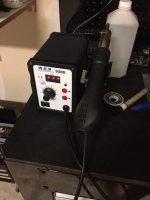
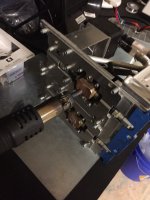
E. Remove the heat gun and place your finger on the water block, if coolant is flowing properly it should be cold or mildly warm but not hot.
F. Do this a few more times to ensure consistent operation
G. Repeat steps D-F on the other water block
I call this the “Finger Test.” I know it’s not completely scientific but it’s a good indicator as to whether the system is working or not.
Also: Another good indicator of a clogged waterblock is a buzzing pump.
Draining the System
Note: For this procedure, only the 4 upper hoses need to be removed.
A. Remove the “Cooligy” cover by removing the two screws that secure it.
B. Remove the crimped on hose clamps by prying against the crimp or cutting the band.
C. Chisel off the epoxy by placing a small screwdriver on it and lightly tapping.
D. Place the unit in a sink.
E. Cut each hose sideways from the pump to the radiator and turn the unit upside down to let it drain.
F. Remove pieces of clear heat shrink from the pump ports and radiator ports.
G. Remove both pumps by unscrewing the screws securing the mount and set the pumps aside.
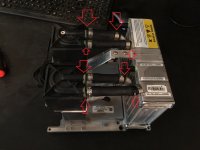
Note: Be careful not to damage or lose the flow restrictors that are attached to the metal “Z” Tube.
A. Place the LCS Assembly on a work surface oriented as if it were still in the computer.
B. Apply 12VDC to pins 1, 2, 5 & 6. (The pins are numbered).
C. Apply ground to pins 7 & 8 (You should hear the pumps come on).
D. Set your seat gun for 200F and target the center of the water block for 15 seconds.
E. Remove the heat gun and place your finger on the water block, if coolant is flowing properly it should be cold or mildly warm but not hot.
F. Do this a few more times to ensure consistent operation
G. Repeat steps D-F on the other water block
I call this the “Finger Test.” I know it’s not completely scientific but it’s a good indicator as to whether the system is working or not.
Also: Another good indicator of a clogged waterblock is a buzzing pump.
Draining the System
Note: For this procedure, only the 4 upper hoses need to be removed.
A. Remove the “Cooligy” cover by removing the two screws that secure it.
B. Remove the crimped on hose clamps by prying against the crimp or cutting the band.
C. Chisel off the epoxy by placing a small screwdriver on it and lightly tapping.
D. Place the unit in a sink.
E. Cut each hose sideways from the pump to the radiator and turn the unit upside down to let it drain.
F. Remove pieces of clear heat shrink from the pump ports and radiator ports.
G. Remove both pumps by unscrewing the screws securing the mount and set the pumps aside.
Note: Be careful not to damage or lose the flow restrictors that are attached to the metal “Z” Tube.