

Thread
Mac Os 9 booting on: xServe G4 (Detailed Posts)
There is two models of DDR xServe G4:
A) A 133 Mhz System bus and ATA 100 Hard disk Interfaces and FW400.
B) A 166 Mhz System bus and ATA 133 Hard disk Interfaces and FW800.
In the A model the ATA 100 may help, but we are pushed to try the bus overclocking using the MDD procedure, never tested in the Xserve...
Getting rid the Open Firmware barrier to a MacRISC2 kernel (Mac Os 9) it isn't easy, but it was done before. The real challenge comes now:
Comparing the PowerMac G4 MDD Architecture Block Diagram:

With the xServe G4 (133Mhz Bus) Architecture Block Diagram:
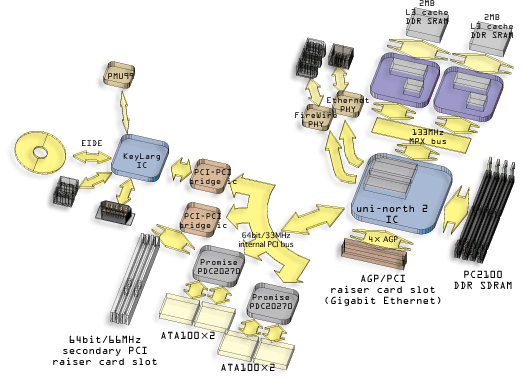
It's easy to see that the secondary PCI bus is really different from the MDD one. There is two PCI bridge interfaces ic (integrated circuit) and two ATA 100 ic. Probably Mac Os ROM 10.2.1 don't understand this part of the motherboard, so if don't bring it to a crash, it is better to ignore it by now.
So our possibilities must be limited to Uni-North 2 direct devices: Firewire, Ethernet, AGP etc...
A) A 133 Mhz System bus and ATA 100 Hard disk Interfaces and FW400.
B) A 166 Mhz System bus and ATA 133 Hard disk Interfaces and FW800.
In the A model the ATA 100 may help, but we are pushed to try the bus overclocking using the MDD procedure, never tested in the Xserve...
Getting rid the Open Firmware barrier to a MacRISC2 kernel (Mac Os 9) it isn't easy, but it was done before. The real challenge comes now:
Comparing the PowerMac G4 MDD Architecture Block Diagram:
With the xServe G4 (133Mhz Bus) Architecture Block Diagram:
It's easy to see that the secondary PCI bus is really different from the MDD one. There is two PCI bridge interfaces ic (integrated circuit) and two ATA 100 ic. Probably Mac Os ROM 10.2.1 don't understand this part of the motherboard, so if don't bring it to a crash, it is better to ignore it by now.
So our possibilities must be limited to Uni-North 2 direct devices: Firewire, Ethernet, AGP etc...
So the procedure is:
- To use a basic installation of Mac Os 9.2 (ROM 10.2.1) in to a device connected to a port that this OS can "drive", We have to try FW, Ethernet, USB, PCI cards, etc...
- To trick the Open Firmware or Mac Os ROM to avoid the MacRisc3 closed door. For this we have to Hex Edit the ROM, change the NVRAM settings or in the last chance Reflash the firmware ¿?
Probably we have to remove some xServe components to try to avoid a system crash...
The successful possibilities are very low. In the best case we can achieve that the xServe boot in to Mac Os 9, but most of the components couldn't work...
In the worst case the xServe never go further than a grey screen, but at least, we try to learn something of the "inner soul" of this lovely machines...
MacTron
- To use a basic installation of Mac Os 9.2 (ROM 10.2.1) in to a device connected to a port that this OS can "drive", We have to try FW, Ethernet, USB, PCI cards, etc...
- To trick the Open Firmware or Mac Os ROM to avoid the MacRisc3 closed door. For this we have to Hex Edit the ROM, change the NVRAM settings or in the last chance Reflash the firmware ¿?
Probably we have to remove some xServe components to try to avoid a system crash...
The successful possibilities are very low. In the best case we can achieve that the xServe boot in to Mac Os 9, but most of the components couldn't work...
In the worst case the xServe never go further than a grey screen, but at least, we try to learn something of the "inner soul" of this lovely machines...
MacTron
Here we have an intro to Macintosh boot:
http://macos9lives.com/smforum/index.php?topic=1965.msg9990#msg9990
The New World ROM also sets the "compatible" property of the root node to "MacRISC2" (machines that can boot classic Mac OS using "Mac OS ROM") or "MacRISC3" (machines that can only boot OS X or another Unix-like system).
So after the machine "basic" boot procedure (Open Firmware), we have to to enable a Mac Os 9 ROM to boot on a MacRisc3 Mac (the xServe, or any other Os X only G4). Here we have a guide on how to solve this:
http://macos9lives.com/smforum/index.php?topic=1967.msg9998#msg9998
http://macos9lives.com/smforum/index.php?topic=1965.msg9990#msg9990
The New World ROM also sets the "compatible" property of the root node to "MacRISC2" (machines that can boot classic Mac OS using "Mac OS ROM") or "MacRISC3" (machines that can only boot OS X or another Unix-like system).
So after the machine "basic" boot procedure (Open Firmware), we have to to enable a Mac Os 9 ROM to boot on a MacRisc3 Mac (the xServe, or any other Os X only G4). Here we have a guide on how to solve this:
http://macos9lives.com/smforum/index.php?topic=1967.msg9998#msg9998
Mactron... I am so interested in the results of this thread.
Circa 2003/2004 we had 2 extra Apple Xserve G4/1.33 (Slot Load) models in our warehouse and I was going to experiment converting them into OS 9 DAW Units.
Unfortunately, we had standardized on both the 933 QS and single 1.25 MDD, so when my partner and service manager heard the fans, which get pretty loud, it was a company decision to abandon research in getting 9.2.2 and DAW apps on it; which really pissed me off. I left the company (in New York) and moved to CA at the end of 2004 for other reasons and never got a chance to experiment with another Xserve.
Circa 2003/2004 we had 2 extra Apple Xserve G4/1.33 (Slot Load) models in our warehouse and I was going to experiment converting them into OS 9 DAW Units.
Unfortunately, we had standardized on both the 933 QS and single 1.25 MDD, so when my partner and service manager heard the fans, which get pretty loud, it was a company decision to abandon research in getting 9.2.2 and DAW apps on it; which really pissed me off. I left the company (in New York) and moved to CA at the end of 2004 for other reasons and never got a chance to experiment with another Xserve.
interesting to see the inclusion of the "promise pdc20270"
this is the same chipset off the original "fasttrack" ide raid pci cards
which i was writing about suspecting them as the origin of the
"mac bootable" seritek firmware after reading the hex code inside the firmware file
Yes, it is Interesting...
Mactron... I am so interested in the results of this thread.
Yes, me too... LOL
Those are just "preliminary studies" ...
An "active member" of the forum kindly offered me a machine to test ...
So, we will see ...
I'm waiting to do the real test ...
IIO do u even bother to re-read what u write before u press enter??

Unfortunately, Initial Tests are a Failure
Preliminary Tests on Xserve G4 1.33Ghz (Single CPU)
SN# QP334024N9A
Boot Attempt 1: FireWire
Boot attempt from External FireWire 400 Hard Drive using FW800 to FW400 Cable with Modified Mac OS 9.2.2 System Folder
(ROM 10.2.1 Mofied by iMic)
Here is the picture after Holding Option Key to scan boot devices...
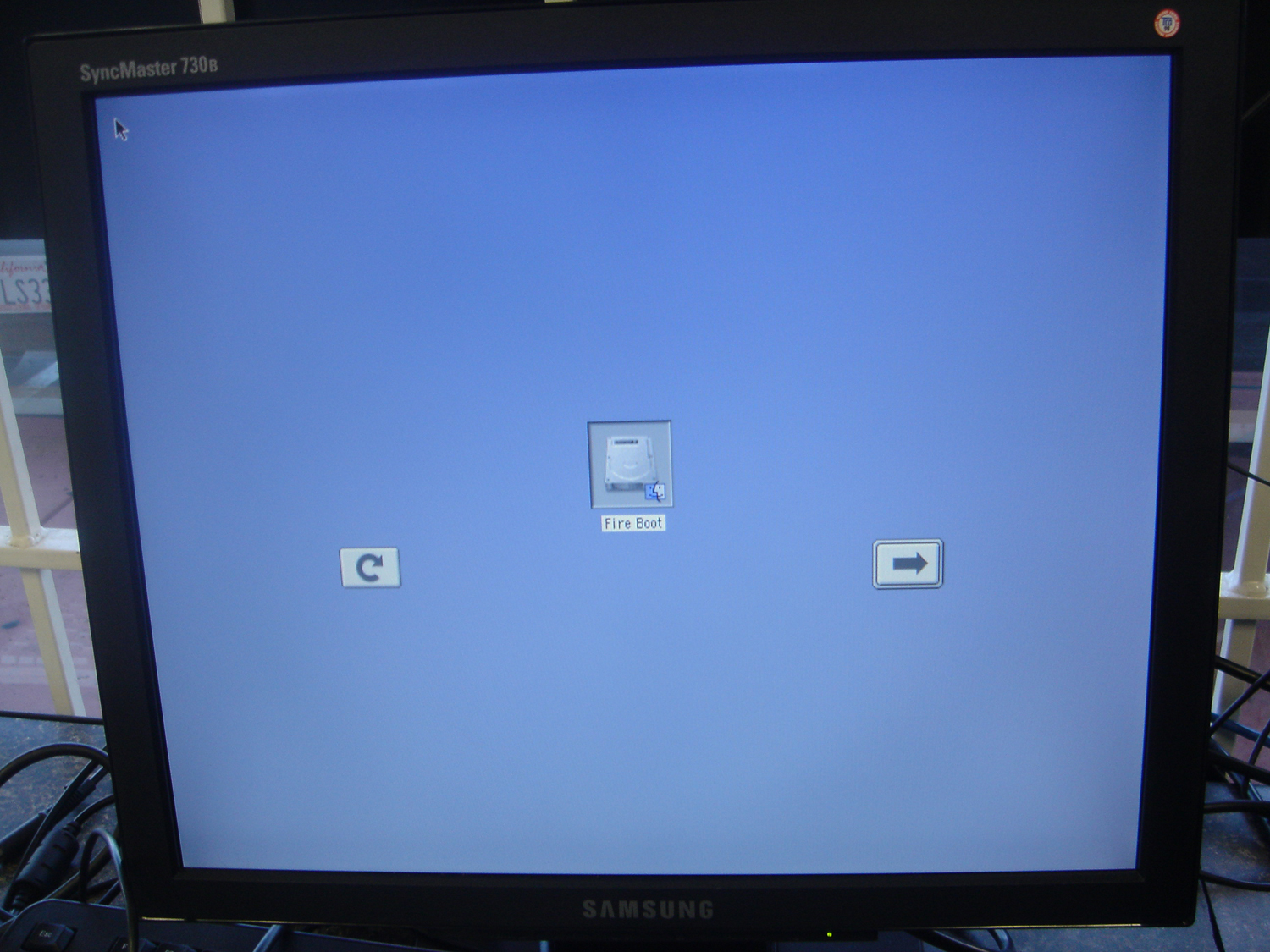
After Selecting the FW Drive to Boot... nothing happens and this is displayed
Boot Attempt 2: USB Flash
Boot attempt from USB Flash with Modified Mac OS 9.2.2 System Folder
(ROM 10.2.1 Mofied by iMic)
Here is the picture after Holding Option Key to scan boot devices...
USB Flash is NOT recognized as valid Boot device...
Boot Attempt 3: CD-ROM
Boot attempt Bootable CD with Modified Mac OS 9.2.2 System Folder
(ROM 10.2.1 Mofied by iMic)
Here is the picture after Holding "C" Key to boot to CD-ROM...
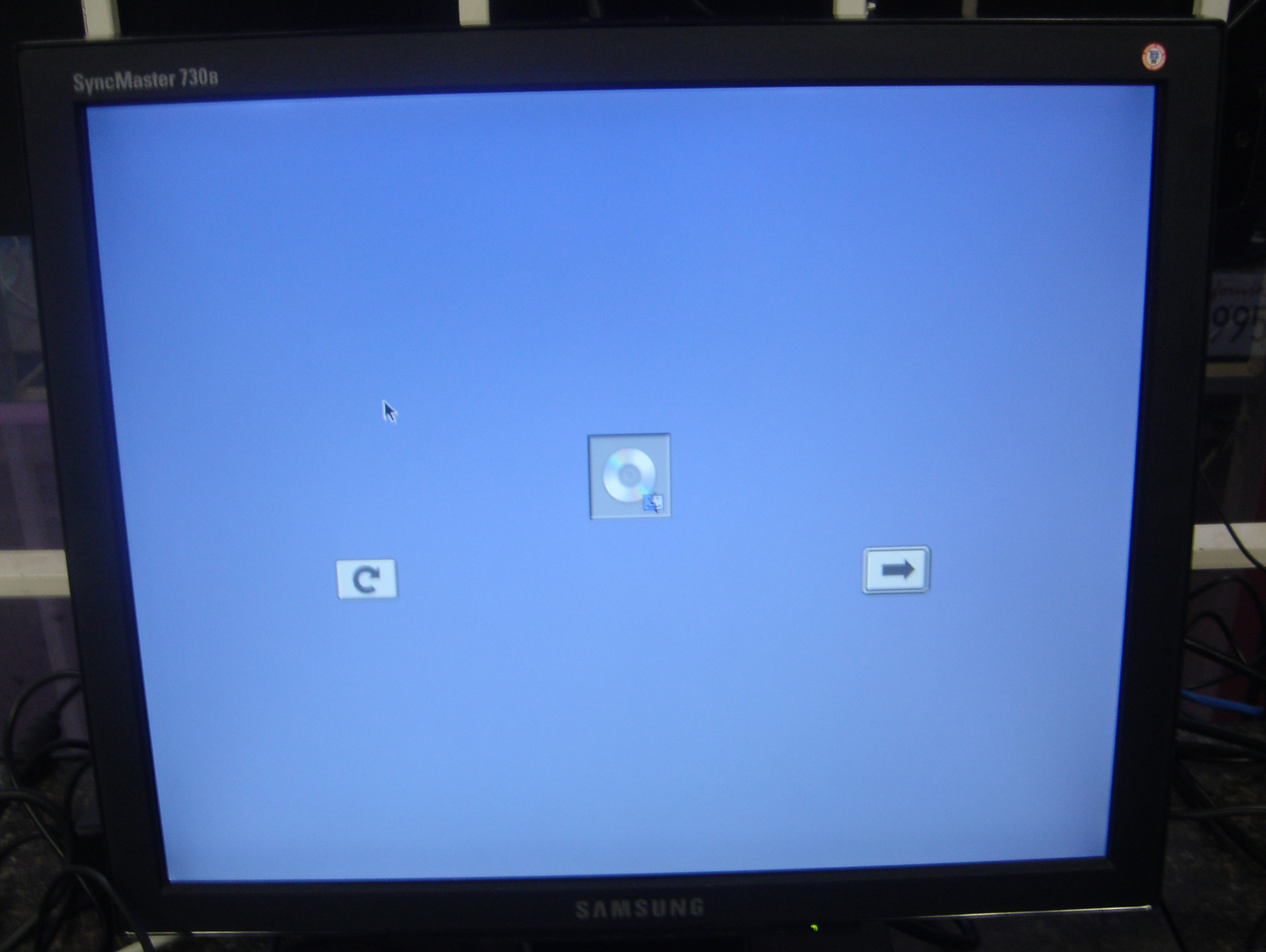
After Selecting the CD Drive to Boot... nothing happens and this is displayed
Way too loud for me 
Yes... CPU will be going into MDD and Xserve will be parted out on eBay and scrapped after iMic and Mactron are satisfied
Yes... CPU will be going into MDD and Xserve will be parted out on eBay and scrapped after iMic and Mactron are satisfied
Diehard was the CD-ROM an externally connected device? If so then a fresh install on the internal HD of the X-serve via FW400/800 has yet to be tested yet then?
Shouldn't matter at all. Looks like a dead end getting OS9 running on these machines.
What a pity
Quote
Diehard was the CD-ROM an externally connected device? If so then a fresh install on the internal HD of the X-serve via FW400/800 has yet to be tested yet then?
No, I would have mentioned that... It was the Internal Slot-Load Optical drive, so at least we know it recognizes that as bootable with modified ROM