
Thread
Mac SE Prototype *PICTURES*
Mac SE Prototype *PICTURES*
MacApp 2.0b5 Feature Overview

MacApp 2.0b5 Feature Overview
Macintosh · PDF
| Filename | MacApp_2.0b5_Feature_Overview_19880803.pdf |
|---|---|
| Size | 1.52 MB |
| Subsection | developer / MacApp_2.0 |
| Downloads | 1 |
Contents
MacApp® 2.0b5
Feature Overview
August 3, 1988
Curt Bianchi
This document is a brief description of the new features included in MacApp 2.0.
MacApp Source Code Organizatio_n
MacApp 2.0 breaks up the MacApp source code into logically separate units, each of which contains the code for a
distinct part of MacApp. Here's a description of the new units.
Non-Object-Oriented Libraries
These libraries provide non-object-oriented support facilities for MacApp.
c
UMAUtil
This unit contains a set of constant and type declarations and utility routines that are
used by the other MacApp units. MacApp users will also want to make use of the
routines in this unit
UViewCoords
This unit implements the routines dealing with 32-bit view coordinates and the
VPoint and VRect data types, which are analogous to QuickDraw's Point and
Rect types. MacApp users will have to be familiar with the routines in this unit.
Basically, they provide conversion between QuickDraw and view coordinates, and
view coordinate counterparts to many QuickDraw routines (for example, SetVRect,
which is just like QuickDraw's SetRect except that it works in view coordinates).
UFailure
This unit implements MacApp's failure-handling mechanism. Most users only need
to know how to invoke failure handling and how to write their own failure handlers.
The code in this unit actually implements the failure-handling mechanism.
UPat.ch
This unit implements MacApp's trap-patching scheme and is of little interest to
MacApp users as they don't ordinarily patch traps.
UBusyCursor
This unit implements the MacApp busy cursor. Most MacApp users won't be
interested in this unit unless they want to change the way the busy cursor works.
UMemory
This unit implements the MacApp memory and segment management system.
MacApp users need to know the philosophy behind MacApp's memory management
and the services provided by this unit If you need to know the gory details, read this
unit's source code.
UMenuSetup
This unit implements MacApp's menu handling. Mostly this consists of routines to
manipulate menu items via command numbers, and provides the framework in which
menu setup takes place.
Wed, Aug 3, 1988
© 1988S Apple Computer
1
Object-Oriented Libraries
These units form the core of the MacApp object classes.
UObject
This unit provides the base support for objects in MacApp and includes the
TObject class.
UAssociation
This unit implements the TAssociation class, which is essentially a dictionary
that associates one string with another.
UList
This unit contains the TList and TSortedList classes, which implements lists
of objects, similar to dynamic arrays. They are widely used by MacApp and by most
MacApp programs.
.
UMacApp
This is the main MacApp uniL It contains the classes TApplication,
TDocument,TView,TWindow,TScroller,TControl,TCtlMgr,
TScrollBar, TSScrollBar and TPrintHandler. It also contains global
variables, constants, and type declarations used by MacApp.
Building Block Units
These …
Showing first 3,000 characters of 40,301 total. Open the full document →
Here they are, round one of the Mac SE Prototype pictures! I've got more coming TOMORROW (sorry for the change in time, see the fourth post) as soon as I clear off my digital camera's card (so I can take them).
Frontal Shot
http://i93.photobucket.com/albums/l50/MacPlus512/IMG_0605.jpg
Close-Up of Bezel
http://i93.photobucket.com/albums/l50/MacPlus512/IMG_0606.jpg
Underside
http://i93.photobucket.com/albums/l50/MacPlus512/IMG_0610.jpg
Left Side View
http://i93.photobucket.com/albums/l50/MacPlus512/IMG_0611.jpg
Ports - Close-Up
http://i93.photobucket.com/albums/l50/MacPlus512/IMG_0617.jpg
Case Rear
http://i93.photobucket.com/albums/l50/MacPlus512/IMG_0618.jpg
Serial Sticker
http://i93.photobucket.com/albums/l50/MacPlus512/IMG_0619.jpg
With a Production SE
http://i93.photobucket.com/albums/l50/MacPlus512/IMG_0621.jpg
Enjoy!!! Any questions feel free to ask!!!
Frontal Shot
http://i93.photobucket.com/albums/l50/MacPlus512/IMG_0605.jpg
Close-Up of Bezel
http://i93.photobucket.com/albums/l50/MacPlus512/IMG_0606.jpg
Underside
http://i93.photobucket.com/albums/l50/MacPlus512/IMG_0610.jpg
Left Side View
http://i93.photobucket.com/albums/l50/MacPlus512/IMG_0611.jpg
Ports - Close-Up
http://i93.photobucket.com/albums/l50/MacPlus512/IMG_0617.jpg
Case Rear
http://i93.photobucket.com/albums/l50/MacPlus512/IMG_0618.jpg
Serial Sticker
http://i93.photobucket.com/albums/l50/MacPlus512/IMG_0619.jpg
With a Production SE
http://i93.photobucket.com/albums/l50/MacPlus512/IMG_0621.jpg
Enjoy!!! Any questions feel free to ask!!!
Very interesting...thank you for sharing 
Interesting...
It's odd that it has a serial number that conforms to production runs. Did you run it through the serial decoder?
What's the origin of this thing?
I found it in a storage facility alongside dozens of other Macs. It looks as if it was used as a regular machine.
I did run it through the decoder and it came up an SE. That is why I want to look at the logic board of this computer. I ran MacEnvy on it and it said it was an SE.
It does still have the "rat cage" fan and the hard drive doesn't appear to be a MiniScribe, at least based on sound.
Also, I am not going to be able to get the pictures of the inside up tonight simply because I need to find my Torx T-15 and since the rest of the family is going to sleep I don't want to be up rummaging through tools. I'll probably get them up sometime tomorrow since I plan to work on a few vintage computers anyways. I'll try to get these taken and up in the morning.
I did run it through the decoder and it came up an SE. That is why I want to look at the logic board of this computer. I ran MacEnvy on it and it said it was an SE.
It does still have the "rat cage" fan and the hard drive doesn't appear to be a MiniScribe, at least based on sound.
Also, I am not going to be able to get the pictures of the inside up tonight simply because I need to find my Torx T-15 and since the rest of the family is going to sleep I don't want to be up rummaging through tools. I'll probably get them up sometime tomorrow since I plan to work on a few vintage computers anyways. I'll try to get these taken and up in the morning.
looks sweet, and it looks like it needs a good cleaning
The plastic looks a lot smoother and shinier than my SE. Did they originally plan to use a different type of plastic for the cases?
I would think prototypes get cases made differently using different plastics since it costs alot of money to make production injection molding dies and to harden and sandblast them (which is what gives them that texture).
Before I snap the Mac back together, there are a few logic board comments I need to make. None of this information would have shown up well on the picture due to my low-end camera.
1. The serial number is M70208578.
2. The sticker is located to the left of the "bar code label" space.
3. Above jumper C57 it reads "Macintosh SE 820-0176-B ©1986 630-4125".
4. Underneath SIMM 3 it reads "Apple Computer 820-0176-B ©1986".
5. Along the side near the expansion slot it reads "TPB-D.VO"
The logic board looks like an early production model. If anyone with an SE made in 1987 wants to confirm that this is indeed a finished board, please let me know.
I say this because the board looks identical to a regular SE board, the computer acts like a regular SE and is recognized as such, and I remember reading that plans for the SE in mid-1986 called for a 68020.
Now to snap the computer back up and get the rest of those pictures online...
EDIT: I also took a picture of the computer running. Interestingly, there is a "Sleep" command available under the Special menu. It's running 6.0.7.
1. The serial number is M70208578.
2. The sticker is located to the left of the "bar code label" space.
3. Above jumper C57 it reads "Macintosh SE 820-0176-B ©1986 630-4125".
4. Underneath SIMM 3 it reads "Apple Computer 820-0176-B ©1986".
5. Along the side near the expansion slot it reads "TPB-D.VO"
The logic board looks like an early production model. If anyone with an SE made in 1987 wants to confirm that this is indeed a finished board, please let me know.
I say this because the board looks identical to a regular SE board, the computer acts like a regular SE and is recognized as such, and I remember reading that plans for the SE in mid-1986 called for a 68020.
Now to snap the computer back up and get the rest of those pictures online...
EDIT: I also took a picture of the computer running. Interestingly, there is a "Sleep" command available under the Special menu. It's running 6.0.7.
OK, here we go, round two...
The basic inside view:
http://i93.photobucket.com/albums/l50/MacPlus512/IMG_0622.jpg
The logic board itself:
http://i93.photobucket.com/albums/l50/MacPlus512/IMG_0623.jpg
Side view showing the analog board cover (note lack of printing on it):
http://i93.photobucket.com/albums/l50/MacPlus512/IMG_0624.jpg
The "rat cage" fan...for all the younger folks who have never seen one (let alone heard one):
http://i93.photobucket.com/albums/l50/MacPlus512/IMG_0625.jpg
The inside etching of the case rear:
http://i93.photobucket.com/albums/l50/MacPlus512/IMG_0629.jpg
Up and running!!!
http://i93.photobucket.com/albums/l50/MacPlus512/IMG_0630.jpg
The basic inside view:
http://i93.photobucket.com/albums/l50/MacPlus512/IMG_0622.jpg
The logic board itself:
http://i93.photobucket.com/albums/l50/MacPlus512/IMG_0623.jpg
Side view showing the analog board cover (note lack of printing on it):
http://i93.photobucket.com/albums/l50/MacPlus512/IMG_0624.jpg
The "rat cage" fan...for all the younger folks who have never seen one (let alone heard one):
http://i93.photobucket.com/albums/l50/MacPlus512/IMG_0625.jpg
The inside etching of the case rear:
http://i93.photobucket.com/albums/l50/MacPlus512/IMG_0629.jpg
Up and running!!!
http://i93.photobucket.com/albums/l50/MacPlus512/IMG_0630.jpg
I´ve got an early SE board in my regular SE
1. seria number M80237970
2. sticker is on the barcode label thing
3. Macintosh SE 820-0176-B ©1986 630-4125 over C57 here too
4. Underneath SIMM 3 it reads Apple Computer 820-0176-B ©1986 for me too
5. expansion slot it reads TPB-D.VO is there for me too
everything the same on my mobo xcept teh serial number is higher.
looks teh same too

just out of interest. you got the same varta battery i got... where is yours made?
1. seria number M80237970
2. sticker is on the barcode label thing
3. Macintosh SE 820-0176-B ©1986 630-4125 over C57 here too
4. Underneath SIMM 3 it reads Apple Computer 820-0176-B ©1986 for me too
5. expansion slot it reads TPB-D.VO is there for me too
everything the same on my mobo xcept teh serial number is higher.
looks teh same too
just out of interest. you got the same varta battery i got... where is yours made?
OK, to answer some questions for everyone here...
Mac128: Already answered yours in my earlier post, but to lump them together here with the others: I found it in a storage facility alongside other Macs (including many other compacts). It looks to have been used as a regular Mac. Also, the serial number came up as an SE made in late 1986 on the decoder.
MacG4: Yes, it's filthy. It was covered in dust when I got it. I don't really want to use anything harsh on it though, maybe just a little water. There's also an area on the front near the "Apple logo" where I removed a sticker, so it looks a little grimy there.
Quadraman and Unknown K: I'm answering both of yours together. Yes, the case is very smooth and shiny. Check out the picture of it next to the regular SE, you'll see the production SE has more of a matte finish than a glossy one. All prototypes seem to be made of these lower-cost plastics. There's a picture of a prototype Quadra 700 somewhere and it was the same way. I think this was done to save on costs since that computer could have been scrapped at the last minute for an alternate design. I don't think it was ever going to be glossy like that because Apple was already using the platinum plastic with texture at that point on the IIGS. I do get the feeling the plastic used is immune to yellowing--there's no trace of it anywhere.
Bolle: I'll have to check on the origin of that battery. Most SEs with soldered batteries seem to have Varta brand in there for some reason. I've got Monday morning off and will check on it then. I'll also pull out the hard drive to get some details on that, since I'm thinking it may be a replacement drive--we all know MiniScribe reliability isn't the best.
I have a question for all of you--do you think that cover over the second floppy bay is third-party or something Apple put out there, maybe using leftover IIc-coloured plastic? (The shade looks about right, I have several ImageWriter IIs that are "white" to compare to).
Mac128: Already answered yours in my earlier post, but to lump them together here with the others: I found it in a storage facility alongside other Macs (including many other compacts). It looks to have been used as a regular Mac. Also, the serial number came up as an SE made in late 1986 on the decoder.
MacG4: Yes, it's filthy. It was covered in dust when I got it. I don't really want to use anything harsh on it though, maybe just a little water. There's also an area on the front near the "Apple logo" where I removed a sticker, so it looks a little grimy there.
Quadraman and Unknown K: I'm answering both of yours together. Yes, the case is very smooth and shiny. Check out the picture of it next to the regular SE, you'll see the production SE has more of a matte finish than a glossy one. All prototypes seem to be made of these lower-cost plastics. There's a picture of a prototype Quadra 700 somewhere and it was the same way. I think this was done to save on costs since that computer could have been scrapped at the last minute for an alternate design. I don't think it was ever going to be glossy like that because Apple was already using the platinum plastic with texture at that point on the IIGS. I do get the feeling the plastic used is immune to yellowing--there's no trace of it anywhere.
Bolle: I'll have to check on the origin of that battery. Most SEs with soldered batteries seem to have Varta brand in there for some reason. I've got Monday morning off and will check on it then. I'll also pull out the hard drive to get some details on that, since I'm thinking it may be a replacement drive--we all know MiniScribe reliability isn't the best.
I have a question for all of you--do you think that cover over the second floppy bay is third-party or something Apple put out there, maybe using leftover IIc-coloured plastic? (The shade looks about right, I have several ImageWriter IIs that are "white" to compare to).
Wow, that's good stuff. Never thought I'd ever see that. Thanks!
I've seen several dual-floppy SEs with hard drive upgrades, including covers with light windows and (internal) little metal retainer clips to hold the covers in place. Since many of the drives were Apple EPROM'd MiniScribes (though one was Seagate) and had original-style hard drive mounting cages, I'd guess that they were an Apple upgrade option.
That's fascinating!
Scott and others as well, you may recall my posting of a Plus that appeared to be a prototype / pre-production sample before The Big Crash.
I thought I would tag on to this post and see if anyone knows more about how these make it out to the general public etc. I think there have been other Macs mentioned in discussions that seem to fit this description.
With this Plus, there is no evidence of the logo or name ever being applied, and same with the missing s/n on bottom - very clean and smooth. The rear label fits the description of the first release label (no copyright date).
Pics if anyone would like to have a look:
front:

Logo area closeup:

Bottom:

:?:
I thought I would tag on to this post and see if anyone knows more about how these make it out to the general public etc. I think there have been other Macs mentioned in discussions that seem to fit this description.
With this Plus, there is no evidence of the logo or name ever being applied, and same with the missing s/n on bottom - very clean and smooth. The rear label fits the description of the first release label (no copyright date).
Pics if anyone would like to have a look:
front:
Logo area closeup:
Bottom:
:?:
The prototype's plastics aren't necessarily inferior, it's the soft tooling used for the prototyping run that's inferior. As I understand it, you can only make so many injections before it degrades and the parts aren't made as crisply on soft tooling as on hard tooling.
Re: Soft/Hard Tooling
If a different plastic was used, it wouldn't be a good prototyping test. The reason the prototypes are generally smooth/glossy is that adding texture to the hard tooling is the very last step done in preparation for production.
My M.E. little bro says tooling for injection molding is a black art, it costs a fortune to get it just right. The plastic has to cool enough to be ejected as quickly as possible, shortening the cycle time. Time on the injection molding machine is the most expensive portion of the part being produced.
Re: Soft/Hard Tooling
If a different plastic was used, it wouldn't be a good prototyping test. The reason the prototypes are generally smooth/glossy is that adding texture to the hard tooling is the very last step done in preparation for production.
My M.E. little bro says tooling for injection molding is a black art, it costs a fortune to get it just right. The plastic has to cool enough to be ejected as quickly as possible, shortening the cycle time. Time on the injection molding machine is the most expensive portion of the part being produced.
You know, since we are talking about an SE prototype;
I have always wondered why they silkscreened the name on the right side of the SE and SE fdhd/superdrive models.
All other macs just seem to have it on the left. Even the SE/30
Anyone knows if the placement has any reason?
I have always wondered why they silkscreened the name on the right side of the SE and SE fdhd/superdrive models.
All other macs just seem to have it on the left. Even the SE/30
Anyone knows if the placement has any reason?
Did decide to run the serial number through the decoder...
"Manufactured in: F => Fremont, California, USA
Year of production: 1986
Week of production: 47
Production number: BWX => 13767
Modell ID: M5011 => Macintosh SE FDHD
Your Macintosh SE FDHD was the 13767th Mac manufactured during the 47th week of 1986 in Fremont, California, USA."
http://myoldmac.net/FAQ/Mac-Serialnumber-decoder-e.php
Of course, as we know, pre-SuperDrive/FDHD M5011's were just marked Macintosh SE 800k, HD20SC on the back. Or just Macintosh SE in some cases.
-J
"Manufactured in: F => Fremont, California, USA
Year of production: 1986
Week of production: 47
Production number: BWX => 13767
Modell ID: M5011 => Macintosh SE FDHD
Your Macintosh SE FDHD was the 13767th Mac manufactured during the 47th week of 1986 in Fremont, California, USA."
http://myoldmac.net/FAQ/Mac-Serialnumber-decoder-e.php
Of course, as we know, pre-SuperDrive/FDHD M5011's were just marked Macintosh SE 800k, HD20SC on the back. Or just Macintosh SE in some cases.
-J
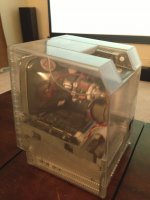
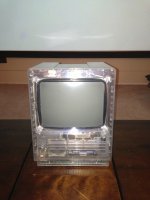
Here's an example of an early prototype Mac SE. The transparent case was for smoke testing at Apple. I think there are less than 3 of these out in the real world. I know another person who owns one but all the rest are at Apple.
Awesome! Mac SE! Hey, I would suggest you make your own thread for your very cool Mac SE there.
I'm sure everyone is dying to know all the juicy details, How you got it, Who was the original owner?
etc, and maybe make another thread on that MacII you have, that belonged to Steve Jobs.
However, Very nice! Welcome to 68kmla !!!!
Charles
I'm sure everyone is dying to know all the juicy details, How you got it, Who was the original owner?
etc, and maybe make another thread on that MacII you have, that belonged to Steve Jobs.
However, Very nice! Welcome to 68kmla !!!!
Charles
Welcome aboard!
Smoke testing? Cooling?
Smoke testing? Cooling?
Thanks and I will start a new post shortly. Thanks for your advice.
Yes, from what I've read/heard, this was the first personal computer with a fan. To make sure the computer was getting adequately cooled, they would filter smoke though the computer to see how it moved through the machine. So yes, its sort of both testing the cooling. The machine was sold to me buy a friend who worked on the original project. I have all the manuals, the carry case, working correct 20MB HD, 8mhz board, etc. I even have the ethernet card but don't have it hooked up right now. The guy had some really cool stories about the machine and seeing how I know there cannot be more than 3 in the real world it has to be one of the rarest/most iconic Mac ever produced.
To be fair, there were plenty of Personal Computers with fans prior to the Mac SE but the Mac SE was the first Apple Computer with a fan.
Bumping this old thread because...this computer is about to go on the market in about 15 minutes...