X Ball
| Filename | x-ball-121.hqx |
|---|---|
| Size | 1,331.5 KB (1363456 bytes) |
| Developer | David Beck |
| Downloads | 20 |
X Ball is a Breakout-style arcade game from Crystal Pier Software, released around 2001 for Mac OS 8.5 and later (Carbonized for both Classic and Mac OS X on PowerPC). It twists the brick-busting formula with a funding economy: players begin each session with $1000 and watch that bankroll tick down as they play, turning every level into a race against an emptying wallet.
Gameplay
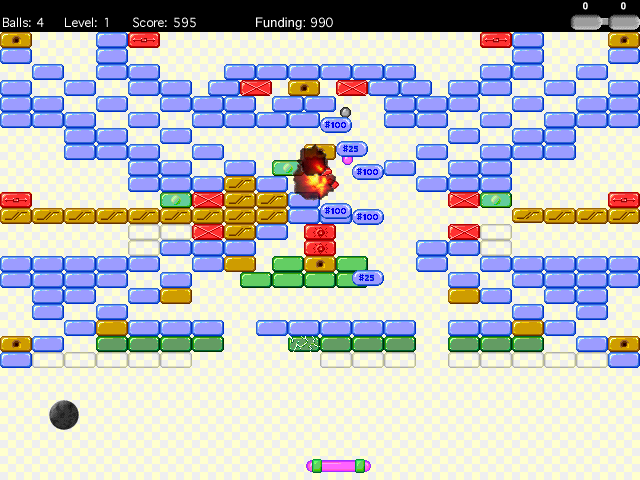
The core loop is familiar -- bounce a ball off a paddle to clear bricks -- but each cleared screen pays out cash that extends play. Falling obstacles, explosive bricks, and roaming enemies complicate the field, and a magnetic paddle lets skilled players catch and aim returns rather than rely on the bounce alone.
Funding economy
The funding system is what sets X Ball apart from contemporaries like Brick Out or DX-Ball. Spend money on power-ups now or stockpile them for tougher screens. Timing a saved explosion or a magnet activation against a wave of enemies becomes the strategic heart of the game.
Versions and compatibility
Two main builds circulated: version 2.1.3 for Mac OS 8.5+ with CarbonLib, and version 2.6 for Mac OS X. Both are PowerPC-only Carbon executables, so the game runs comfortably on later beige and early G3/G4 hardware but will not boot on a 68k Mac.
Crystal Pier Software
Crystal Pier was a small late-era Mac shareware house known for arcade ports and casual originals during the Carbon transition. X Ball is one of the studio's most-recalled releases, sitting alongside a handful of other Carbon arcade titles aimed at the dwindling Classic Mac OS audience as OS X took hold.
Original Source: info-mac
This file is part of the MacTrove archive. See the Thank You page for the upstream mirrors we rely on. It is BinHex encoded. Use The Unarchiver to decode it.