


Mac Fibs
| Filename | mac-fibs-20.hqx |
|---|---|
| Size | 829.4 KB (849307 bytes) |
| Developer | Paul Ferguson |
| Downloads | 29 |
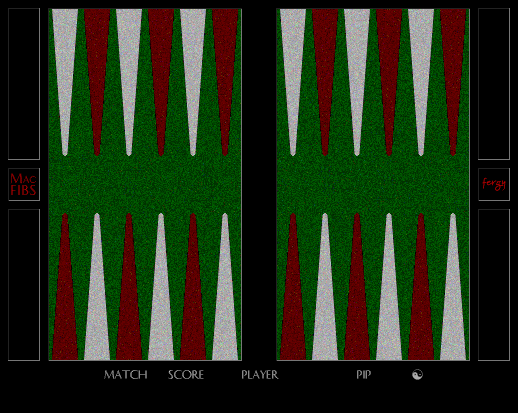
MacFIBS is a native Macintosh client for FIBS, the First Internet Backgammon Server. It lets a player log in to the public FIBS service, find a partner, play rated matches against opponents around the world, watch ongoing games, or simply chat with other backgammon enthusiasts, all through a familiar Mac-style interface.
About the program
The author describes MacFIBS as "virtual backgammon the Macintosh way": instead of playing FIBS through a raw telnet session, the client renders the board, dice, and chat windows as proper Mac windows and menus. The version preserved in this archive is MacFIBS 2.0.3, which the README notes replaces the original MacFIBS 1.0 posted to the SUMEX-AIM mirror in September 1994.
FIBS, the First Internet Backgammon Server
FIBS itself is a free public backgammon server that has been running since 1992. Players are matched, rated using an Elo-style system, and can choose between competitive matches and casual play. MacFIBS handles the network connection, login, and protocol details so the user can focus on the game rather than on the underlying telnet commands.
Author and distribution
MacFIBS 2.0.3 was submitted to Info-Mac on 30 April 1995 by Paul Ferguson (fergy@best.com). It was distributed as a BinHex 4.0 archive through the SUMEX-AIM and funet Info-Mac mirror network, where this copy originates.
Provenance
The description above is drawn from the submission header embedded in mac-fibs-20.hqx. No Macintosh Garden or MobyGames page for this specific Classic Mac client was located during enrichment, so no further metadata or screenshots have been added.
Original Source: info-mac
This file is part of the MacTrove archive. See the Thank You page for the upstream mirrors we rely on. It is BinHex encoded. Use The Unarchiver to decode it.


