

Thread
Mac Portable, Dead Battery, Compatible AC Adapters
The 9v AC Adapter trick works and I have seen Portables being sold on ebay in the past with such an adapter rigged up in lieu of a working battery. The power circuit between the 9v battery and the 6v SLA battery is just the cover switch. The negative terminals of both batteries is wired to a common ground and the switch just switches between the 9v and 6v's positive terminal. You could even use a 6v AC adapter on the 9v battery connector if you are concerned about the step-up regulators on the motherboard. You don't need the main AC adapter to run this setup either.
I am going to be working with mcdermd to try and fix these boards that people fry using powering methods other then spec.
I have 5 boards here that, pretty much from what I diagnose just need a replacement 12v boost regulator.
Will post new info as discovered.
I have 5 boards here that, pretty much from what I diagnose just need a replacement 12v boost regulator.
Will post new info as discovered.
Has anyone measured the amperage thats pulled from the 6v SLA battery when the hard drive is spinning up? I didn't think to do this while I had just leads running to the battery terminals. I'm curious as to how much current these circuits see with the "correct" power setup.
A typical boost regulator works by repeatedly charging up an inductor, then opening the switch (transistor or mosfet) so the magnetic field collapses rapidly, resulting in a high(er) voltage pulse which is directed through a freewheel diode into the output filter capacitor. If there is no load on the output, the resulting pulse can spike FAR higher than intended, so it's possible to damage the switching device in the regulator or the freewheel diode. This shouldn't happen on a *properly* designed regulator, but these things were relatively new in consumer devices during the Mac Portable era. In addition to that, ESR in the output filter capacitor can exacerbate the problem, as a good low ESR capacitor will tend to absorb the brief spike and clamp the voltage. A higher input voltage would also tend to make things worse.
You may discover otherwise, but this is my best guess at why these things are frying when powered without a battery installed. A scope on the switched side of the inductor would be a good way to see what's happening if the regulator doesn't zap instantly. A power resistor of a few tens of Ohms wired in place of the battery may also be enough to damp any spikes, or you could try installing a trans-zorb across the switching device in the regulator to protect it from excess voltage.
Is there a proper way to check the inductor?
I would assume they do not normally go bad.
I feel that this method of attaining 12v,
ITs still kind of like black magic to me.
Battery (6.7v to 6v) ---> boost regulator(switching transistor or mosfet) ----> inductor ----> freewheel diode -----> Filter Cap -----> 12 volts ?
All the components have to work properly in the circuit… its almost like a recipe for making bread, everything has to be right.
I have a situation with 5 boards, where the multimeter will show me 11.94 volts, but as soon as i attach any kind of load to the 12v side
it collapses to nothing.
The caps are freshly installed,
Diode appears to look fine, would a normal ESR Checker/Diode Checker/meter be able to test a freewheel diode?
If you could guess as to what part might be the weak link, what would it be?
Would you consider a Diode to be a wear item? Kind of like a cap? Maybe I should change that Diode by default as well?
Sounds like those little guys do quite a bit for work.
Also I should really look at the data sheet of the Boost Regulator, to get a better understanding how that works,
It might be more like multifunction device, Switcher for the Inductor, and also a 12v regulator all in one.
witch really would make it the key for proper operation of the generated 12v rail.
i did notice this boost regulator does have quite a few legs.
Battery (6.7v to 6v) ---> boost regulator(switching transistor or mosfet part) ----> inductor ----> freewheel diode -----> Filter Cap -----> Boost regulator(12v regulator part) = 12 volt rail ?
I would assume they do not normally go bad.
I feel that this method of attaining 12v,
ITs still kind of like black magic to me.
Battery (6.7v to 6v) ---> boost regulator(switching transistor or mosfet) ----> inductor ----> freewheel diode -----> Filter Cap -----> 12 volts ?
All the components have to work properly in the circuit… its almost like a recipe for making bread, everything has to be right.
I have a situation with 5 boards, where the multimeter will show me 11.94 volts, but as soon as i attach any kind of load to the 12v side
it collapses to nothing.
The caps are freshly installed,
Diode appears to look fine, would a normal ESR Checker/Diode Checker/meter be able to test a freewheel diode?
If you could guess as to what part might be the weak link, what would it be?
Would you consider a Diode to be a wear item? Kind of like a cap? Maybe I should change that Diode by default as well?
Sounds like those little guys do quite a bit for work.
Also I should really look at the data sheet of the Boost Regulator, to get a better understanding how that works,
It might be more like multifunction device, Switcher for the Inductor, and also a 12v regulator all in one.
witch really would make it the key for proper operation of the generated 12v rail.
i did notice this boost regulator does have quite a few legs.
Battery (6.7v to 6v) ---> boost regulator(switching transistor or mosfet part) ----> inductor ----> freewheel diode -----> Filter Cap -----> Boost regulator(12v regulator part) = 12 volt rail ?
It's really pretty straightforward, it's the same way a flyback transformer produces such high voltages. An inductor stores energy in the form of a magnetic field. The more quickly this field collapses, the higher the voltage it will be because it's the same amount of energy released in a shorter period of time. Each time the switching device closes, the inductor charges up by drawing current from the input. When the switch opens, the energy stored in the inductor is rapidly dumped into the load. The output voltage is regulated by a feedback loop that controls the length of time the switch is closed, which in turn controls the amount of charge stored in the inductor on each cycle.
Inductors rarely fail unless the insulation is burned off the windings causing a short. The freewheel diode can be tested like any other diode. Without a scope you are pretty much groping around in the dark but I would try replacing the regulator chip or take a look at the current limiting if it's external. Don't these use an all-in-one switching regulator IC with an internal switch transistor? As a general rule, semiconductor devices do not "wear out". Diodes can become leaky (electrically) but for the most part one that tests good is fine and there is no reason to replace it.
Definitely look for a datasheet for the regulator. The first step to diagnosing why something doesn't work is to gain a basic understanding of how it's supposed to work in the first place.
Inductors rarely fail unless the insulation is burned off the windings causing a short. The freewheel diode can be tested like any other diode. Without a scope you are pretty much groping around in the dark but I would try replacing the regulator chip or take a look at the current limiting if it's external. Don't these use an all-in-one switching regulator IC with an internal switch transistor? As a general rule, semiconductor devices do not "wear out". Diodes can become leaky (electrically) but for the most part one that tests good is fine and there is no reason to replace it.
Definitely look for a datasheet for the regulator. The first step to diagnosing why something doesn't work is to gain a basic understanding of how it's supposed to work in the first place.
it uses a linear technology made to-220 multipin package for the boost converter. I think i made a post a year or so ago that listed the boost converter parts on a backlit board. (which mine is)
trag, what symptoms was yours having?
same kind of issues?
Changing the Boost regulator fixed it?
I will try and dig up your post.
same kind of issues?
Changing the Boost regulator fixed it?
I will try and dig up your post.
Here is the location of the boost converter:
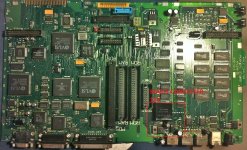
You need to remove the freewheeling diode and somehow insert an ammeter between that diode and the rest of the load. Because if that boost exceeds more than 1.5A or so, itll drop out. Watch the current draw.
I cant remember what all uses that 12V, I think the HDD, serial, audio, and FDD use it.
I dont know what the current rating of the inductor, or the inductance is. I could break out my B&K and measure it, but i really dont wanna tear my portable all the way apart again. lol.
You want to ring check, and inductance check the coil against a known good. That way, it can be ruled out. because if it has shorted turns it can saturate early and the voltage will drop off. but then the regulator will get noticeable hot very quickly at that point.
I cant remember what all uses that 12V, I think the HDD, serial, audio, and FDD use it.
I dont know what the current rating of the inductor, or the inductance is. I could break out my B&K and measure it, but i really dont wanna tear my portable all the way apart again. lol.
You want to ring check, and inductance check the coil against a known good. That way, it can be ruled out. because if it has shorted turns it can saturate early and the voltage will drop off. but then the regulator will get noticeable hot very quickly at that point.
That photo is too blurry for me to make out the part number, but Linear Technology generally has good datasheets and documentation. Most of their part numbers are LTxxxx.
Inserting an ammeter anywhere in the regulator circuit is not likely to work. The current will be pulses and these circuits tend to be sensitive to stray inductance and capacitance. Without an oscilloscope, your best bet may be to replace parts one at a time until you find the bad part(s), the same thing is likely wrong with all of the boards.
Inserting an ammeter anywhere in the regulator circuit is not likely to work. The current will be pulses and these circuits tend to be sensitive to stray inductance and capacitance. Without an oscilloscope, your best bet may be to replace parts one at a time until you find the bad part(s), the same thing is likely wrong with all of the boards.
VR1 is a LT1070CKC
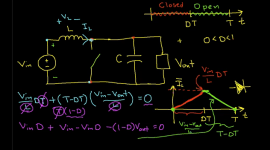
this video helped me alot ,understanding how a switch-mode boost converter works.
mouser.com
"LT1070CKC" did not return any results.
hey what do you think would be a good part# for that diode?
and the Inductor?
"LT1070CKC" did not return any results.
hey what do you think would be a good part# for that diode?
and the Inductor?
http://www.digikey.com/product-detail/en/LT1070CT%23PBF/LT1070CT%23PBF-ND/891546?WT.z_cid=ref_octopart_dkc_buynow
the diode is a generic shottkey, but it has to be capable of the current your handing it.
the coil has to be measured.
the diode is a generic shottkey, but it has to be capable of the current your handing it.
the coil has to be measured.
I've used the LT1070 in a couple of designs before, it's a good part.
Datasheet and documentation is here:
http://www.linear.com/product/LT1070
The CKC suffix indicates various options, stuff like temperature range, package style, whether it's Pb-free, etc. You need to start searching by the root part number.
Datasheet and documentation is here:
http://www.linear.com/product/LT1070
The CKC suffix indicates various options, stuff like temperature range, package style, whether it's Pb-free, etc. You need to start searching by the root part number.
Does it not have a 3 digit code on the top? It works the same way as capacitor codes.
You can make a pretty good guess by looking at the datasheet though. It will tell you how to calculate the optimal inductor value based on the desired input voltage and output voltage and current. RTFM
No, I posted a picture. It shows a part number of the coil, but it doesnt really ring any bells on google.
Sure you can go by datasheet, but the exact way IMHO on how they did it is by an inductance meter, but thats just my thought.
I am not entirely sure what amperage the 12V rail supplies, so im not entirely sure what the saturation current of the coil needs to be in that aspect. Of course we know the regulator tops 5A peak. So we can safely assume by using the maximum ratings boundary.
As a start, spec a coil based on the absolute maximum ratings. knowing your dealing with 6v to 7.5v input. and 12v output. But i would ring it to make sure its even bad first...
eh. whatever. lol mine hasnt failed. at least not yet.
Sure you can go by datasheet, but the exact way IMHO on how they did it is by an inductance meter, but thats just my thought.
I am not entirely sure what amperage the 12V rail supplies, so im not entirely sure what the saturation current of the coil needs to be in that aspect. Of course we know the regulator tops 5A peak. So we can safely assume by using the maximum ratings boundary.
As a start, spec a coil based on the absolute maximum ratings. knowing your dealing with 6v to 7.5v input. and 12v output. But i would ring it to make sure its even bad first...
eh. whatever. lol mine hasnt failed. at least not yet.
http://www.mouser.com/ProductDetail/Vishay-Semiconductors/VSSAF5L45-M3-6A/?qs=sGAEpiMZZMutXGli8Ay4kDeC%2frMhms2PGmqbeJ7O5WI%3d
Mouser Part #:
78-VSSAF5L45-M3/6A
Manufacturer Part #:
VSSAF5L45-M3/6A
Manufacturer:
Vishay Semiconductors
Description: Schottky Diodes & Rectifiers 5A, 45V, TMBS
: $0.31
maybe this?
http://www.digikey.com/product-detail/en/LT1070CT%23PBF/LT1070CT%23PBF-ND/891546?WT.z_cid=ref_octopart_dkc_buynow
$10.93 - seems quite expensive.... dammit.
how about this?
http://www.mouser.com/ProductDetail/Texas-Instruments/LM2577T-ADJ-NOPB/?qs=sGAEpiMZZMug9GoBKXZ751B%2faedqEegd7LygRit8d30%3d
Larger Image
Mouser Part #:
926-LM2577T-ADJ/NOPB
Manufacturer Part #:
LM2577T-ADJ/NOPB
Manufacturer:
Texas Instruments
Description: DC/DC Switching Converters STEP-UP VLTG REG
1: $5.97
maybe 3A would be plenty?
Mouser Part #:
78-VSSAF5L45-M3/6A
Manufacturer Part #:
VSSAF5L45-M3/6A
Manufacturer:
Vishay Semiconductors
Description: Schottky Diodes & Rectifiers 5A, 45V, TMBS
: $0.31
maybe this?
http://www.digikey.com/product-detail/en/LT1070CT%23PBF/LT1070CT%23PBF-ND/891546?WT.z_cid=ref_octopart_dkc_buynow
$10.93 - seems quite expensive.... dammit.
how about this?
http://www.mouser.com/ProductDetail/Texas-Instruments/LM2577T-ADJ-NOPB/?qs=sGAEpiMZZMug9GoBKXZ751B%2faedqEegd7LygRit8d30%3d
Larger Image
Mouser Part #:
926-LM2577T-ADJ/NOPB
Manufacturer Part #:
LM2577T-ADJ/NOPB
Manufacturer:
Texas Instruments
Description: DC/DC Switching Converters STEP-UP VLTG REG
1: $5.97
maybe 3A would be plenty?
Keep in mind the pinout. I havent looked in the datasheet. So I dont know if the LM part will drop in place of the LT part
Also the diode package type isnt correct
Also the diode package type isnt correct
ok i will keep an eye on that.
It would be much less of a hassle to spend more money and get the right part, instead of making something else work.
Its not like there is a %90 price difference ether, its 50% less expensive, and has 2 amps less power output as well.
I know the diode package is not like what is on there.
looking closer at the pads, I think this one might fit.
It would be much less of a hassle to spend more money and get the right part, instead of making something else work.
Its not like there is a %90 price difference ether, its 50% less expensive, and has 2 amps less power output as well.
I know the diode package is not like what is on there.
looking closer at the pads, I think this one might fit.
Give it a shot ;-)
i'll make sure to start with the m5126 that has a completely dead 12v rail.
Linear Technology parts do tend to be a bit on the spendy side. If you ask them nicely though, they will usually send you a couple of samples free of charge. I've used the LM257x parts as well, originally National Semiconductor and now cheaper clones are made by TI. They work very similarly to the LT parts but do double check the pinout and current rating.
The inductor is really not all that critical. They only come in a handful of standard values and most of these integrated switching regulators will work fine over quite a wide range of inductances and in this case a similar application recommends 150uH so I would expect anything from 100uH to 200uH to work just fine and a much wider range is likely to work to some extent. If you are trying to optimize efficiency then you want to get the value a bit closer to ideal, but here you are just trying to diagnose and I am betting there is nothing wrong with the existing inductor.
Same with the diode, it's not critical. Any Schottky diode of equal or greater current and voltage ratings will work fine, although if the diode tests ok out of circuit then it's highly unlikely to be bad.
There is just not much to this circuit, and most of the parts are easily tested. There is no need to shotgun it and replace everything.
The inductor is really not all that critical. They only come in a handful of standard values and most of these integrated switching regulators will work fine over quite a wide range of inductances and in this case a similar application recommends 150uH so I would expect anything from 100uH to 200uH to work just fine and a much wider range is likely to work to some extent. If you are trying to optimize efficiency then you want to get the value a bit closer to ideal, but here you are just trying to diagnose and I am betting there is nothing wrong with the existing inductor.
Same with the diode, it's not critical. Any Schottky diode of equal or greater current and voltage ratings will work fine, although if the diode tests ok out of circuit then it's highly unlikely to be bad.
There is just not much to this circuit, and most of the parts are easily tested. There is no need to shotgun it and replace everything.
All I can say is order up the parts and try it.
First thing is first though, test all the traces that connect the regulators circuits all together. Follow the datasheet, its example circuit diagram is what I would follow as its likely the same.
Also, check any resistors it may have to form the output voltage.
oh and last but not least, check the shutdown signal. if engaged, thats why no 12V. and the 68HC05 is responsible for that.
First thing is first though, test all the traces that connect the regulators circuits all together. Follow the datasheet, its example circuit diagram is what I would follow as its likely the same.
Also, check any resistors it may have to form the output voltage.
oh and last but not least, check the shutdown signal. if engaged, thats why no 12V. and the 68HC05 is responsible for that.