

Thread
Twiggy 128K prototype, again.
Surely there are pictures of these prototypes in archives of the corporations that used them to develop software? I honestly can't believe that these companies wouldn't have taken the machines apart and taken some photos of them due to the revolutionary aspect of them. Someone somewhere would have more photos of these things back in the day that we could compare this one to. I still think that Andy Hertzfeld would be able to tell you if this one is legit or not, and answer a lot of the questions we are all asking.
Nope, no system air, it's just the tiny bit of cooling air that would slip up and around the Frame/PCB that would carry the negligible amount of waste heat produced by the TwiggyDrive out the 5.25" slot.
Think of the box is an open bottom diving bell, trapping the waste head from the Twiggy in the (albeit miniscule) sea of air vented through the underchin intake vents of the ProtoMac case. The Box all but abuts the right side of the case and frame, so no cooling air to speak of takes that route. The 'diving bell" acts as an air dam, such that the front vent intake's air stays down in the MoBo cellar picking up the MoBo's heat output and traveling back and to the left side of the case underneath the warmer air inside the Twiggy enclosure. Only these two routes remain for the cooler air to travel as it picks up waste heat and expands up and to the left, past the AB where it picks up more heat from the AB components in the (4" tall ?) space between the "diving bell box" and the component side of the AB's PCB. The other path for convection would be straight back underneath the "air dam/diving bell" and up the backside of the "diving bell" where it would cool the yoke assembly of the CRT.
It ain't enough, but if that's what the "packaging" mechanical engineers chose to do on purpose, it was pretty slick. My local lil' bro does blade server packaging for TekElec, he likes playing with fluid dynamics and heat sinks. He says convection is fine until you start having fans blowing air all around the inside of a computer case. Convection is out the window in Gamer Boxes and the like.
With a very small fan mounted in the handle space, a whole lot of grief could have been avoided by giving convection a little pull along!
My thoughts?
im a member of the google groups lisalist.
Xenix was an operating system ported to the lisas by microsoft, dd is available on xenix. If you could get an early version of macos on a twiggy lisa, you could image it.
there are a few lisa owners with this combo...
oh and another thing, iirc the twiggy drive used a piece of foam on the other side of the drive head to exert positive pressure of the disk surface to the head (twiggy drives had drive heads for both sides on opposite ends of the disk. IF that foam is perished =very likely, then no pressure means no disk reading! = that twiggy disk may have <.85 system on it! hard to say unless a hacker minded collector buys it.....
or storms the guy whos selling it's house and steals it via gunpoint....
for a very rough timeline of sys versions, see here
http://www.folklore.org/StoryView.py?project=Macintosh&story=Early_Demos.txt&sortOrder=Sort%20by%20Date&detail=medium
im a member of the google groups lisalist.
Xenix was an operating system ported to the lisas by microsoft, dd is available on xenix. If you could get an early version of macos on a twiggy lisa, you could image it.
there are a few lisa owners with this combo...
oh and another thing, iirc the twiggy drive used a piece of foam on the other side of the drive head to exert positive pressure of the disk surface to the head (twiggy drives had drive heads for both sides on opposite ends of the disk. IF that foam is perished =very likely, then no pressure means no disk reading! = that twiggy disk may have <.85 system on it! hard to say unless a hacker minded collector buys it.....
or storms the guy whos selling it's house and steals it via gunpoint....
for a very rough timeline of sys versions, see here
http://www.folklore.org/StoryView.py?project=Macintosh&story=Early_Demos.txt&sortOrder=Sort%20by%20Date&detail=medium
i believe this system is the #6 or #7 or in between that andy describes here http://www.folklore.org/StoryView.py?project=Macintosh&story=Macintosh_Prototypes.txt&sortOrder=Sort%20by%20Date&detail=medium
due to the date on the board, the non matching serial number, and the presence of mr macintosh
note this pic, http://i.ebayimg.com/t/BEYOND-RARE-PROTOTYPE-MACINTOSH-128k-APPLE-MAC-5-25-TWIGGY-DISK-DRIVE-/00/s/ODcwWDYyMg==/$(KGrHqR,!nQE9gF4Zen9BPhvO7Nv9Q~~60_58.JPG
where the analog sound generator chip (ASG) is present
due to the date on the board, the non matching serial number, and the presence of mr macintosh
note this pic, http://i.ebayimg.com/t/BEYOND-RARE-PROTOTYPE-MACINTOSH-128k-APPLE-MAC-5-25-TWIGGY-DISK-DRIVE-/00/s/ODcwWDYyMg==/$(KGrHqR,!nQE9gF4Zen9BPhvO7Nv9Q~~60_58.JPG
where the analog sound generator chip (ASG) is present
Considering the undoubtedly draconian terms of the non-disclosure agreement that pre-release developers certainly must have signed to get their paws on a Mac prototype in the first place disassembling it and taking pictures would have been an extremely stupid thing to do from a legal standpoint.
only if the photos got out 'too early'
20yrs is an ok time to let them out.
20yrs is an ok time to let them out.
I don't think those non-disclosure agreements expire like that.
Ask Apple, Foxconn, or the scores of many other companies that (sometimes rightfully) use NDAs like it's going out of style if they ever plan a "sunset" date into them.
Ask Apple, Foxconn, or the scores of many other companies that (sometimes rightfully) use NDAs like it's going out of style if they ever plan a "sunset" date into them.
It seems that someone has bid on this. :O
Yeah, and the bidder basically has nothing for feedback. So expect this prototype to be on eBay a little while longer.
Yeah, judging by his last bids (pocket knives, PDA/Cellphone batteries), it just sounds like someone that is screwing around.
There are prototypes of everything floating around.
ATM there are prototypes of Wii U, there are presumably PS4, XBox720, iPad 4/Mini etc. prototypes.
But the NDAs prevent any details getting out, anything that is reported is rumour / PR or someone leaving something in a bar...
ATM there are prototypes of Wii U, there are presumably PS4, XBox720, iPad 4/Mini etc. prototypes.
But the NDAs prevent any details getting out, anything that is reported is rumour / PR or someone leaving something in a bar...
Re-listed...
i think the seller is holding out for MAXIMUM ROI!
lol
lol
Just a reminder to everyone from your friendly administration team to please refrain from making derogatory comments about the seller or the price they want for it, regardless of your opinion on either topic. 
Relisted auction is now gone. Odd.
I certainly wouldn't publicly mention or post pictures of an Apple prototype that I had in my possession, let alone try to sell it on eBay! Foolish - it could be taken away from that person. I'm glad we got to see it though.
so, as i undrstand it, The difference this particular mac makes is =
the twiggy drive
the possible(but atm doubtful)early system rom
and the front cover to facilitate the twiggy drive
im a solutions type of hacker so....
we have twiggy disk drivers in LOS, and lisaem, and possibly the other lisa emulator i cant remember
it would take a little hacking around to make twiggy drivers, but we really have references and code available to us.
they could easily be injected into a system rom and a new one burnt.
heh u could even compile ur own rom and use it in the fpgamac project.. for something different (and closer to a 512k config without going upto a mac+- scsi and extra stuff)
The twiggy drive is a little harder, but we could find the last and best revision twiggy and reproduce one properly with a reprap.
(a 3d printer that can be built by anyone) the circuitry and motors and such are large enough to be replaced with other similar items.
the lisa 2/5 twiggy adapter can be c0pied and reproduced as well.
as for the front cover, well either someone could reproduce one from a the photos and positioning a real twiggy in a mac case, a 3d modeller would be able to do so.
so for some who would like to fiddle with a twiggy mac, there is a real possibility
as well as the extra storage space that the twiggy provides = 900ish kb to a disk comparted to 400kbish.
aslo as a side thought, would there be anything wrong with connecting an idefile/xprofile card to a pre 512ke mac?
alls that needed is a paralell card and some drivers... just thinking here.
the twiggy drive
the possible(but atm doubtful)early system rom
and the front cover to facilitate the twiggy drive
im a solutions type of hacker so....
we have twiggy disk drivers in LOS, and lisaem, and possibly the other lisa emulator i cant remember
it would take a little hacking around to make twiggy drivers, but we really have references and code available to us.
they could easily be injected into a system rom and a new one burnt.
heh u could even compile ur own rom and use it in the fpgamac project.. for something different (and closer to a 512k config without going upto a mac+- scsi and extra stuff)
The twiggy drive is a little harder, but we could find the last and best revision twiggy and reproduce one properly with a reprap.
(a 3d printer that can be built by anyone) the circuitry and motors and such are large enough to be replaced with other similar items.
the lisa 2/5 twiggy adapter can be c0pied and reproduced as well.
as for the front cover, well either someone could reproduce one from a the photos and positioning a real twiggy in a mac case, a 3d modeller would be able to do so.
so for some who would like to fiddle with a twiggy mac, there is a real possibility
as well as the extra storage space that the twiggy provides = 900ish kb to a disk comparted to 400kbish.
aslo as a side thought, would there be anything wrong with connecting an idefile/xprofile card to a pre 512ke mac?
alls that needed is a paralell card and some drivers... just thinking here.
Sometimes the even more rare items slip right past us without notice ("lefty" floppy prototype case): http://www.ebay.com/itm/ws/eBayISAPI.dll?ViewItem&_trksid=p4340.l2557&rt=nc&nma=true&item=170824312850&si=oeaBgfrohgJrml%252BMaHtVzMQJHgM%253D&viewitem=&orig_cvip=true&rt=nc#ht_500wt_1387 
As noted here on the fora previously:
] ]'>
I've been planning to make a vacuum forming buck for doing a ProtoHoaxMacTwiggy™ in clear plexi since the Old Guard day over on 'fritter. However a DVD/CD will be popping in-n-out of the opening. Learning about the stamped aluminum "skin" on the Twiggy drive makes this just too easy! [ ] ]'>
] ]'>
I've got plans on the board for doing a total of five riffs on different ProtoHoaxMac™ Hacks. Vacuum forming plexi convex CRT faces and concave inner bezels to frame LCDs behind 9" and 12" CRT openings is the next development step in this ongoing project.
Old school pattern making, vacuum forming and plexi fabrication techniques trump CNC & ProtoPrinting processes when it comes to clear ProtoHoaxMac™ production in very small quantities . . . not to mention the monetary hit imposed by taking a high tech approach.
Plaster cast of positive part = female cast for positive blank -> shave down positive blank by the thickness of the plexi being formed ->
vacuum forming sections -> trimming formed blanks -> machining Snow White grooviness -> assembly
Lightly frosting the inside of the blanks, by sandblasting, covers a multitude of sins, like the (manual, not CNC) router table bit's machining marks, BTW. [ ] ]'>
] ]'>
[
] ]'>I've been planning to make a vacuum forming buck for doing a ProtoHoaxMacTwiggy™ in clear plexi since the Old Guard day over on 'fritter. However a DVD/CD will be popping in-n-out of the opening. Learning about the stamped aluminum "skin" on the Twiggy drive makes this just too easy! [
] ]'>I've got plans on the board for doing a total of five riffs on different ProtoHoaxMac™ Hacks. Vacuum forming plexi convex CRT faces and concave inner bezels to frame LCDs behind 9" and 12" CRT openings is the next development step in this ongoing project.
Old school pattern making, vacuum forming and plexi fabrication techniques trump CNC & ProtoPrinting processes when it comes to clear ProtoHoaxMac™ production in very small quantities . . . not to mention the monetary hit imposed by taking a high tech approach.
Plaster cast of positive part = female cast for positive blank -> shave down positive blank by the thickness of the plexi being formed ->
vacuum forming sections -> trimming formed blanks -> machining Snow White grooviness -> assembly
Lightly frosting the inside of the blanks, by sandblasting, covers a multitude of sins, like the (manual, not CNC) router table bit's machining marks, BTW. [
] ]'>
Barana, If all one wants to do is play with a Twiggy Mac, then yes those are the only differences. For a collector however, the rear bucket is notably different from production models too - no top vents, the apple logo is stamped into the back of the case and the square apple logo is on the right side, it's stamped prototype inside, the front bezel is also missing a bottom vent. The logicboard is a completely different configuration, the analogue board shows some differences, and who knows what else ...
Personally, I'd love to have that thing in my collection, working or not ...
Personally, I'd love to have that thing in my collection, working or not ...
When I saw those flipped photos, it made me think, the amount of attention this machine is getting is actually kind of silly. It is a good reference point in the evolution of the design, but it has not really added much more info on what has already been seen from old photos. It's just a shame it did not end up in a place like the computer history museum where proper research and documentation could go into it. I hope the guy selling it does not get rewarded for his profit seeking in this particular case. If he paid $5-10k it's still low enough to do a kickstarter to get his money back and donate it. If he's a true Woz fan, that would be the thing to do.
Relisted for half-price $49,995 with a BIN of $74,995.
http://www.ebay.com/itm/ws/eBayISAPI.dll?ViewItem&item=160794146416
Just noticed the external floppy drive port. Did this icon change? It can't be clearly seen in the photos posted on eBay, but looking at my 128K, it appears to be a Twiggy drive. In other words, the Icon represents the front of the external floppy case, with a Centered floppy slot that goes all the way across, with an oversized thumb/finger grab-hole (I know ... High level techno speak), whereas the actual 400k external slot was offset to the upper left (with a sleeker grab-hole). In contrast, the Mac Plus depicts an external floppy drive that almost exactly mirrors the front of the 800K Macintosh external drive.
It would appear the icon was never modified. This is surprising considering many other minor (and major) changes to the prototype case from the production, considering Jobs meticulous attention to detail.
http://www.ebay.com/itm/ws/eBayISAPI.dll?ViewItem&item=160794146416
Just noticed the external floppy drive port. Did this icon change? It can't be clearly seen in the photos posted on eBay, but looking at my 128K, it appears to be a Twiggy drive. In other words, the Icon represents the front of the external floppy case, with a Centered floppy slot that goes all the way across, with an oversized thumb/finger grab-hole (I know ... High level techno speak), whereas the actual 400k external slot was offset to the upper left (with a sleeker grab-hole). In contrast, the Mac Plus depicts an external floppy drive that almost exactly mirrors the front of the 800K Macintosh external drive.
It would appear the icon was never modified. This is surprising considering many other minor (and major) changes to the prototype case from the production, considering Jobs meticulous attention to detail.
I saw a Sony 3.5" sized external fdd that hooked up to a standard Mac floppy port. I'm assuming it would be for the //?
For the IIgs, and the Mac. Yeah, all Compact Macs (and some II series) had a floppy drive port so that you could attach another 3.5" Sony drive. Given that the early Macs had no HDDs, and 400k was nowhere near enough, an external drive was virtually a neccessity. Heck, mine has been upgraded to 512ke with an 800k drive, and I still prefer using it with the external.
Apple's first 3.5" fdd was 400K and exclusively for the 128K/512K Mac. It was incompatible with any other Apple product.
Apple's first 800K external 3.5" drive was the UniDisk exclusively for the Apple II, though the internal circuitry could be bypassed and used with a Mac.
Apple then released an 800K 3.5" external exclusively for the Mac. And later introduced a cross platform drive for both Apple IIs and Macs. Apple again updated this drive to a 1.44MB external, again for both IIs and Macs.
No 5.25" drive is compatible with the Mac (excluding the specialized PC drive, which is not compatible with the Apple II), except of course the Twiggy drive used with this Mac prototype.
This site has an excellent history of the Apple drives and their compatibility.
http://vintagemacworld.com/drives.html
An interesting note, the release of the SE marked the third update of the external disk icon for the Mac, which I believe was the universal disk icon used on all Apple products - instead of a representation of the actual external drive, it became a 5.25 disk icon. Ironic that the Apple II line won out with their preferred 5.25" disk format rather than the 3.5" disk standard (which was never widely adopted by II users). Just goes to show how influential the Apple II was at Apple in 1987.
Apple's first 800K external 3.5" drive was the UniDisk exclusively for the Apple II, though the internal circuitry could be bypassed and used with a Mac.
Apple then released an 800K 3.5" external exclusively for the Mac. And later introduced a cross platform drive for both Apple IIs and Macs. Apple again updated this drive to a 1.44MB external, again for both IIs and Macs.
No 5.25" drive is compatible with the Mac (excluding the specialized PC drive, which is not compatible with the Apple II), except of course the Twiggy drive used with this Mac prototype.
This site has an excellent history of the Apple drives and their compatibility.
http://vintagemacworld.com/drives.html
An interesting note, the release of the SE marked the third update of the external disk icon for the Mac, which I believe was the universal disk icon used on all Apple products - instead of a representation of the actual external drive, it became a 5.25 disk icon. Ironic that the Apple II line won out with their preferred 5.25" disk format rather than the 3.5" disk standard (which was never widely adopted by II users). Just goes to show how influential the Apple II was at Apple in 1987.
I'm intervening late in this thread but I'll say thanks to Gorgonops and Trash for their thoughts.
In order to understand or reverse engineer how a Twiggy 128K might work, you need to have a workshop like the one that existed at Apple at the time. To recreate it, you need a selection of hardware: Lisa 1, Lisa 2, 64KB ROM Mac, Apple II with 68000 co-processor card etc. Real hardware, not emulators, but emulators are a great *additional* tool. Then you need the software that was used to transfer the OS from the source device to something that wrote a bootable disk. Finding the software or recreating it is more difficult than finding the hardware. Until we have an example of the boot blocks on a Mac Twiggy disk or code that read them, they are hard to replicate.
Am i seing the twiggy drive on this? I think i am.
http://archive.computerhistory.org/resources/text/Apple/Apple.Macintosh.1984.102646178.pdf
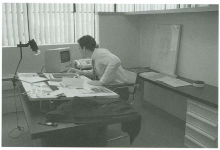
http://archive.computerhistory.org/resources/text/Apple/Apple.Macintosh.1984.102646178.pdf
Definitely is. I wonder who ended up with the twiggy Mac? Anyone here?
I offered him 50 bucks, no response.
I know who has it and I know it's in private but safe hands with someone who is working with several others on both documenting it and booting it.