

Ophiuchus
| Filename | ophiuchus-100.hqx |
|---|---|
| Size | 3,014.1 KB (3086424 bytes) |
| Downloads | 24 |
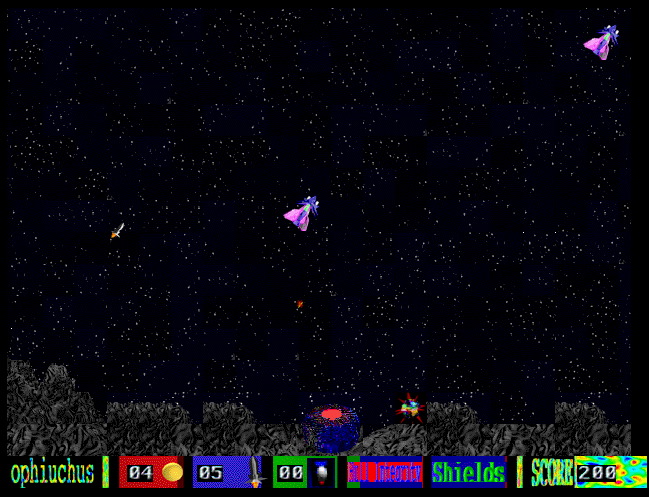
Ophiuchus is a side-scrolling shooter set in a lunar canyon, released in 1997 by Adam Winiecki under the Judah Software label. The player flies through tight rock corridors dodging rapid fire, guided missiles, and enemy bases scattered along the way. A small loadout of decoys, cloaking devices, and other deception gadgets gives the pilot tools beyond plain firepower.
Concept and setting
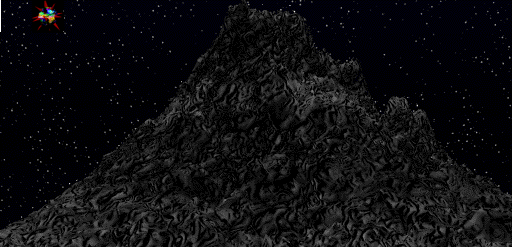
The action takes place above a barren lunar surface, with the camera tracking sideways through narrow canyons. Each run sends the player past dozens of fortified bases and patrolling defenses, with terrain forcing constant maneuvering rather than open dogfights.
Weapons and gadgets
Beyond standard fire, the player can deploy decoys to confuse guided missiles, trigger cloaking to slip past sensors, and use other special devices the readme groups together as "devices of deception." Picking the right gadget for each obstacle is part of the puzzle.
Performance
Judah Software tuned Ophiuchus to hit 30 frames per second on every Power Macintosh of the era, and the game also runs on 68040 machines, although physics and momentum make precision flying demanding regardless of hardware.
System requirements
The game occupies about 3.8 MB uncompressed and asks for 3800K of RAM. It runs in 8-bit color and requires a display of at least 640x480.
Author and contact
Adam Winiecki of Judah Software distributed Ophiuchus directly, taking registrations and feedback through Kagi at adamw@kagi.com and from his Pacifier-hosted home page. The shareware notice pegs the title at version 1.0.0.

This file is part of the MacTrove archive. See the Thank You page for the upstream mirrors we rely on. It is BinHex encoded — use The Unarchiver to decode it.


