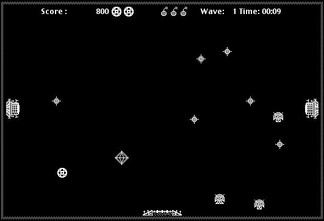
Tracktor Beam
| Filename | tracktor-beam-12.hqx |
|---|---|
| Size | 1,206.7 KB (1235642 bytes) |
| Architecture | PowerPC |
| Downloads | 22 |
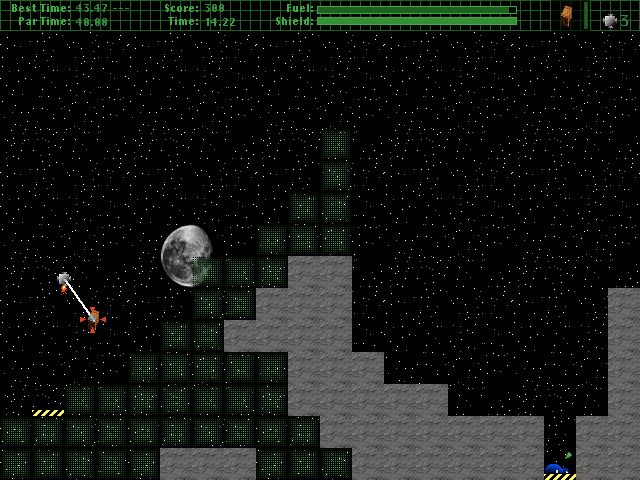
Tracktor Beam is a fast-paced action-puzzle game by William Thimbleby, released by UK shareware label Tri-Bar in 1999. Pilot a small spaceship that hauls crates between drop points using its tractor beam, dodging obstacles and enemies in tightly designed levels billed as both challenging and rewarding.
Premise
The Macintosh Garden entry summarizes it plainly: "In this game, you pilot a small spaceship and move a crate from one point to another using your tractor beam." The Tri-Bar release notes echo the pitch, calling it a "fun fast action packed game" with "unique" and "very addictive gameplay" that takes practice to master.
Tri-Bar Software
Tracktor Beam was the flagship release of Tri-Bar, a small UK shareware outfit run by William Thimbleby and Matthew Dolan. The same team also distributed TheMouse2B, a utility that mapped modifier keys onto two-button Mac mice, extending the playability of action games like StarCraft.
Versions and shareware terms
The Info-Mac archive carries v1.1 of Tracktor Beam (a sibling entry on this site catalogs v1.2). Tri-Bar stressed that "this game is not crippled nor has any features been removed" and asked players to register on the honor system if they liked it.
Built for extension
The author's notes describe Tracktor Beam as "built with extension in mind," with planned level and world editors that would have allowed new graphics, sounds, enemies, bonuses, and puzzle blocks. Whether those tools ever shipped publicly is unclear from the archived materials.
Original Source: info-mac
This file is part of the MacTrove archive. See the Thank You page for the upstream mirrors we rely on. It is BinHex encoded. Use The Unarchiver to decode it.