

Apeiron
| Filename | apeiron-102.hqx |
|---|---|
| Size | 3,243.0 KB (3320809 bytes) |
| Downloads | 18 |
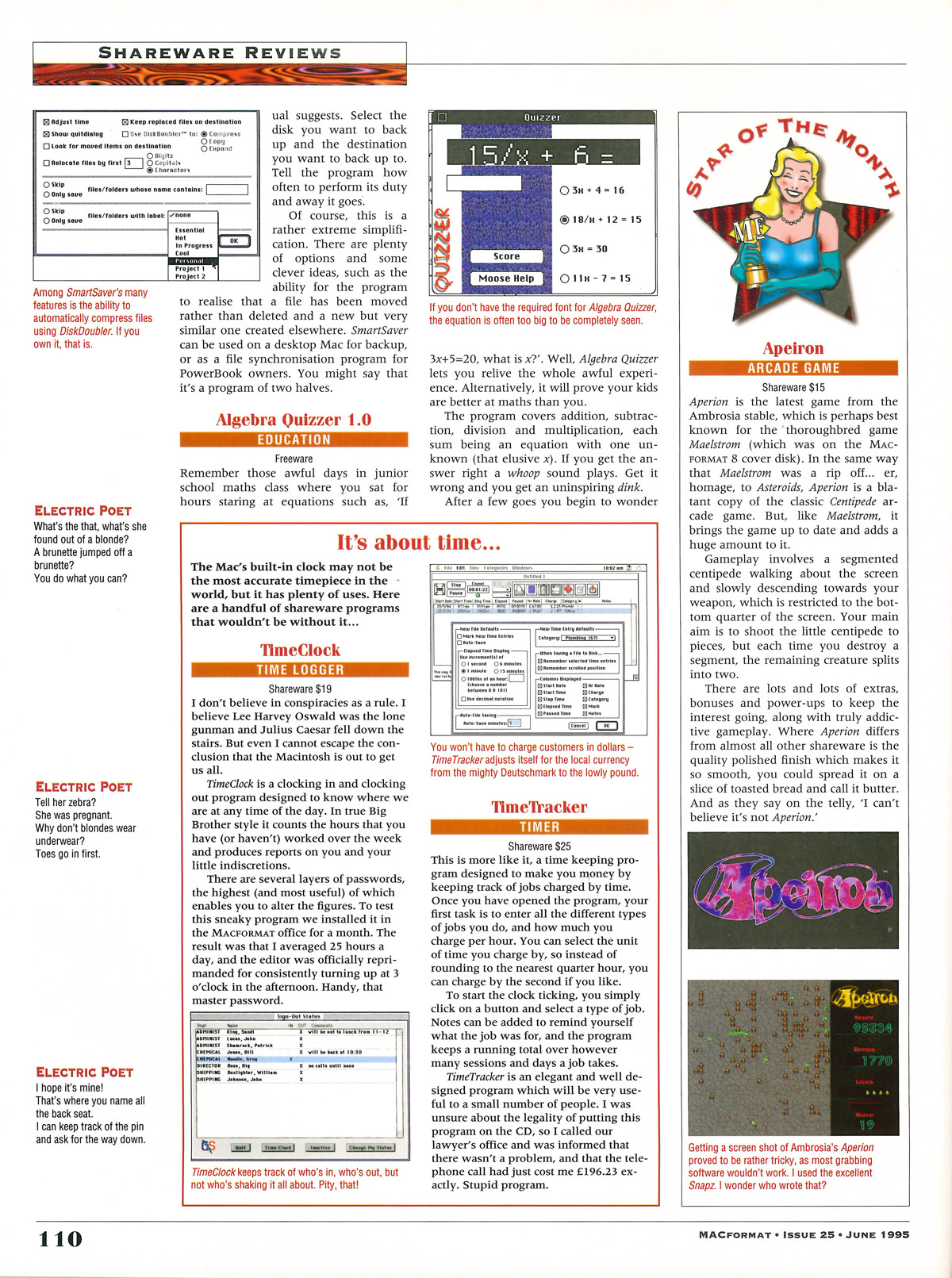
Apeiron is Ambrosia Software's 1995 Macintosh shareware reimagining of Atari's 1980 arcade classic Centipede, designed by Andrew Welch. It pits the player against a writhing centipede that snakes down through a mushroom field, with fleas, spiders, and scorpions stirring up the play area. Widely praised as the definitive Mac take on the formula.
Setting
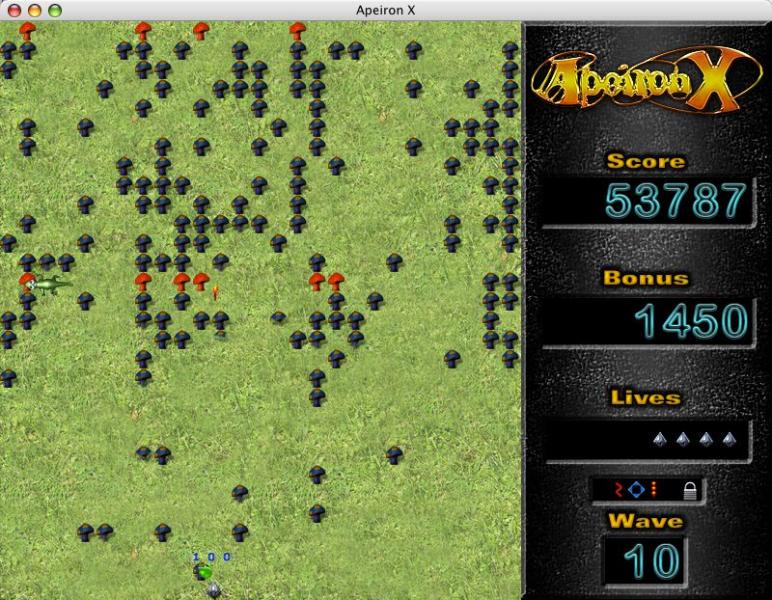
The action plays out in a brightly colored, top-down arena seeded with mushrooms. The player's ship hovers along the bottom strip of the screen and can move freely within a narrow band, dodging hazards while picking off the descending centipede.
Gameplay
Apeiron is a fixed shooter. Each shot that hits a middle segment of the centipede splits it into two faster, independent halves, while shooting mushrooms breaks them down for points. Fleas drop new mushrooms, spiders zig-zag across the field eating them, and scorpions poison mushrooms so a centipede that touches one plummets straight down. Power-ups, multiple ship types, and rising difficulty extend the basic formula across many levels.
Engine
The game requires a 16 MHz 68020 or any PowerPC Macintosh and runs from System 6.0.7 through Mac OS 9.2.2 in 256 colors or grayscale. A native Mac OS X port followed in November 2004. Ambrosia's in-house arcade tech delivered smooth scrolling sprites and the studio's signature polished sound design.
Development
Apeiron was created by Andrew Welch, founder of Ambrosia Software and author of Maelstrom. It was released as shareware on February 11, 1995, distributed via Info-Mac, AOL, and Ambrosia's own channels, with a registration code unlocking the full feature set.
Reception
Reviewers were enthusiastic. Bart Farkas in The Macintosh Bible (1996) called it "the best Centipede clone on the market," Macworld awarded four out of five stars, and MacAddict listed it among the essential Mac titles. It remains a touchstone of mid-1990s Mac shareware gaming.
This file is part of the MacTrove archive. See the Thank You page for the upstream mirrors we rely on. It is BinHex encoded — use The Unarchiver to decode it.


