Project Magellan Demo
| Filename | project-magellan-demo-202.hqx |
|---|---|
| Size | 5,083.4 KB (5205423 bytes) |
| Mac OS | System 7 |
| Architecture | PowerPC68K |
| Downloads | 19 |
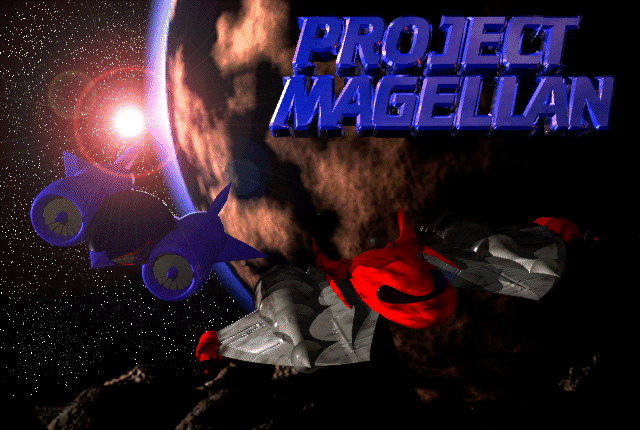
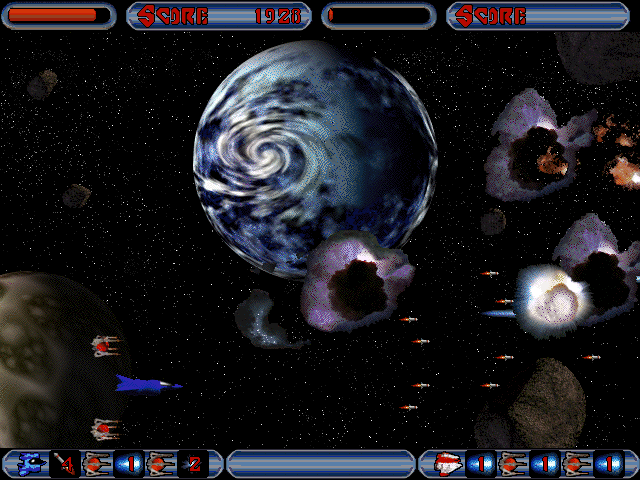
Project Magellan Demo is the playable preview of Plaid World Studios' 1998 horizontal-scrolling space shoot-em-up by Chris Dillman. Posted to Info-Mac as project-magellan-demo-202.hqx in March 1998, the demo showcases the first levels of a 10-stage R-Type / Raiden 2-style arcade shooter built natively for classic Mac OS with two-player simultaneous cooperative play.
Setting and theme
The thousand-year anniversary of Ferdinand Magellan's circumnavigation prompts the United Earth Government to launch an exploratory armada into deep space. Almost immediately, a mysterious alien battle cruiser attacks the fleet, and two assault fighters launch in response. The player flies one of those fighters, with a second fighter available for a co-op partner.
Gameplay
Standard side-scrolling shooter mechanics: dodge enemy bullets and ships, collect weapon power-ups, and clear stages culminating in bosses. The arsenal includes tracking missiles, spread shots, star bursts, energy torpedoes, and particle lasers, each upgradable across nine power tiers. The full game ships ten levels with four layers of parallax scrolling; the demo gates content after the early stages.
Engine and technical changes
Programming was done by Chris Dillman in CodeWarrior C/C++ for classic Mac OS, with sprites and backgrounds rendered as 16-bit pre-rendered 3D art and FMV. The full release requires System 7.5.3 or later, Color QuickDraw, 16 MB RAM, and runs fat on 68k and PowerPC; the demo's requirements match. A 10-track electronic soundtrack accompanies the action.
Development and release
Project Magellan was Plaid World Studios' third release and took two years to build. The Mac demo dropped in early 1998; Plaid World later partnered with Monkey Byte and PlayPak for fuller distribution, and a Win32 DirectX port followed. A Mac OS X port ("Project Magellan X") appeared years later, keeping the title in circulation well beyond the Classic era.
This file is part of the MacTrove archive. See the Thank You page for the upstream mirrors we rely on. It is BinHex encoded — use The Unarchiver to decode it.