

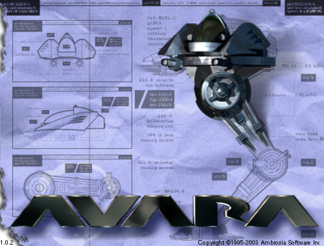
Avara
| Filename | Avara_1.0.0.sit |
|---|---|
| Size | 2,270.6 KB (2325090 bytes) |
| Year | 1996 |
| Mac OS | System 7 |
| Architecture | PowerPC |
| Downloads | 20 |
Juri Munkki's September 1996 release for Ambrosia Software is a network-first first-person mech shooter, built around bipedal combat robots called HECTORs and a fast custom 3D engine that ran playably from Helsinki to California over 28.8k modems. Levels were drawn in ClarisWorks; up to six players fought free-for-all or in colored teams.
Setting and story
The fiction is light: in the near future, conflicts are resolved by remotely piloting HECTORs — Hostile Environment Combat And Tactical Operations Remote, bipedal armored chassis between 150 and 220 kilograms — through arenas and obstacle courses. The single-player campaign is a sequence of training and skirmish levels. The real game is multiplayer.
Gameplay
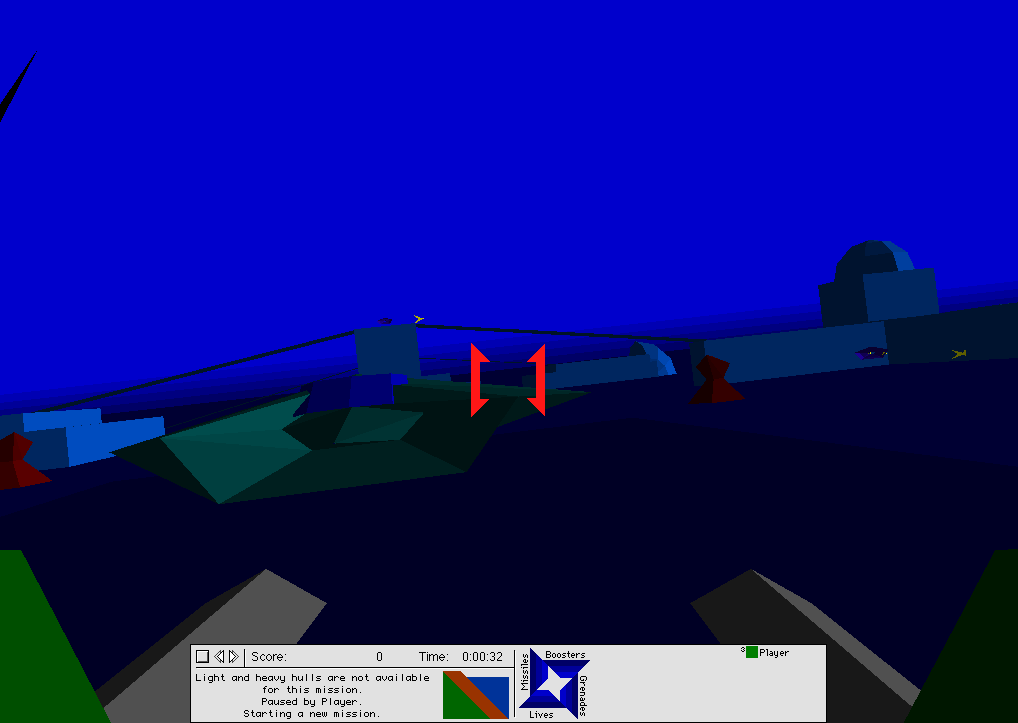
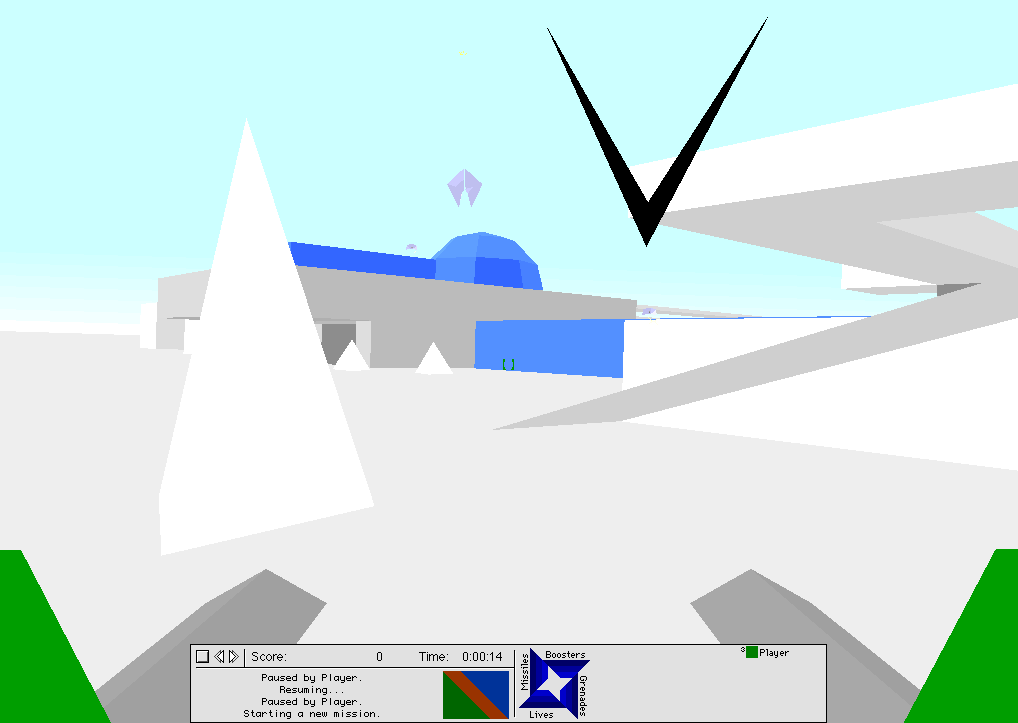
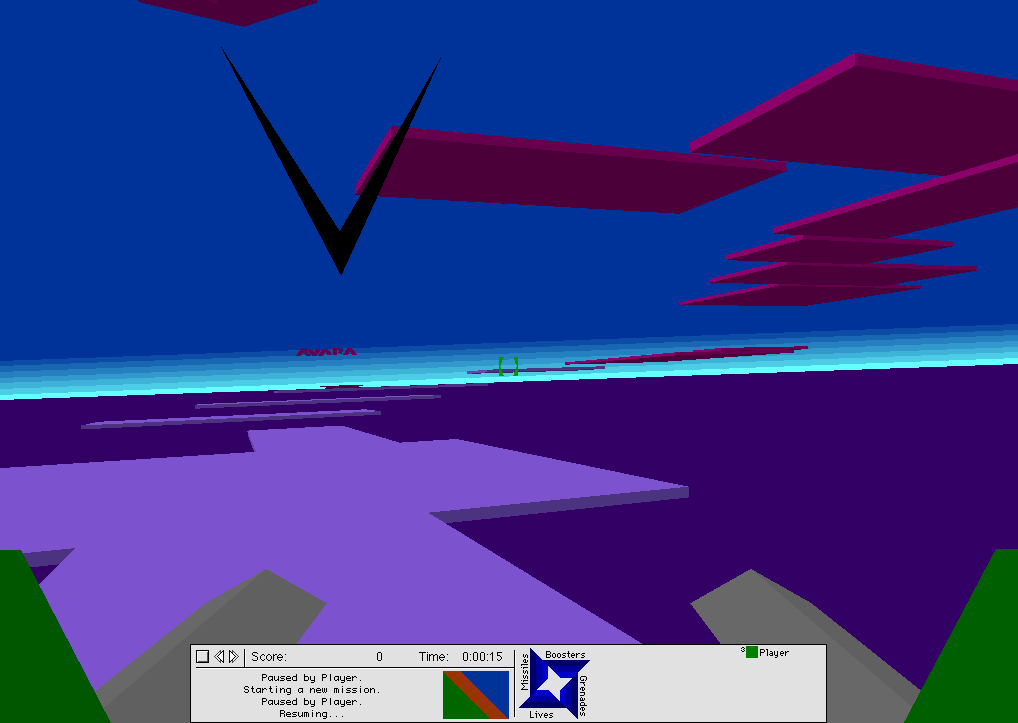
Each player tunes a HECTOR before a match: heavier armor and weapons cost mass, and mass costs jump height, top speed, and turn rate. The arsenal includes plasma guns, missiles, grenades, and a boosters-as-weapons trick that lets a light HECTOR juke around a heavy. Matches run on AppleTalk LAN or over the open internet, with up to six players in solo or team configurations.
The level editor was a defining feature. Maps were drawn as 2D vector shapes in any standard Mac drawing program — ClarisWorks, MacDraw, Canvas — then loaded into Avara, which extruded the polygons into 3D arenas. Community level packs proliferated and several remained competitive long after the commercial game faded.
Engine and technical changes
Munkki had been writing polygon-rendering code since late 1992, demoed his 2D polygon work to Stuart Cheshire at Apple's 1994 WWDC, and built the Avara engine on Binary Space Partitioning libraries he wrote for prototype tank games. The renderer was flat-shaded but fast — playable on a 68040 — and the network code, hand-tuned for high-latency modem play, was unusually robust for the era.
Development and release
Andrew Welch, Ambrosia's president, found Munkki's posts about the prototype in a public developer forum and reached out about publishing. Avara shipped on September 17, 1996 as a Classic Mac OS exclusive. It never sold in volume — Ambrosia's catalogue at the time leaned on shareware action and puzzle titles, and Avara was a steeper learning curve.
Reception and legacy
The commercial run was modest, but the game built a small dedicated following that kept LAN parties and online ladders running for years. Munkki released the source code on GitHub under the MIT license in 2017, and the avaraline community port — cross-platform, network-compatible, with the original level format intact — has been the active maintained version since 2018.
This file is part of the MacTrove archive. See the Thank You page for the upstream mirrors we rely on. It is a StuffIt/Compact Pro archive — use The Unarchiver to extract it.


