

Zap T Balls Ii
| Filename | zap-t-balls-ii-10.hqx |
|---|---|
| Size | 5,167.2 KB (5291205 bytes) |
| Architecture | PowerPC68K |
| Downloads | 14 |
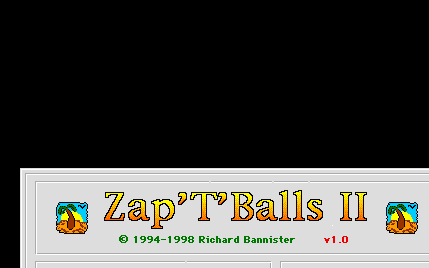
Developed by Richard Bannister of Titan Software, Zap'T'Balls II is the Macintosh sequel to the 1995 shareware hit Zap'T'Balls — itself a clone of Mitchell Corporation's Pang/Buster Bros., a coin-op that was famously never officially ported to the Mac. The sequel was distributed in two builds (v1.0 and a later v2.5), preserved alongside the original on Macintosh Garden.
Gameplay
Like its predecessor, Zap'T'Balls II tasks the player with shooting bouncing balls that split into smaller, faster fragments when hit, until the smallest fragments are destroyed. Each stage clears when all balls are gone, with hazards and power-ups added across levels. The sequel expands the Pang formula with new stages and refinements over the original's level set.
Development and release
Richard Bannister was a prolific Mac shareware developer best known later for his classic-console emulator front-ends. Zap'T'Balls II followed the original by a few years and was distributed via the standard Mac shareware channels of the late 1990s. Both v1.0 and a maintenance v2.5 release survive on Macintosh Garden under the original Zap'T'Balls page.
Reception and legacy
Coverage is limited — the title sits in the same enthusiast-curator niche as many one-developer Mac arcade clones of the era. For Mac users without arcade hardware or a non-Mac home computer, the Zap'T'Balls series was effectively the only way to play Pang on the platform, which gave it lasting community affection well beyond its modest documentation footprint.
This file is part of the MacTrove archive. See the Thank You page for the upstream mirrors we rely on. It is BinHex encoded — use The Unarchiver to decode it.


