

Street Rumble
| Filename | street-rumble.hqx |
|---|---|
| Size | 2,202.0 KB (2254863 bytes) |
| Downloads | 18 |
Street Rumble is a side-scrolling beat-em-up for the classic Mac, built on Foxchange Software's Engine #1 and released in 1997 by Australian developer Laurie Murphy. Players pick between two brawlers, Lozza or Dinky, and punch their way through digitized-image streetscapes in the lineage of Double Dragon.
Gameplay
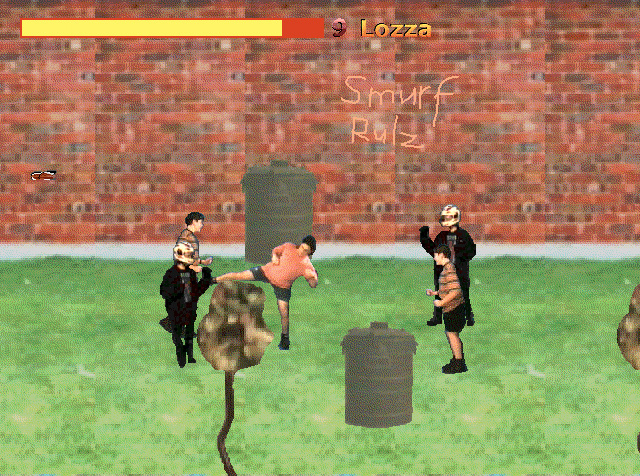
The action is straight-ahead arcade brawling: walk right, take down waves of street thugs with punches and kicks, and push toward the next screen. Two selectable fighters give the game a small replay hook, and the side-scrolling perspective keeps the rhythm tight and aggressive in the spirit of early-90s coin-op beat-em-ups.
Presentation
Backgrounds and characters use digitized photographic imagery rather than hand-drawn sprites, a budget-conscious technique that gives Street Rumble a grittier, slightly surreal look compared to its contemporaries. The art style is a clear nod to the live-action sprite work of titles like Pit-Fighter and Mortal Kombat.
System requirements
Street Rumble runs on 68k Macintoshes under System 7.0 through 7.6, and remains compatible with Mac OS 9. The 1.58 MB download is small enough to fit on a single floppy and runs comfortably under SheepShaver or Mini vMac for modern preservation play.
Distribution and history
Released as shareware through Foxchange Software in 1997, Street Rumble landed late in the classic Mac arcade era when the platform's commercial action market had largely moved on. It survives today through Macintosh Garden's preservation upload and the Info-Mac mirror, where the BinHex archive lists the original Kagi-era contact address foxchange@kagi.com.
This file is part of the MacTrove archive. See the Thank You page for the upstream mirrors we rely on. It is BinHex encoded — use The Unarchiver to decode it.


