

Boom
| Filename | boom-151.hqx |
|---|---|
| Size | 2,928.1 KB (2998423 bytes) |
| Downloads | 16 |
BOOM is a 1997 shareware arcade game by Federico Filipponi at Factor Software, often described in its own marketing as Bomberman meets Doom: a top-down maze blaster where a green-armored space marine tears through 80 bomb-strewn levels of alien soldiers, mid-level monsters and bosses across eight themed worlds.
Gameplay
Players walk through tiled maze rooms, drop timed bombs to break blocks and kill enemies, and grab power-ups that increase blast radius, bomb count and movement speed. Unlike traditional Bomberman, characters can absorb several hits and enemies actively hunt the player with charges and projectiles, pushing the design toward aggressive, Doom-paced combat instead of cautious cornering. A two-player simultaneous mode adds local cooperative and competitive play.
Engine
BOOM is built on Ingemar Ragnemalm's Sprite Animation Toolkit and renders smooth 256-color sprite animation at 640x480. It ships with eight original chiptune-style soundtracks, multi-channel sound effects via Sound Manager 3.0, and runs on 68030/040 or PowerPC Macs under Mac OS 7.0.1 or later with 4.5 MB of free memory.
Development
Factor Software released BOOM as $15 shareware, distributed on shareware CDs and through the late-1990s Mac internet. It became one of the studio's signature titles alongside its later games, and the registration system finally went offline in 2016. An open-source remake called Lifish by silverweed reimplements the engine to keep the game playable on modern macOS, Windows and Linux.
Reception
BOOM was a critical and shareware-charts hit on the Classic Mac, frequently cited as one of the platform's best arcade titles for its high level of polish, distinctive enemy designs and confident remix of two well-known formulas. Macintosh Garden lists it with a 4.8 of 5 user rating, and it remains a fixture of Mac shareware retrospectives.
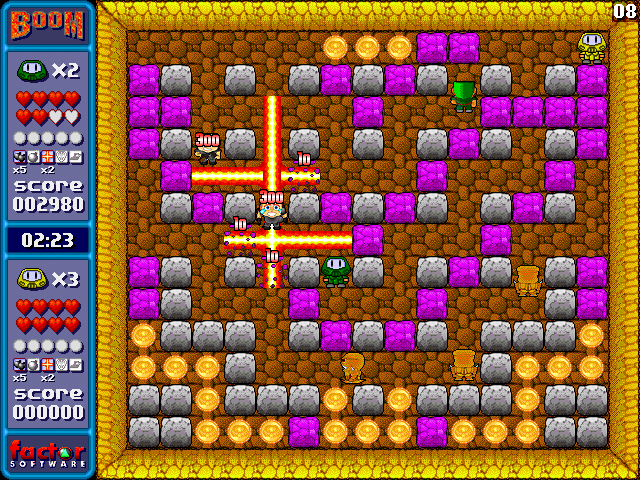
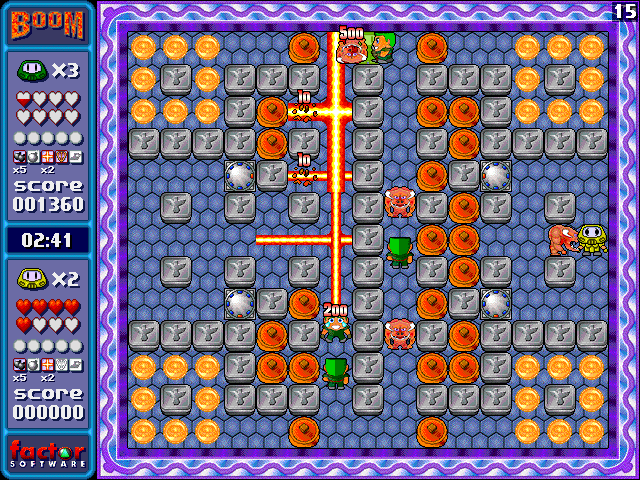
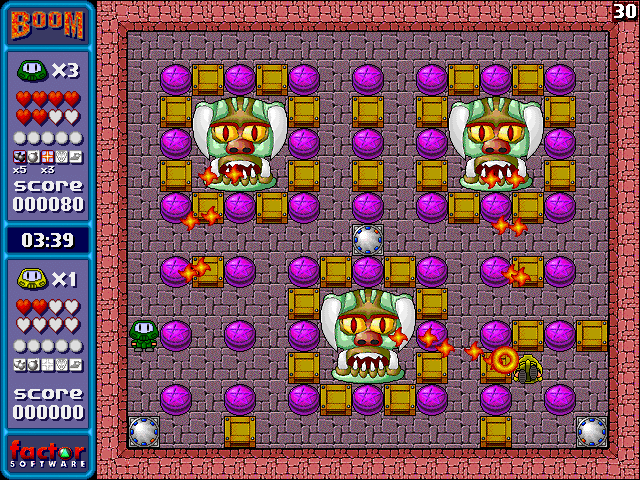
This file is part of the MacTrove archive. See the Thank You page for the upstream mirrors we rely on. It is BinHex encoded — use The Unarchiver to decode it.


