

Task Maker
| Filename | task-maker-223.hqx |
|---|---|
| Size | 2,140.6 KB (2191930 bytes) |
| Architecture | PowerPC |
| Downloads | 17 |
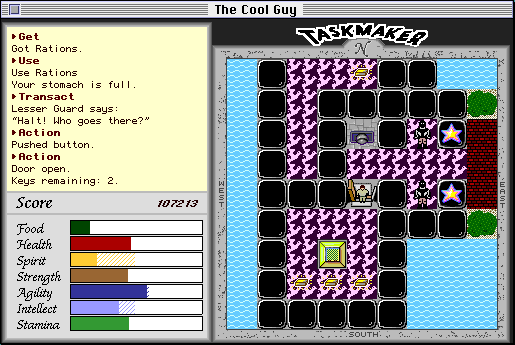
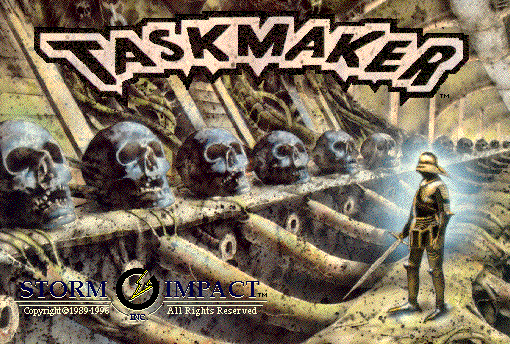
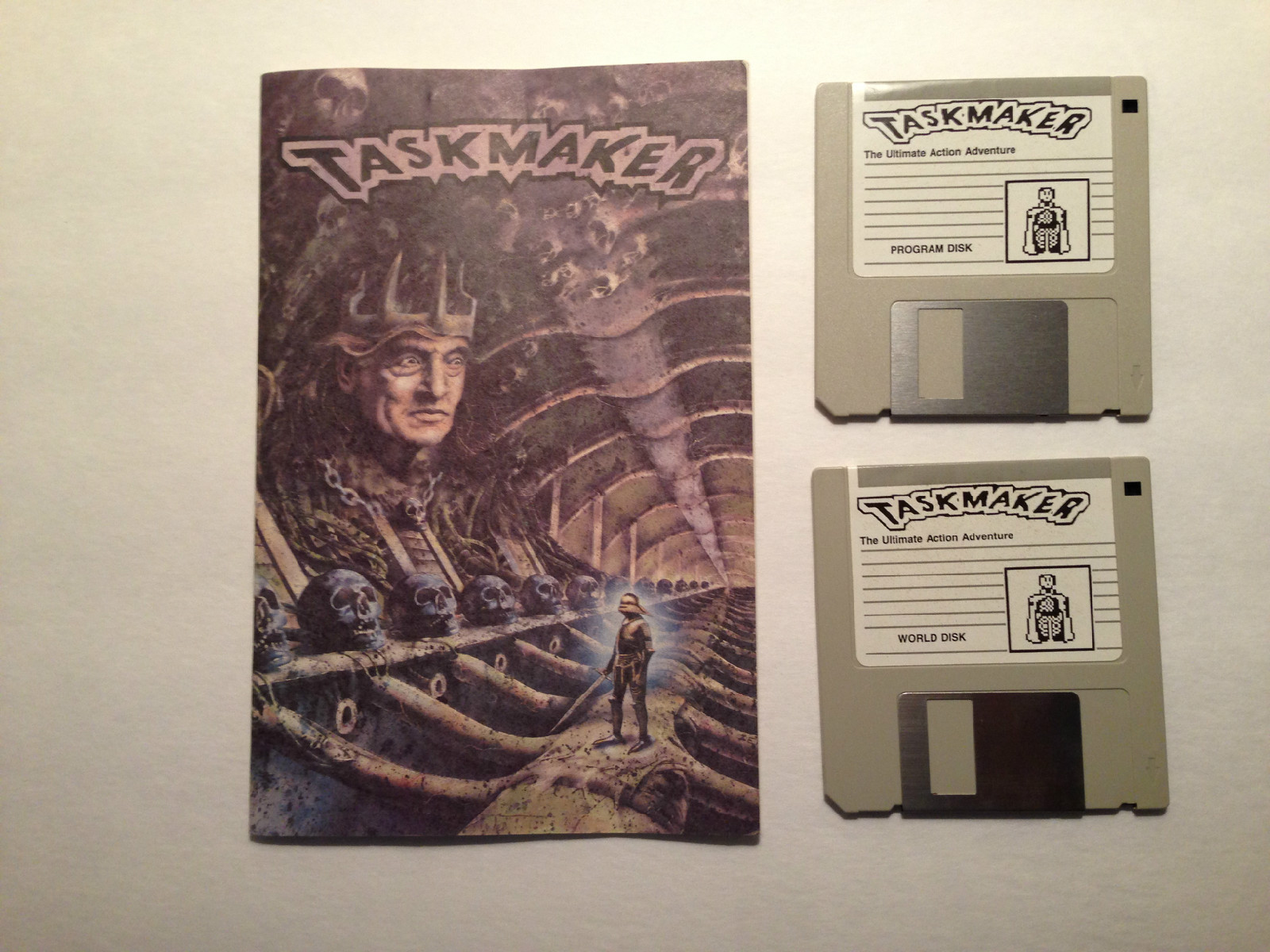
TaskMaker is a tile-based fantasy role-playing game for the Macintosh, originally released in 1989 by XOR Corporation and later picked up by Storm Impact. Players accept assignments from the title character and venture across vast dungeons, villages, and wilderness, battling monsters and solving puzzles in a classic sword-and-sorcery setting.
Gameplay
The player controls a single hero on a top-down tiled map, completing a sequence of tasks issued by TaskMaker himself. Each task sends the hero further afield, into deeper dungeons and tougher encounters, with combat resolved through real-time mouse and keyboard input rather than menus. Inns, shops, and townspeople provide rest, supplies, and exposition between expeditions.
Character and progression
Stats grow with experience earned by defeating enemies and finishing quests. The hero accumulates weapons, armor, potions, and spell scrolls, with inventory weight and gold management forming part of the challenge. The built-in interactive tutorial was unusual for the era and lowered the entry bar for players new to dungeon-crawl RPGs.
Versions and history
The original 1989 release ran in black and white on early Mac hardware. A 1993 upgrade added full color graphics, a refined interface, additional weapons and spells, and System 7 compatibility. Version 2.2.3, distributed through Info-Mac, fixed a registration-check crash that affected PowerPC users running virtual memory, RAM Doubler, or Speed Doubler.
Legacy
TaskMaker was Storm Impact's flagship shareware RPG, reporting more than 3,000 registered users worldwide at its peak. It is frequently cited as a stylistic ancestor to Spiderweb Software's Exile series, sharing the tiled overworld, task-driven structure, and shareware distribution model that defined a strand of Mac RPG design in the early 1990s.
This file is part of the MacTrove archive. See the Thank You page for the upstream mirrors we rely on. It is BinHex encoded — use The Unarchiver to decode it.


