

Power Pong
| Filename | power-pong-10.hqx |
|---|---|
| Size | 2,127.4 KB (2178479 bytes) |
| Downloads | 23 |
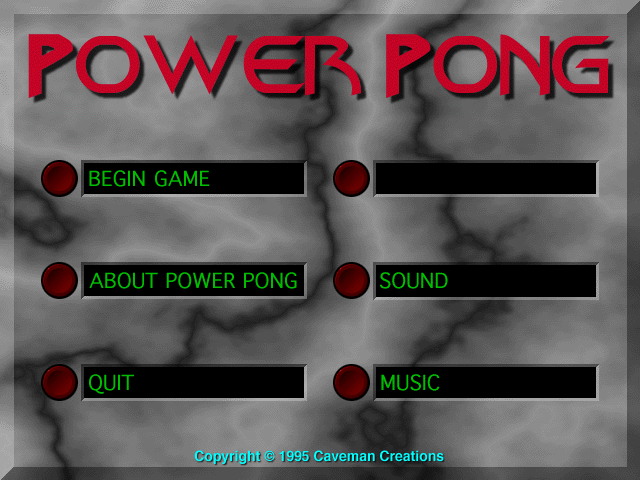
Power Pong is a faithful, no-frills Macintosh remake of the original 1972 Pong arcade game, written by David Hay and published as shareware by Caveman Creations in the mid-1990s. The author's own one-line pitch sums it up: "a modern rendition of the classic game of Pong. Nothing fancy, just pong."
Gameplay
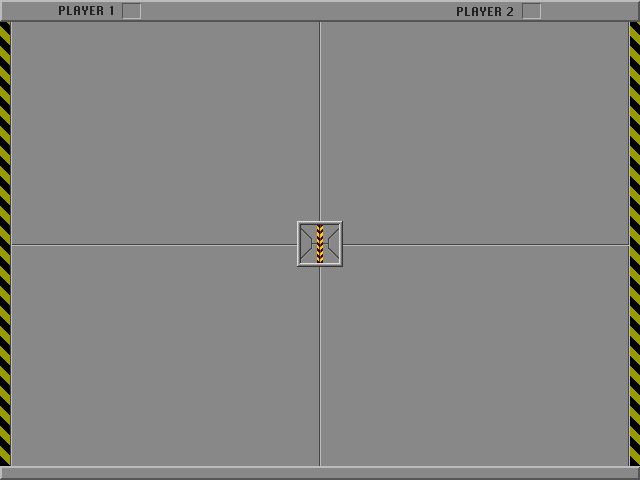
Two paddles, one ball, and the same elemental volley that defined an industry. Power Pong does not layer power-ups, special modes, or 3D flourishes onto the formula. Its appeal is precisely that restraint: a clean, responsive Mac-native version of a game everyone already knows how to play.
Versions and updates
The Info-Mac archive carries both the initial 1.0 release (power-pong-10) and a 1.0.1 updater (power-pong-101-updt). According to the updater's own README, the 1.0.1 patch "fixes a number of bugs, most notably, the main menu now works on screens larger than 640x480" - a reminder of the era when Mac shareware authors targeted compact built-in displays first.
Distribution
Power Pong shipped as freely redistributable shareware and was explicitly cleared for inclusion on CD-ROM compilations, the standard distribution channel for budget Mac game collections of the period. Contact for the author was hay@nag.cs.colorado.edu, placing development in the academic-Internet milieu that produced much 1990s Mac shareware.
Preservation status
The Info-Mac BinHex archives at game/arc/power-pong-10.hqx and power-pong-101-updt.hqx remain the most reliable source. Macintosh Garden carries a corresponding entry under the power-pong slug for browser-friendly access.
This file is part of the MacTrove archive. See the Thank You page for the upstream mirrors we rely on. It is BinHex encoded — use The Unarchiver to decode it.


