
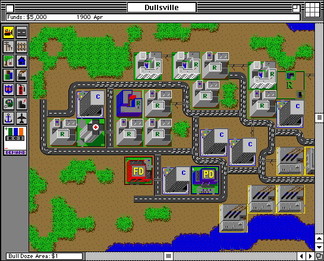
SimCity 2000
| Filename | simcity2000.sit |
|---|---|
| Size | 8,980.9 KB (9196457 bytes) |
| Year | 1989 |
| Downloads | 19 |
Maxis's 1993 isometric city builder gives the player a procedurally generated tract of land and centuries to grow it from frontier village to 22nd-century arcology. Will Wright and Fred Haslam added elevation, underground water mains and subways, nine power plant types from coal to fusion, terraforming, microsimulations of citizen happiness — and the budget spreadsheet that became the genre's signature.
Setting and theme
There is no narrative; you are an unnamed mayor on a procedurally generated terrain that you can sculpt before the first road is laid. The era spans 1900 through the 22nd century, with technology unlocking on a real timeline — wind farms, fusion plants, and arcologies appear as decades tick by — so a long game becomes a kind of urban science-fiction time-lapse.
Gameplay
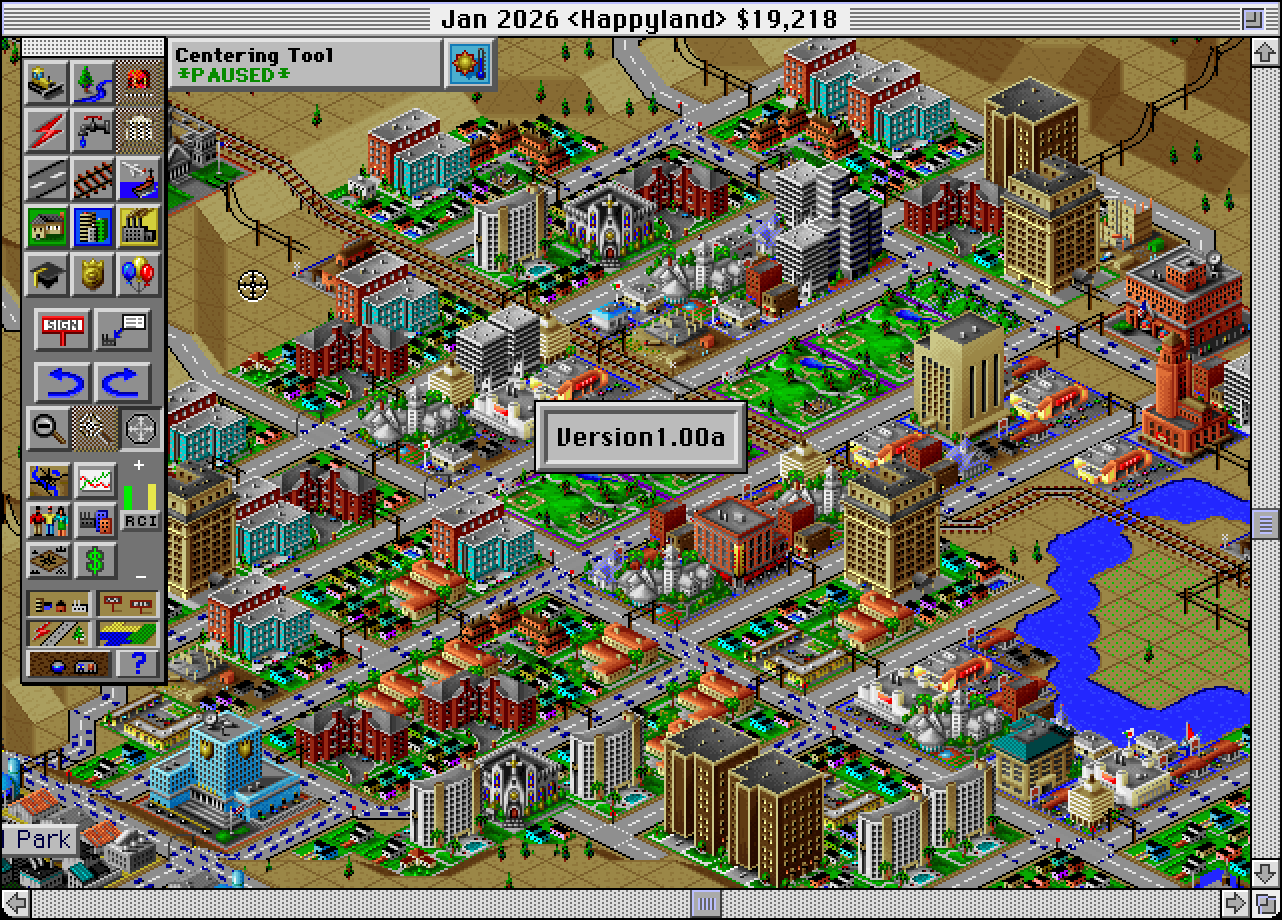
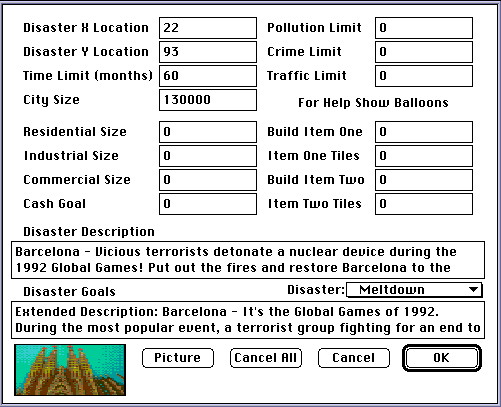
Players zone residential, commercial, and industrial blocks at three densities and run roads, rails, subways, water mains, and power lines through the result. Beneath the surface, a separate underground view handles pipes and transit; above, a query tool reads land value, pollution, crime, and traffic for any tile. Disasters — fires, tornadoes, monster attacks, even a UFO — punctuate the simulation, and bankruptcy ends the game.
Engine and technical changes
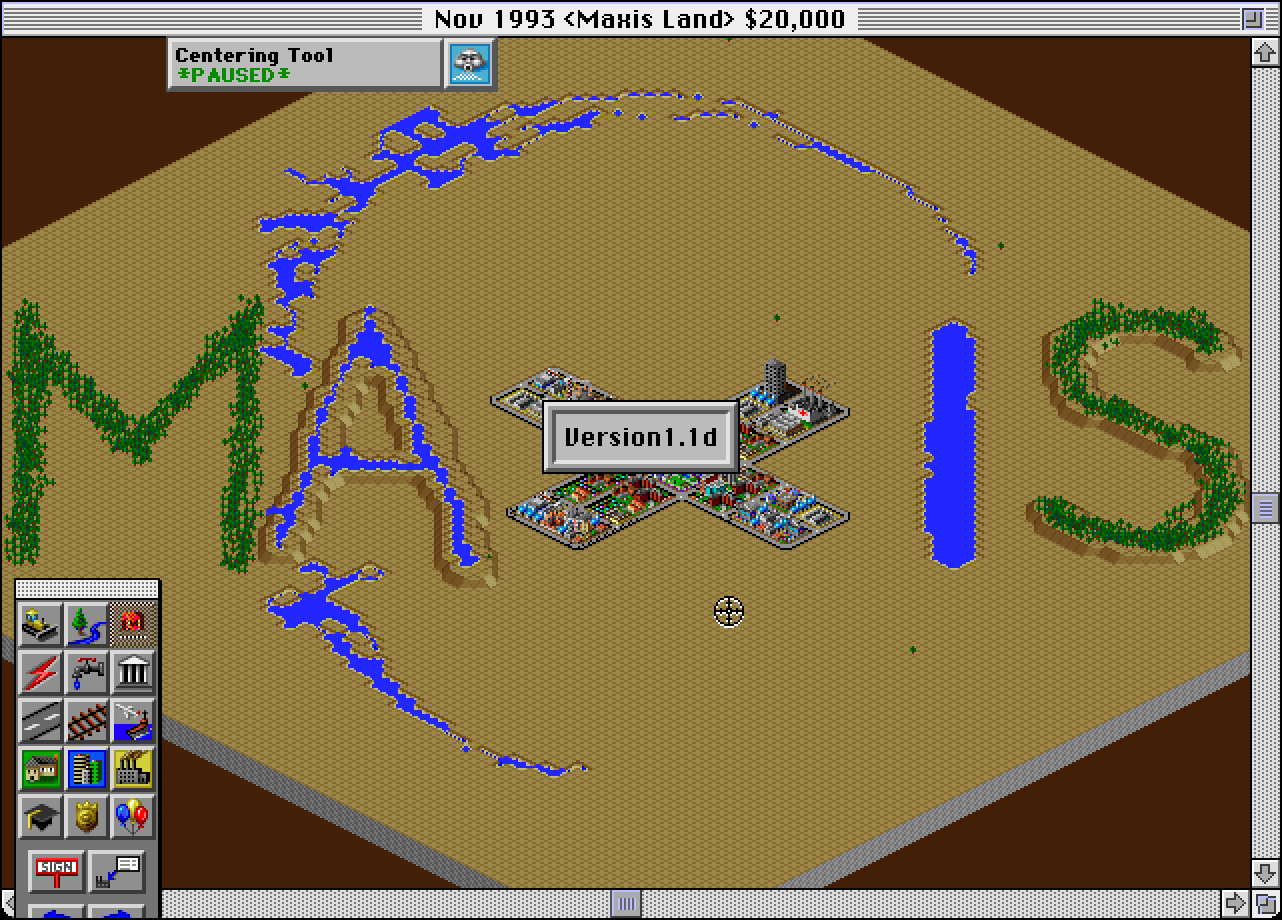
The shift from the original's top-down view to isometric tiles was inspired by Maxis's earlier work on A-Train, after roughly eight months trying to extend the 2D approach. The Mac build supported variable terrain elevation, separate underground rendering, and the new Newspaper system, all running comfortably on a 68k Mac in System 7. Resolution scaled to whatever the host display offered.
Development and release
Fred Haslam began work in late 1990; Will Wright joined later and contributed the arcology, microsimulation, and underground-layer systems. Maxis shipped the Macintosh version first in December 1993, with MS-DOS following in February 1994 and Windows in February 1995. A Special Edition bundled the Urban Renewal Kit, the Great Disasters scenarios, and the "Will TV" interview clips.
Reception and legacy
The game sold roughly 4.23 million copies worldwide and topped year-end charts on multiple platforms. In December 2012 the Museum of Modern Art acquired it for its permanent video game collection, citing its influence on simulation design. The isometric template carried into SimCity 3000 and into a generation of Maxis spinoffs including SimTower and SimFarm.
This file is part of the MacTrove archive. See the Thank You page for the upstream mirrors we rely on. It is a StuffIt/Compact Pro archive — use The Unarchiver to extract it.


